High Levels of Tooth Decay Across Australian Population Cause Concern

Only half of all Australians brush their teeth twice a day and it’s contributing to high levels of decay across the country, a report card on the nation’s dental health has found. A leading think-tank has published the country’s first comprehensive Oral Health Tracker and found a series of damning statistics about the state of … Read more
Dental, Nursing Students Work On Clinical Skills for Oral, Systemic Health

Indiana University School of Dentistry and IU School of Nursing students at IUPUI are learning clinical skills together through a newly developed experiential interprofessional education and practice program. Under the program, fourth-year dental students and final-year family and pediatric nurse practitioner students come together to learn assessments of the oral cavity and analysis of blood … Read more

Cancer Risk from Oral Precancerous Lesions Higher in Non-Smokers

Precancerous lesions in the mouths of non-smokers are more likely to progress to cancer than those in smokers, new research from the University of British Columbia and BC Cancer has found. Although tobacco use is still one of the strongest risk factors associated with mouth cancers, UBC dentistry PhD candidate Leigha Rock found that oral … Read more

AIRWAY-kening™ Orthodontic Treatment for All Ages

Hang fig 24-Slide30 alternate text for this image

Why Do We Have a Problem? The apparent epidemic of OSA which is occurring in all industrialized countries should not come as a surprise. Many in the sleep community routinely cite the increase in obesity rates over the last three to four decades as the cause of this epidemic. 1-7 There is no question that obesity … Read more

An Understanding Of The Trigeminal/Vagus Nerve Relationship Can Help One Tune Out Pain And Fear Part 1: Changing the Face of Pain

Peck Face-Jaw pic alternate text for this image

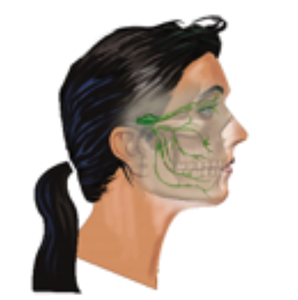
Many people experience a deep fear of sitting in the dental chair even though dentistry can significantly improve their health. By understanding a few key basics about the nervous system (and how fear, pain, and anxiety work in the body), you can help minimize pain, shut down fear responses, and decrease inflammation. This understanding can … Read more

What is Beyond the Drill?

Polonsky fig 5 alternate text for this image

Abstract The development of the dental drill was one of the most significant innovations in dentistry, occurring in the late 1800’s; 150 years later, it is still our “go-to” instrument for most procedures, whether for removal of decay, endodontic instrumentation or surgical extraction. We have witnessed these machines being powered in many different ways, as … Read more

Etiology of Malocclusion: Contributory Factors

Malocclusion

Throughout history, successful treatment of a health condition has often preceded an understanding of what caused the problem. This is surely true of malocclusion. A malocclusion of any significance is not a disease but it does represent a failure of development. Understandably, the great majority of effort by the dental profession is directed towards treating … Read more

Functional Dentistry

Functional Dentistry

What is functional dentistry and why is it worth talking about? I am curious if this is a movement or new direction in dentistry. Here are my thoughts. Functional medicine and dentistry are using your detective skills and sleuthing out underlying root causes and abnormalities that have lead to a patient’s complaints or symptoms and … Read more

Biomimicry, Neuroplasticity, and Sleep: Introducing Myofunctional-Assisted Maxillomandibular Advancement Surgery (MAMMA)

Functional Dentistry

Before you were born, there were countless forces shaping your growth and development. You had your own set of prenatal conditions and a unique path to birth before your very first taste of oxygen. This inaugural breath was then shaped by primitive reflexes, breast feeding (or lack thereof), oral tethered tissues, oral habits, oral nasal … Read more

Does Dentistry Hold The Missing Link to Multiple Sclerosis, Alzheimers and Others?

Williams Figure 3 alternate text for this image

The search for the cause of Multiple Sclerosis (MS) by mainstream medicine has followed a profound predilection for autoimmune conjecture, in spite of the absence of evidence for any “mechanism by which the immune system is tricked into seeing myelin as foreign in MS patients,” said Dr. Bruce Trapp of the Cleveland Clinic. He continues, … Read more

Update Your Patients: Good Oral Hygiene Helps Prevent Influenza

The US Centers for Disease Control and Prevention reported another peak of weekly visits for influenza-like illness last week, as provided by the US Outpatient Influenza-like Illness Surveillance Network. As this notably widespread flu season continues into February — and may bear more infections in the form of a second viral wave — researchers and physicians continue … Read more

Putting the Risk in Context

Infection Control

Sedation and anesthesia for dentistry has come under scrutiny in the past few years due to a few tragic events where patients experienced harm. These events have raised several questions: are these just isolated incidents due to negligence in clinicians’ practices; did these patients pose unforeseeable challenges; and ultimately, what is the safety of dentistry … Read more

The Systematic Treatment of a Canted Smile

Modi Fig. 24. Patient Final Full Face Photo alternate text for this image

Introduction For dentists who have a keen interest in Cosmetic Dentistry, it is exciting when a patient expresses an interest to change their smile. It allows us to perform and deliver dentistry that can be immensely rewarding and life changing for a patient. Patients who have high esthetic demands can be a challenge but also … Read more

Good News: Dentists Not at Risk of Acquiring HIV/AIDS from Infected Patients and the Illusion of Infection Control

Infection Control

Preamble Since the appearance of HIV/AIDS in the mid-1980s, clinical dentists, academics and the profession’s regulatory agencies have been concerned about the possibility of an HIV/AIDS positive patient transmitting the infection to the attending dentist. A recent report in the American Journal of Infection Control categorically refutes this possibility. Prior to discussing these new findings, … Read more

The Impact of Identifying Comorbid Conditions and Screening of Obstructive Sleep Apnea for Treatment of Temporomandibular Disorders

Infection Control

Clinical Problem A 63-year-old female visited the dental clinic at the Jewish General Hospital with chief complaints of jaw pain, bilateral clicking, limited mouth opening, had migraine of 8 years duration, feeling fatigued and unrefreshed in the morning. The patient complains of TMD pain symptoms that began two years ago, involving both sides of the … Read more

CBCT Application in Dentoalveolar Trauma

Nahmias figure 2 alternate text for this image

Traumatic injuries to teeth and their supporting structures comprise approximately five percent of all traumatic injuries.1 Clinical and radiographic examinations are integral parts of diagnosis and treatment planning. Occlusal and periapical images have been suggested to determine the extent of damage to dentoalveolar structures. Due to their limitations as two-dimensional imaging modalities, it is necessary … Read more

Barriers of Access to Deep Sedation and General Anesthesia as Identified by Ontario Dental Patients

Infection Control

There are various indications for deep sedation and general anesthesia (DS/GA) in dentistry, including anxiety associated with dental treatment, pre-cooperative age, traumatic or extensive dental procedures, and cognitive impairment or motor dysfunctions.1–3 Although many of the patients who fall into these categories require DS/GA in order to facilitate dental treatment, not all of them are … Read more

Codeine: Are We Prescribing the Right Opioid to Our Patients?

Infection Control

Given the epidemic of narcotic abuse in Canada, it is important we discuss choices when prescribing opiods. We should be both more pensive prior to picking up our prescription pad and more careful when prescribing opiod analgesia to our patients. It now goes without saying that we should optimize all means of non-opioid analgesia to … Read more