Dental – legal pitfalls facing the new practicing dentist
Part II (See Part I, DPM Fall ’09)

Part II (See Part I, DPM Fall ’09)
Part II (See Part I, DPM Fall ’09)
It is time to start thinking about upgrading the technology in your practice. Realize every practice is different. If your computer system is 10 years old, you may want to invest in new computer equipment and software. If your dental chairs are 30 years old, it might be time for replacements. If your phone system … Read more
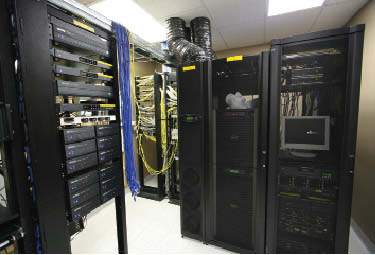
The new home of the Coronation Dental Specialty Group in Cambridge, Ontario is located in the Canamera Medical Centre, a large, one-level medical facility in the middle of the city. CDSG is a large group of dental specialists providing oral and maxillofacial surgery, periodontics, endodontics and anaesthesia services. “This is an example of a very … Read more
Intra-oral bony growths of all types, present a clinical challenge for the dental team attempting to capture accurate detail for final impressions of crown and bridge, removable prosthetics, oral appliances, accurate opposing models, study models, and whitening trays. Stock impression trays often can’t be seated to depth, because they get hung up on these bony … Read more

As the communication editor of CDPA (Canadian Dental Protective Association) I am involved with the analysis of data from cases that place dentists at risk. One such area of particular interest is the interrelationship of dentists working in conjunction with denturists. In the RCDS(O) publication Dispatch1 this issue has been highlighted three times since 2002. … Read more
Picture it. Scenario One: Your patient has just arrived for his dental recall appointment and you’ve now become aware that the patient is one week early; his dental insurance plan won’t pay for such recall examinations unless exactly six months have passed since his last recall appointment. The patient asks you to just change the … Read more
Portrait photography can be used to document a finished case or as a marketing tool for advertising your skills to potential clients, and like radiographs in the endodontic referral letter, can be used to enhance a reporting letter. The skill required to produce professional quality portraits, requires work but the journey will be a rewarding … Read more
I am writing to commend Dr. Hardie on his recent critique of the Infection & Prevention Control document proposed by the RCDSO. I appreciate his introduction describing the Precautionary Principle and the resulting unintended consequences when these principles are applied to the health arena. Here in Alberta, an IP & C draft has been formulated … Read more
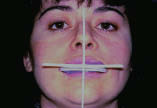
If a plastic dual arch impression tray can negatively affect the fit of a restoration clinically1,2,3,4,5,8 you better believe that the SMALL stuff can have a tremendous impact on the quality of your dentistry and the overall success of your business/practice. In 2007, 3M/ESPE reported the cost in lost revenue to the dental practitioner for … Read more

Instructions and the Answer Card are found between pages 34 and 35. The 15 Question 2009 SLSA Quiz for CE points appears on these two pages along with instructions and reply card. To be eligible for CE points, responses must be received by December 31, 2009.
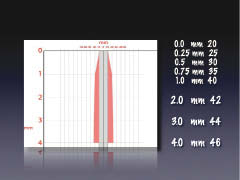
Study the past, if you would divine the future — Confucius The Endodontic Implant Algorithm — provides highlights in the assessment and identification of determinant factors leading to endodontic failures, in order to help in the decision making process whether or not it is adequate to implement an new endodontic approach vs. extraction and replacement … Read more
Universal precautions were introduced by the Centers for Disease Control in 1987. Their purpose was to allay the fears expressed by health care workers regarding the occupational acquisition of AIDS. An essential feature of universal precautions (UPs) was the wearing of gloves by dental personnel for all intra-oral procedures. Since the late 1980s gloves have … Read more
External root resorption is an uncommon event, but one that can threaten the long-term viability of a tooth. Its management is greatly affected by the lesion location (apico-coronally and circumferentially), the size of the lesion and a timely diagnosis. Both surgical and non-surgical methods can be utilized in its management. Lesions that are located close … Read more

The SLSA program is based on current, referenced literature and consists of 40 questions, answers, rationales and references. Answers appear in the following issue at the end of each quiz. Dentists who complete the 15 question quiz in the November, 2009 issue of Oral Health may be eligible to receive continuing education points. The names … Read more
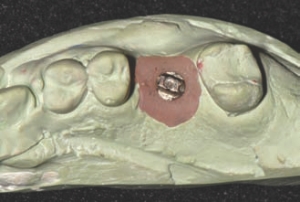
There are a myriad of complications that may occur with either the surgical or prosthetic phase of implant dentistry. In this case report one uncommon complication is presented and the possible solutions examined. A 41-year-old patient presented for an implant in the 26 area after a failed endodontic procedure. The patient was a smoker of … Read more
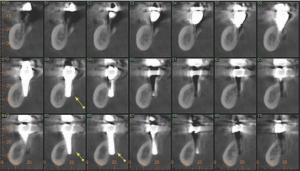
Treatment planning for implant placement includes the prescription and interpretation of an appropriate diagnostic imaging technique in order to determine the quantity of bone available for implants and to assess the morphology of the alveolus. Location of critical anatomic structures, such as the mandibular canal, in three dimensions is critical to successful implant place ment. … Read more
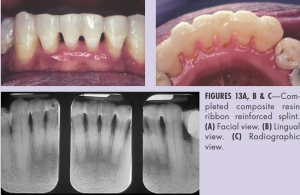
For those patients with moderate to severe periodontal disease, tooth mobility can contribute to discomfort when eating and decreased masticatory and occlusal function. Clinical management of the hyper-mobile tooth can pose challenges, foremost, in determining etiology, whether related to existing periodontal attachment loss, or genuine trauma due to occlusion. Occlusal trauma and mobility in the … Read more