B.C. Expands PPEP Assessments to Include Anesthesia in Dental Facilities
The College of Physicians and Surgeons of BC (CPSBC) is expanding their Physician Practice Enhancement Program (PPEP) to anesthesiologists and those providing family practice anesthesia (FPA) in dental facilities for 2024. This means that those providing sedation and general anesthesia services may be required to complete a practice environment assessment and peer assessment. PPEP is an educational … Read more

Epinephrine for Everybody?

Epinephrine is the second-most frequently administered medication by dentists as it is present in almost all local anesthetic cartridges. Epinephrine is an endogenous hormone released from the adrenal medulla. Its main function is to support the body in times of physiologic stress by increasing cardiac output and glucose delivery to tissues.1 Within dentistry, epinephrine serves … Read more

Emerging Medications in Anesthesia and Analgesia

Advances in our pharmacology and physiology knowledge have allowed for the creation of medications that have improved safety profiles and enhanced clinical action. One only needs to look at how quickly vaccines and therapeutics for SARS-CoV-2 were produced to realize how our knowledge has advanced. What once took years, if not decades, to make was … Read more

Failed Mandibular Anaesthesia: Aberrant Nerve Pathways

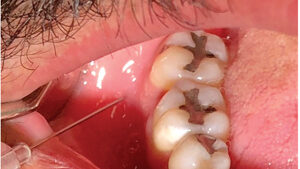
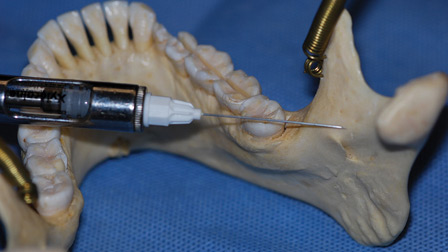
Failed mandibular anaesthesia is a burden on both patients and dental practitioners, as lack of profound anaesthesia can result in pain, apprehension about dental visits, and rescheduling of appointments. When considering factors such as the provider, patient, and techniques used, the incidence of failed mandibular anaesthesia has been reported to be as high as 50%.1 … Read more

Successful Pilot Trial of Needle-free Dental Anaesthesia

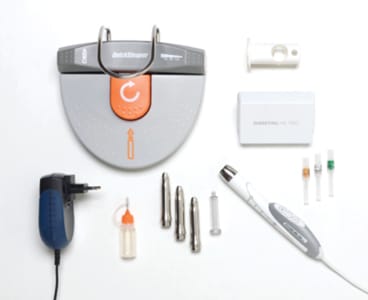
Researchers are literally taking the pain out of visits to the dentist after the successful creation and pilot trial of a needle-free device for dental anaesthesia for teeth extractions. A collaboration between the University of Otago, University of Auckland, and Auckland University of Technology, the device differs from other needle-free dental jet injectors in that … Read more

Intraosseous Access to the Circulation: A Valuable Tool in Medical Emergencies

The two most common methods for administering systemic medications to dental patients is by enteral (PO) or intravenous (IV) routes. In an emergency, the PO route has a slow onset of action. The drug, administered PO, needs to be absorbed before being systemically available.1 The IV route will offer faster onset, but IV access can … Read more

NPO Guidelines and Current Evidence-Based Considerations

Current nil per os (npo) standards promote pre-operative fasting as an approach to reduce the volume and acidity of a patient’s stomach contents to reduce the risks of regurgitation and subsequent pulmonary aspiration. Pre-anesthesia fasting standards apply to any procedure where sedative medications reduce the protective airway reflex that under normal conditions prevent aspiration. The … Read more

Peri-Operative Epistaxis During Dentistry: A Case Report

Epistaxis (nasal bleeding) is a relatively common complication that may arise during a dental visit that utilizes sedation/anesthesia. While rarely fatal, appropriate and prompt management of peri-operative epistaxis is critical in order to prevent further harm. This article will discuss a case report of epistaxis encountered during dentistry under deep sedation. In addition, the anatomy, … Read more

Reviewing Contraindications to Nitrous Oxide

All practitioners who deliver nitrous oxide to their patients should be intimately familiar with the relative and absolute contraindications to its administration. Relative Contraindications Nasal obstruction: Nitrous oxide sedation can proceed if despite some degree of nasal obstruction, the patient is still able to respire through the nares (or one naris) in such a way … Read more

Mandibular Anesthesia: Troubleshooting and Overcoming Failure to Anesthetize

Abstract When difficulty in obtaining adequate mandibular anesthesia is encountered a systematic approach incorporating the evaluation of patient factors and operator technique will substantially improve outcomes. Even for the most experienced dental practitioners, consistent, profound mandibular anesthesia remains difficult to achieve 100 percent of the time. This can be stressful for both dentist and patient … Read more

Assessing BONES May Give You Moans, But it Can Help Manage Oversedation

Oversedation

Pre-operative airway assessment and management is essential to successful dental treatment under procedural sedation. In the event of oversedation, defined as the transition from an intended level of sedation to an unintended deeper level of sedation, the patient’s ability to independently maintain ventilatory function may be impaired. This can result from an inability for the … Read more

Evidence-Based Guidelines and Regulations?

“Sign, sign, everywhere a sign/Blockin’ out the scenery, breakin’ my mind/Do this, don’t do that/Can’t you read the sign?” – Signs by The Five Man Electrical Band A repeated discussion that I have with colleagues is that dentistry, as a profession, is over-regulated. While it’s true that we have rules governing everything in our practices … Read more

Vancouver Dental Office Owner Fined $5,000 In Death Of 4-Year-Old

Washington’s Dental Quality Assurance Commission has fined an owner of Must Love Kids Pediatric Dentistry in Vancouver in connection with the death of a 4-year-old Vancouver boy after a dental procedure in March 2017. Mykel Wayne Peterson died after receiving general anesthesia for dental treatment. In June 2017, the Clark County Medical Examiner’s Office announced … Read more

‘Absolute Hell’: Parents Say Of Daughter, 5, Who Almost Died After Routine Dental Surgery

Autumn Ferguson went into a Regina dental clinic with a few cavities, and left in an ambulance on life support. The five-year-old girl’s lungs collapsed while receiving oxygen in the wrong way under general anesthesia, according to the surgical centre’s own admission. Ferguson’s parents are still in shock that routine dental surgery could take such a bad turn, and … Read more

Intraosseous Local Anesthesia Revisited

To view figures, click on figure mentions throughout the article. Your patient in the chair has confirmed that their lips and tongue are numb from your block local anesthesia. As you are beginning to start the clinical procedure, your patient jumps to report that you are hurting them and they still feel pain. Feeling apologetic, … Read more

Putting the Risk in Context

Infection Control

Sedation and anesthesia for dentistry has come under scrutiny in the past few years due to a few tragic events where patients experienced harm. These events have raised several questions: are these just isolated incidents due to negligence in clinicians’ practices; did these patients pose unforeseeable challenges; and ultimately, what is the safety of dentistry … Read more

Codeine: Are We Prescribing the Right Opioid to Our Patients?

Infection Control

Given the epidemic of narcotic abuse in Canada, it is important we discuss choices when prescribing opiods. We should be both more pensive prior to picking up our prescription pad and more careful when prescribing opiod analgesia to our patients. It now goes without saying that we should optimize all means of non-opioid analgesia to … Read more

What Do You Do?

Infection Control

So, what do you do?” is a question often asked at social gatherings. Everyone has a story. Few of us have actually thought one out. How might we answer? Does the simple response “I’m a dentist” tell us anything about who we really are? Might it even arouse unpleasant thoughts? The unfortunate reality is that … Read more

Bias vs. Integrity

Infection Control

Honesty is such a lonely word – Billy Joel Bias and integrity are strange bedfellows. They are two qualities that we speak of in absolute terms although there is no absolute measure for them. Both qualities force us to look at ourselves critically, an exercise often avoided because all too often we end up not … Read more