
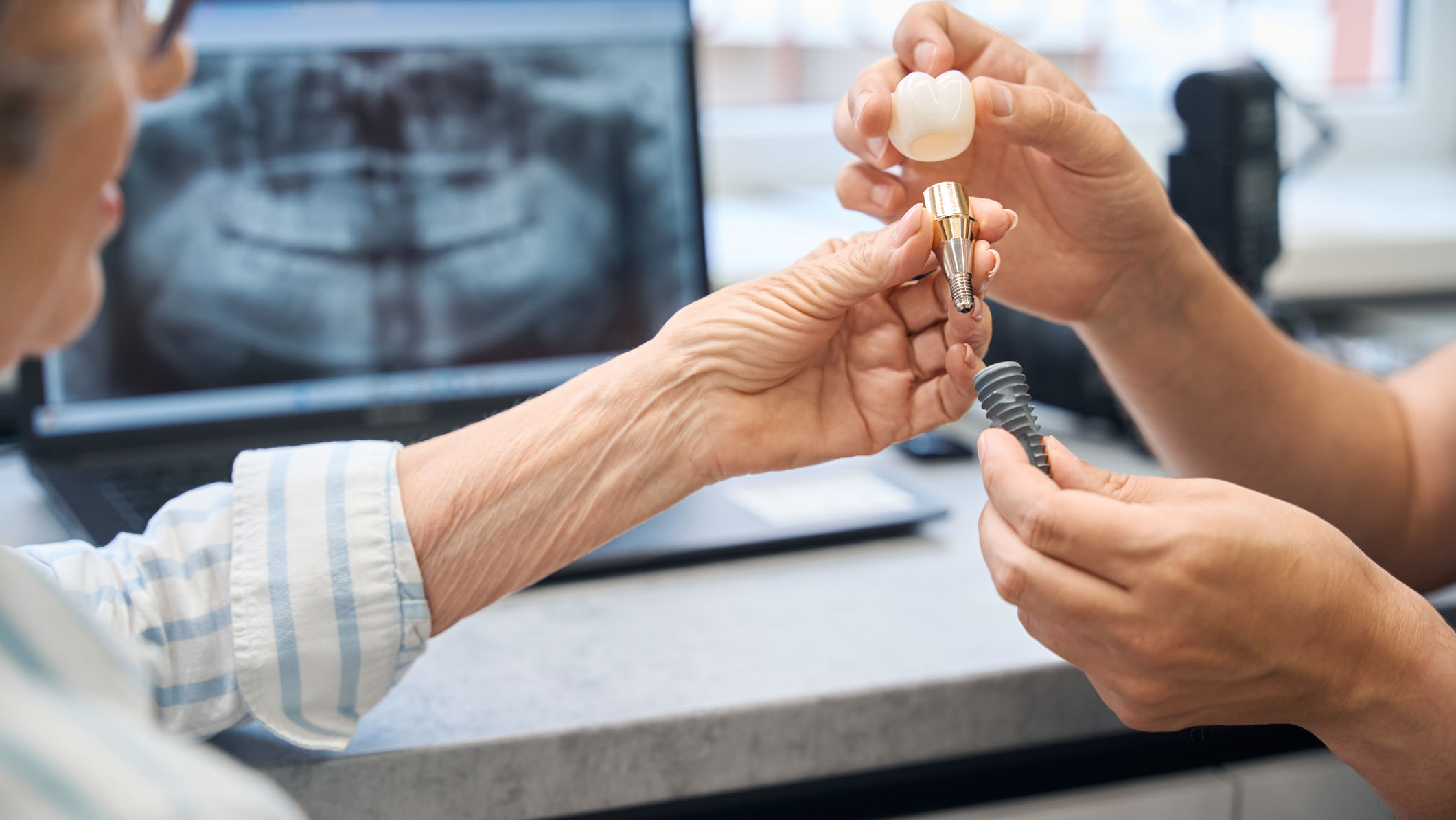
The National Institute of Dental and Craniofacial Research (NIDCR), part of the National Institutes of Health, has awarded US$2.91 million to the Eastman Institute for Oral Health (EIOH) to investigate why dental implants sometimes fail and how those failures might be prevented.
Dental implants made of titanium have been used successfully for decades to replace missing teeth and are considered safe and effective for millions of patients. Clinical studies generally report implant survival rates approaching 95–98 per cent, though a small proportion still fail over time.
However, as more patients receive implants and live longer with them, clinicians are seeing a growing number of complications, including peri-implantitis—an inflammatory disease that can damage the bone and soft tissue surrounding an implant and ultimately lead to failure.
“This research addresses a problem that clinicians encounter every day,” said Tom Diekwisch, chair of EIOH’s Department of Oral and Craniofacial Sciences.
“Dental implants have transformed patient care, but we still do not fully understand why some implants fail. With this support from NIDCR, we’re exploring underlying causes and moving closer to solutions that help implants last longer and perform better,” he added.
Related: Replacement of a failing upper anterior bridge with dental implants: Case report
Related: Researchers use biowaste from bovine bone and eggshells to make longer-lasting dental implants
‘Could lead to new approaches’
The research team, which includes Xianghong Luan, is examining several factors that may contribute to implant failure, including inflammation, plaque accumulation, changes in peri-implant tissues, and microscopic particles released from titanium implants over time.
So far, early findings suggest these factors may disrupt normal bone metabolism around implants and trigger harmful biological responses.
Researchers are also exploring how the body’s own biological processes may influence implant failure—and whether those processes can be modified to better protect bone and soft tissue surrounding implants.
“The goal with all our foundational, clinical and translational research is to translate scientific discovery into real-world benefits for patients,” said Eli Eliav, director of Eastman Institute for Oral Health.
“This project could lead to new approaches that improve long-term implant success, reduce repeat procedures, lower health-care costs and improve outcomes—particularly for older adults and patients with complex medical conditions.”
Related: Are titanium micro-particles common around dental implants? A new study says, ‘Yes’
Related: World’s longest follow-up study on single dental implants shows teeth remain intact