
Got ‘Til It’s Gone

Dental Anesthesia

Don’t it always seem to go/That you don’t know what you’ve got ‘til it’s gone. – Joni Mitchell (“Big Yellow Taxi”) There is an active application to recognize Dental Anesthesia as a dental specialty nationwide. Dental Anesthesia is recognized as a specialty in Ontario as well as in the United States and Japan. This assistive … Read more

Prepare to Win

FEBRUARY-2021-OH alternate text for this image

“It’s been too hard living/But I’m afraid to die/’Cause I don’t know what’s up there/Beyond the sky” – A Change Is Gonna Come by Sam Cooke. According to Bill Bryson’s book, The Body, there are about 8,000 things that can kill us. Of course, only one cause has to succeed, and at least one will … Read more

Case Report: Use of Intramuscular Glycopyrrolate Bromide for Hypersalivation

chiu-thumbnail alternate text for this image

Summary This case report provides a review of the use of the intramuscular (IM) injection of glycopyrrolate bromide as an antisialagogue. In this case, copious saliva interfered with the ability to obtain an accurate impression of the tooth preparation. Glycopyrrolate was delivered intramuscularly to the deltoid muscle. Drying was adequate, and a successful impression was … Read more

A Brief History of Propofol and the Introduction of Remimazolam as a Potential Heir Apparent

FEBRUARY-2021-OH alternate text for this image

Propofol (2,6-diisopropylphenol) is an intravenous (IV) sedative-hypnotic agent commonly used for the IV induction and maintenance of general anesthesia.1 It has a rapid-onset, provides a rapid recovery even after multiple bolus doses or continuous infusion, and has anti-emetic properties which decreases the incidence of post-operative nausea and vomiting.1 These benefits helped propofol become the most … Read more

Diphenhydramine as a Local Anesthetic: Case Report

charette-thumbnail alternate text for this image

Keywords: local anesthetic, allergy, diphenhydramine, emergency treatment Abstract Allergy to local anesthetics is a rare condition which poses a unique challenge for dental treatment. In this article, we present a case of suspected allergy to conventional local anesthetics which was managed successfully using 1% diphenhydramine solution with 1:100,000 parts epinephrine as an alternative means of … Read more

Tobacco Cessation and Dentistry

FEBRUARY-2021-OH alternate text for this image

Introduction The COVID-19 pandemic has made people more conscious about their overall health. It is a good moment to discuss tobacco smoking cessation with our patients. Tobacco smoking has overall devastating effects on health. It continues to be the number one cause of preventable disease and death in Canada. An estimated 45,000 Canadians die each … Read more

Lipid Emulsion Treatment for Local Anesthetic Systemic Toxicity

FEBRUARY-2021-OH alternate text for this image

Local anesthetics are used by dentists extensively and when used erroneously, such as intravenously or above the maximum dose, life-threatening local anesthetic systemic toxicity (LAST) can result. The signs and symptoms of LAST can appear immediately after injection if injected directly into a blood vessel or delayed if the anesthetic is absorbed from the tissue … Read more

The Problems with the COVID-19 Test: A Necessary Understanding

FEBRUARY-2021-OH alternate text for this image

Viewpoint: Introduction On August 26th, 2020 Professor Mark Woodhouse, a senior scientific advisor to the UK Government stated the following, “We couldn’t think of anything better to do. Lockdown was a panic measure and I believe history will see that trying to control Covid-19 through lockdown was a monumental mistake on a global scale, the … Read more

Reviewing Contraindications to Nitrous Oxide

ORAL-HEALTH-PROMO-FEB-20 alternate text for this image

All practitioners who deliver nitrous oxide to their patients should be intimately familiar with the relative and absolute contraindications to its administration. Relative Contraindications Nasal obstruction: Nitrous oxide sedation can proceed if despite some degree of nasal obstruction, the patient is still able to respire through the nares (or one naris) in such a way … Read more

Mandibular Anesthesia: Troubleshooting and Overcoming Failure to Anesthetize

Waters-Fig-4-thumbnail alternate text for this image

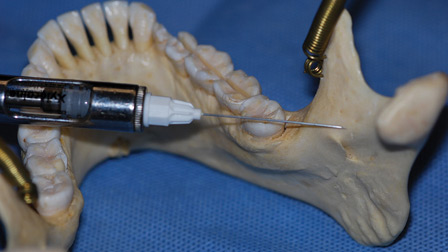
Abstract When difficulty in obtaining adequate mandibular anesthesia is encountered a systematic approach incorporating the evaluation of patient factors and operator technique will substantially improve outcomes. Even for the most experienced dental practitioners, consistent, profound mandibular anesthesia remains difficult to achieve 100 percent of the time. This can be stressful for both dentist and patient … Read more

Assessing BONES May Give You Moans, But it Can Help Manage Oversedation

Oversedation

Pre-operative airway assessment and management is essential to successful dental treatment under procedural sedation. In the event of oversedation, defined as the transition from an intended level of sedation to an unintended deeper level of sedation, the patient’s ability to independently maintain ventilatory function may be impaired. This can result from an inability for the … Read more

Evidence-Based Guidelines and Regulations?

ORAL-HEALTH-PROMO-FEB-20 alternate text for this image

“Sign, sign, everywhere a sign/Blockin’ out the scenery, breakin’ my mind/Do this, don’t do that/Can’t you read the sign?” – Signs by The Five Man Electrical Band A repeated discussion that I have with colleagues is that dentistry, as a profession, is over-regulated. While it’s true that we have rules governing everything in our practices … Read more

Biomechanical Implant Failures Management of an Implant Failure: A Case Report

Implant Failure

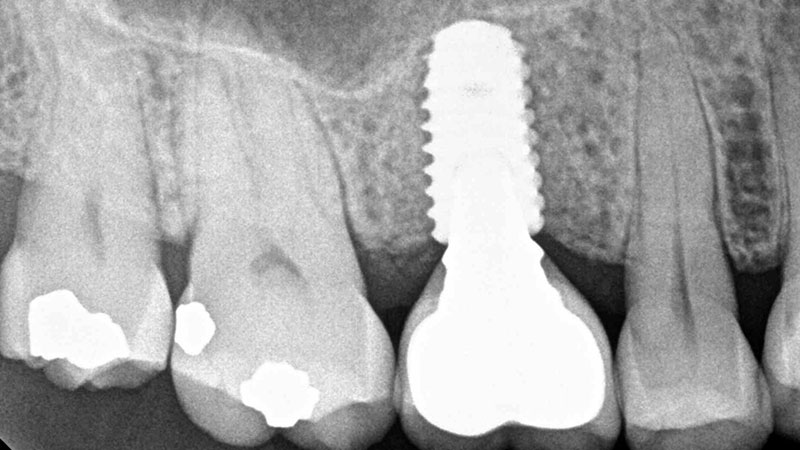
Introduction The goal of modern dentistry is to restore the patient’s oral health to normal contour, function, aesthetics and speech. 1 The era of dental implants have ushered in a new treatment concept where the patients no longer have to use removable dentures, or sacrifice healthy adjacent teeth. The success and predictability of osseointegrated implants … Read more

Supplemental Oxygen in an Acute Myocardial Infarction

Acute Myocardial Infarction

You are about to begin dental treatment on your healthy 65-year-old male patient when he suddenly develops severe chest pain. You suspect he is having an acute myocardial infarction and immediately call 911. You then refer back to the treatment algorithm, MONA, an acronym (morphine, oxygen, nitroglycerin and aspirin) used in the management of patients … Read more

The New Standard (and Why We Should Comply)

Acute Myocardial Infarction

“Gotta hit the club/Like you hit them hit them hit them angles” – Nice For What (clean version), Drake On November 15, 2018, the Royal College of Dental Surgeons of Ontario accepted a new revision of the Standard of Practice for the “Use of Sedation and General Anesthesia in Dental Practice”. This made Ontario the … Read more

Putting the Risk in Context

Infection Control

Sedation and anesthesia for dentistry has come under scrutiny in the past few years due to a few tragic events where patients experienced harm. These events have raised several questions: are these just isolated incidents due to negligence in clinicians’ practices; did these patients pose unforeseeable challenges; and ultimately, what is the safety of dentistry … Read more

Barriers of Access to Deep Sedation and General Anesthesia as Identified by Ontario Dental Patients

Infection Control

There are various indications for deep sedation and general anesthesia (DS/GA) in dentistry, including anxiety associated with dental treatment, pre-cooperative age, traumatic or extensive dental procedures, and cognitive impairment or motor dysfunctions.1–3 Although many of the patients who fall into these categories require DS/GA in order to facilitate dental treatment, not all of them are … Read more

Codeine: Are We Prescribing the Right Opioid to Our Patients?

Infection Control

Given the epidemic of narcotic abuse in Canada, it is important we discuss choices when prescribing opiods. We should be both more pensive prior to picking up our prescription pad and more careful when prescribing opiod analgesia to our patients. It now goes without saying that we should optimize all means of non-opioid analgesia to … Read more

What Do You Do?

Infection Control

So, what do you do?” is a question often asked at social gatherings. Everyone has a story. Few of us have actually thought one out. How might we answer? Does the simple response “I’m a dentist” tell us anything about who we really are? Might it even arouse unpleasant thoughts? The unfortunate reality is that … Read more