
The first step in infection control is washing instruments before they go into the sterilizer. This can be done by using an ultrasonic cleaner or using an automated washer. Do you know how to use them properly? Which method is best? Do you know how to test and maintain them? Read on to learn how to wash instruments the safe way and the right way.
In the operatory
After using instruments, discard disposable sharps in sharps containers in the operatory. Remove cements and restorative materials from instruments before they dry. Place instruments in cassettes and lock the cassettes. If you are not using cassettes, place a locked cover over the instrument tray while transporting instruments from the operatory to the sterilization centre.
Personal Protective Equipment
Wear the following when cleaning instruments:
- Eye protection or a face shield
- Mask
- Gown
- Utility gloves when hand cleaning instruments
Washing Instruments
Washing instruments by hand is not recommended. Healthcare workers may get harmed doing this and it is time consuming. Ultrasonic washers require presoaking or handwashing instruments as gross debris must be removed from instruments before placing them inside the unit.
It is safer to use an automated washer over an ultrasonic cleaner as instruments do not have be presoaked or scrubbed before placing them inside an automated washer. This decreases exposure to blood and other bodily fluids for workers. Dental materials such as cements and resins should be removed from instruments before placing them in an automated washer or an ultrasonic cleaner.
Do not reach in to grab instruments when you can not see what you are grabbing such as a sink full of soapy water or an ultrasonic washer reservoir. Instead, use forceps or remove the strainer basket holding the instruments inside an ultrasonic washer.
Cassettes
Instrument cassettes are advantageous to instruments that are kept loose and later pouched. Cassettes keep the worker protected as the instruments are not exposed, they save time in sorting and packing as they keep the instruments together, and the cleaning and sterilizing processes are more effective as they keep instruments separated.
Ultrasonic Cleaners
Ultrasonic cleaners work by producing high frequency vibrations which makes air bubbles in the solution which dislodges debris from instruments. Follow the Manufacturer’s Instruction for Use (MIFU) to learn how to operate, test and maintain your unit.
For SciCan’s StatClean ultrasonic cleaner, set the duration for 5 minutes for each layer of instruments or cassette. Do not use for more than 30 minutes continuously. Never run the unit dry. Fill the reservoir between the minimum and maximum lines with filtered water.
Before placing instruments in an ultrasonic cleaner or automated washer:
- Instruments that can be taken apart should be dissembled
- Instruments that open and close should be unlocked and opened
- Instruments should not be bound together
After cleaning instruments in an ultrasonic cleaner, remove the strainer basket and rinse the instruments under water. The ultrasonic cleaning solution must be changed daily or more often if it looks dirty.
Automated Washers
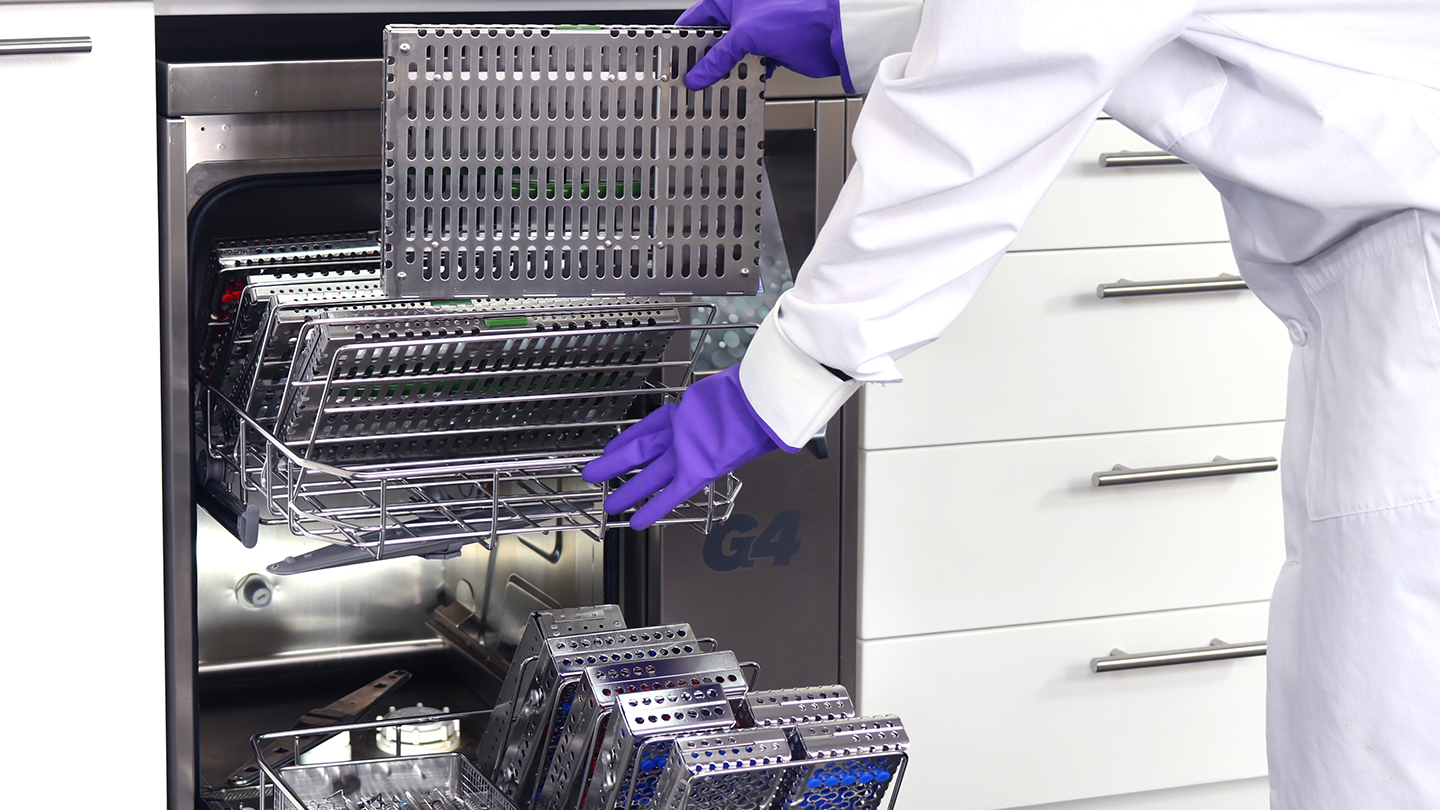
Automated washers work by using a powerful prewash cycle followed by high-pressure sprays to remove debris. Automated washers, such as SciCan’s HYDRIM, have many advantages over ultrasonic cleaners. They are safer for workers as presoaking, scrubbing and drying are not required. This prevents handling instruments reducing sharps injuries.
They also save time by not requiring presoaking, scrubbing and drying. These steps must be done with ultrasonic cleaners, but not automated washers. Once instruments are transported from the operatory, they can be immediately placed in the automated washer (after ensuring that hinged instruments are opened and instruments with parts are dissembled). After the drying cycle is completed, instruments can go directly into the sterilizer.
Check the care instructions for instruments to ensure they can be placed in the HYDRIM. For example, burs, fiberoptics and electrical devices can not be cleaned inside them.
Do not allow dirty instruments to sit dry for more than 10 minutes. Run the P1 Rinse and Hold cycle of the HYDRIM if instruments are going to sit dry for 10 minutes or longer.
In addition, automated washers send cycle information to your smartphone or computer. This allows automatic logging of cycle data, maintenance and service. Technicians can see this information remotely and provide remote support minimizing downtime.
Testing and Maintenance
Do you know how often an ultrasonic cleaner should be tested? If you said at least weekly, you are correct. Clean the unit and do an efficacy test according the MIFU for your unit.
Do you know how often an automated washer must be tested? The correct answer is daily. For SciCan’s HYDRIM, place a test indicator strip inside one load each day that it is used. If using a HYDRIM, run a chamber cleaning cycle every 25 loads and get it tested annually by a technician. If wash arms are not moving freely, remove the arms, rinse them with water, and reassemble. Check the filter daily for debris. If the filter is dirty, remove it, rinse under water and replace.
Log your test results as well as maintenance of your ultrasonic cleaner and automated washer and keep these records.
Can a dishwasher be used?
How about using a dishwasher? Absolutely not. Dishwashers neither clean or disinfect instruments as they do not remove microorganisms or proteins. They were not manufactured to clean medical instruments, so do not use them.
What is the Best Method to Clean Instruments?
What’s better? An ultrasonic cleaner or an automated washer? An automated washer is superior. Both the Canadian Standards Association (CSA) and the Royal College of Dental Surgeons (RCDSO) recommend using the automated washers. An automated washer saves time, is more effective and is safer for workers.
Make your first step, the right step. Use automated washers to clean instruments before they go in the sterilizer.
References
Standard of Practice Infection Prevention and Control in the Dental Office
HYDRIM 112W G4+ INSTRUMENT WASHER | Canada
Z314-23 – CSA: Medical Device Reprocessing