It depends! In fact, the clinical case determines how much choice you have with the cement system. Dentists have a trio of options to choose from: adhesives, self-adhesives, and conventional cements. You can weigh the selling points of each one against various practical factors, such as clinical presentation, restoration type and material, and your patient’s esthetic goals. So how does each option stack up? Let’s dive in.
Self-adhesive resin, meanwhile, combines strength with simplicity. You need a retentive tooth preparation and high-strength restorative material, but it involves fewer steps than an adhesive system. While this can save valuable time, self-adhesive cements have a weaker bond strength than adhesive cements.
The final option, conventional cementation, is the simplest to use. Conventional cements such as ZirCAD Cement can also involve fluoride release – an added value for patients prone to cavities. On the downside, this system provides the lowest bond strength and requires both a retentive preparation and the use of a high-strength restorative material such as zirconia. This cement category is best for clinical situations in which it is difficult to control isolation.
Tailoring Your Choice
The best choice of cementation system depends on the overall clinical situation, which encompasses several factors:
- Tooth Preparation: As mentioned earlier, conventional cements and self-adhesive cements offer comparatively low bond strength values. As such, retentive tooth preparations become critical for clinical success. (A retentive tooth preparation has a taper of approximately 6 degrees and a 4mm height.) The type of tooth preparation is less of a concern with adhesive cements, due to their high bond strength values; as such, adhesive cement can be used in all clinical scenarios where moisture control can be achieved.
- Type of restorative materials: High-strength ceramics like lithium disilicate and zirconia can be paired with any cement options, keeping tooth preparation guidelines in consideration. For example, IPS e.max lithium disilicate can be placed with all three cement systems (adhesive, self-adhesive, and conventional), with the caveat that self-adhesive and conventional cementation require a more aggressive preparation of 1.5mm to achieve a 1.5mm material thickness and optimize intrinsic strength. Low-strength materials and minimal-preparation cases require a high-bond strength and must be adhesively bonded.
- Clinical situation: Highly esthetic restorations such as anterior veneers or crowns should be adhesively cemented due to high bond strength, properties of the preparation, and colour stability. Self-adhesive cements and conventional cements do not provide the same esthetic results.
The Takeaway
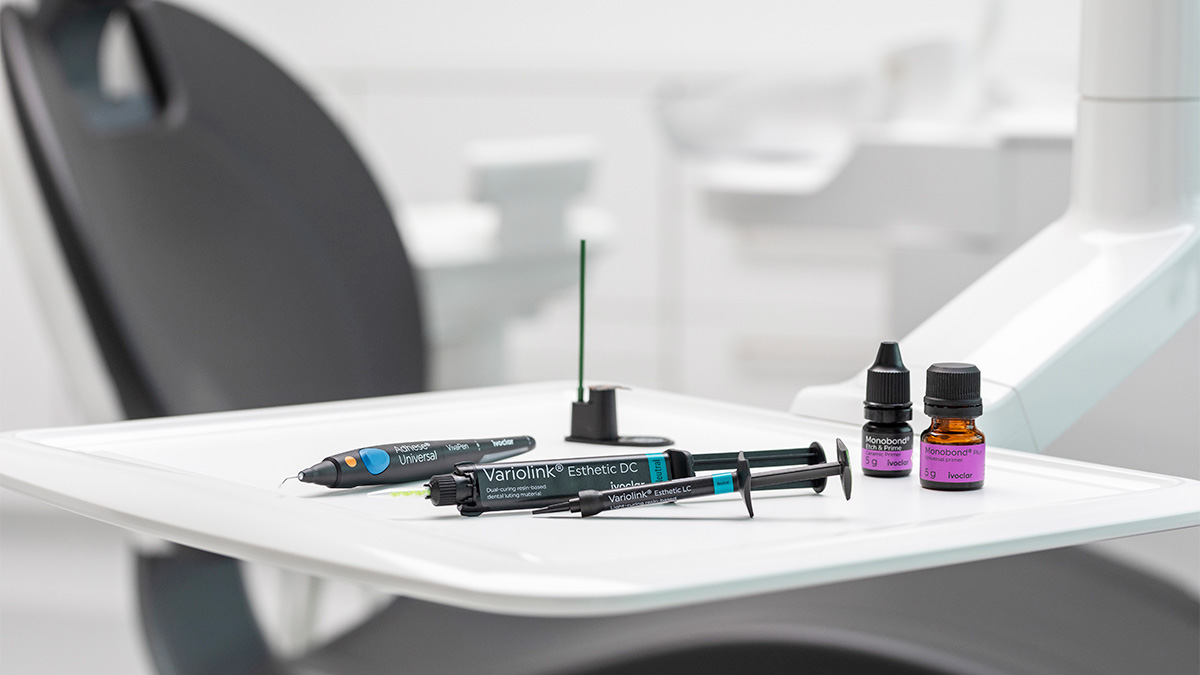
Choosing the right cement system for a restoration requires careful consideration of factors like the clinical situation, tooth preparation, and restorative material. By understanding the pros and cons of each option, you can make a clinical decision that supports the patient’s objectives, while making the procedure as efficient and effective as possible. In my practice, I use Variolink Esthetic as my go-to adhesive resin cement solution for all minimum-preparation and esthetic clinical cases to achieve both clinical longevity and optimal esthetic results.
Variolink Esthetic offers unparalleled advantages for dental restorations. Specifically, this adhesive resin cement provides exceptional bond strength for all types of ceramic restorations and materials. It comes with a generous selection of shade options, which allows customization for optimal esthetic outcomes, particularly in visible areas of the mouth. What’s more, Variolink Esthetic’s superior shade stability ensures lasting beauty and durability for the entire mouth. In summary: choosing a versatile adhesive cement like Variolink Esthetic provides reliable bonding, precise shade matching, and long-term success for all types of ceramic restorative materials.