
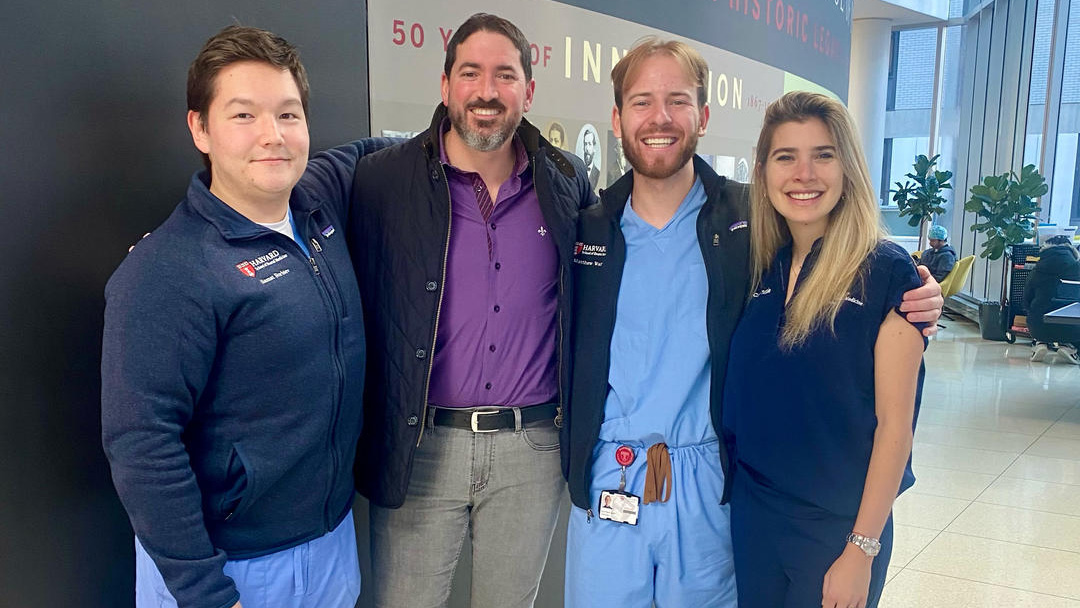
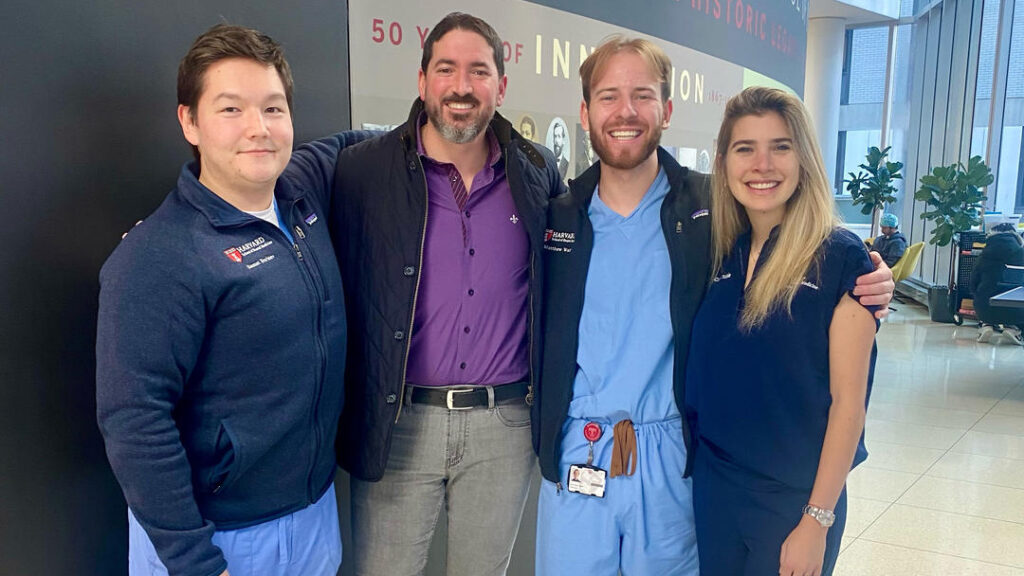
A research team at Harvard School of Dental Medicine (HSDM) is exploring how artificial intelligence (AI) could help detect head and neck cancer at much earlier stages, potentially improving survival and reducing care gaps.
Globally, head and neck cancer is the seventh most common cancer, accounting for more than 660,000 new cases and roughly 325,000 deaths each year. Despite advances in treatment, many cases are still diagnosed late because early-stage disease can be asymptomatic and population-wide screening options remain limited.
“AI, particularly machine learning and deep learning, is uniquely suited to identifying complex, high-dimensional patterns in data that humans cannot efficiently parse,” said Fernando Guastaldi, assistant professor of oral and maxillofacial surgery (OMFS) at HSDM and Massachusetts General Hospital, who led the research.
“By integrating imaging, pathology and genomic data, AI has the potential to detect cancer earlier, predict recurrence and identify high-risk patients,” Guastaldi added. “This could lead to earlier interventions, more personalized treatment and improved survival—especially in underserved settings.”
Study overview
The team published its findings in the Journal of Oral and Maxillofacial Surgery, examining both the opportunities and barriers associated with integrating AI and genomics into oral oncology practice.
The researchers found that genomic and molecular data can provide a detailed picture of the biological drivers of cancer, including mutations, gene-expression patterns, biomarker signatures and molecular subtypes that influence tumour behaviour and treatment response. However, each patient’s genomic profile can include millions of data points, making clinical interpretation a significant challenge without advanced computational tools.
Related: Researchers explore repurposing EGFR inhibitors to manage oral cancer pain and opioid tolerance
The study also highlights hurdles to real-world adoption, including data quality and standardization, algorithm transparency, clinical workflow integration, infrastructure limitations, and ethical and privacy concerns.
The team plans to expand its work by developing larger, more diverse datasets and advancing explainable AI models before moving toward clinical validation. Guastaldi said successful adoption will depend not only on technical performance, but also on transparency, equity and real-world usability in clinical settings.
“Our goal is to develop AI approaches that are not only powerful, but also transparent, equitable and clinically meaningful,” he said.
Guidelines in focus
In a related development, the American Dental Association’s Living Guideline Program is accepting public comments through Feb. 6 on the third installment of its evidence-based recommendations for the early detection and management of oral cancer.
The latest recommendations focus on the use of light-based adjunctive devices to help determine whether a biopsy is warranted. Earlier rounds of the guideline development process examined evidence related to brush cytology and vital staining as adjuncts in oral cancer detection.
The ADA is inviting input from dentists, other health-care professionals, patients, organizations and policymakers, with feedback intended to inform the final guidance and ensure it reflects current evidence and clinical realities.