Many dentists are familiar with this scenario: a fully booked appointment calendar, and a patient arrives with an urgent issue requiring immediate treatment. On such busy days, efficient workflows and streamlined processes are essential to effectively managing unexpected cases. Dr. Dan Butterman,[1] an experienced practitioner whose practice in Centennial, Colorado emphasizes implant and digital dentistry, highlights the productivity improvements made possible by using a digital workflow that includes a cloud-powered, wireless intraoral scanner through the following patient case.
A 67-year-old female patient presented to the practice stating that she had a chipped upper left tooth that felt sharp to her tongue. She reported no pain or discomfort other than the aforementioned roughness.
Clinical Findings:
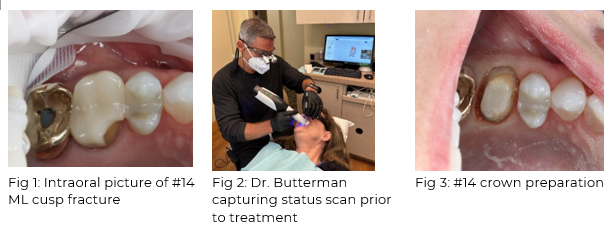
Clinical examination revealed a fractured mesial-lingual cusp on an existing porcelain crown on tooth #14. Radiographic examination confirmed a previous root canal treatment (RCT) with no concerns noted. An intraoral photograph was taken to document the cusp fracture.
Treatment Plan:
The patient was advised to replace the fractured crown to prevent recurrent decay under the fractured crown which could lead to a compromise of the endodontic treatment. We were able to treat the patient the same day.
Treatment:
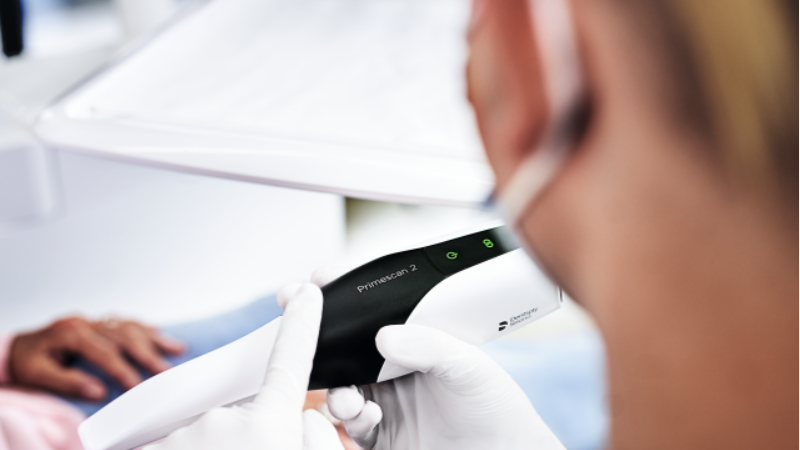
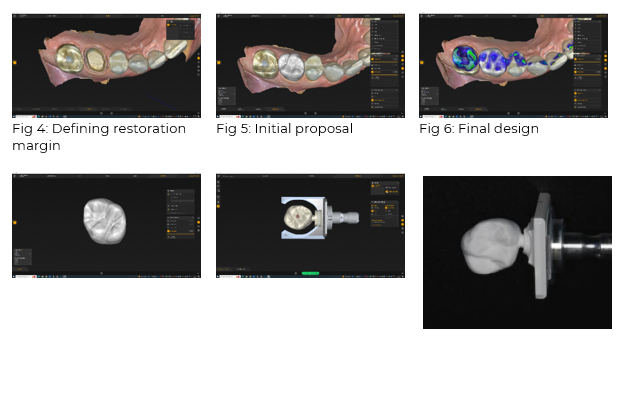
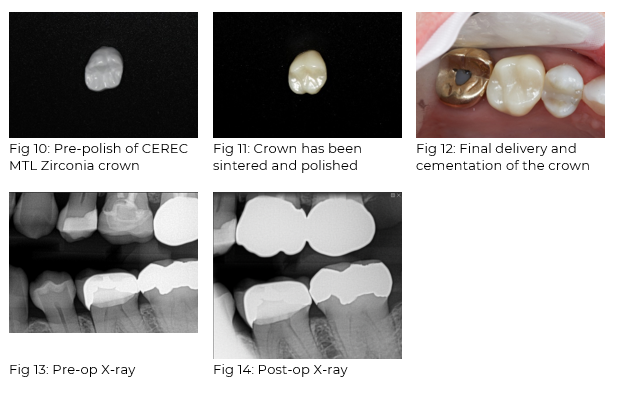
The patient received local anesthesia, and while the anesthetic took effect, I captured a preliminary status scan using Primescan 2.[1] The existing crown on tooth #14 was then removed using an Energo electric handpiece, and the tooth was prepared for a new restoration. Following preparation, a final scan was promptly acquired. Thanks to the prompt availability of all digital impression files in DS Core, I opened the scan in the inLab 22 Software, designed the new crown from CEREC MTL Zirconia (shade A2) and milled it in CEREC Primemill in under five minutes using Super Fast Milling Mode.
The crown underwent pre-polishing, sintering in the CEREC SpeedFire furnace, and micro-etching before final placement. After cementing the crown with Calibra Universal Cement, excess cement was carefully cleaned, and seating was confirmed radiographically. The entire procedure, from anesthesia to the final restoration, took approximately 90 minutes.
Outcome:
The patient expressed genuine satisfaction with the efficiency and convenience of the workflow and that we were able to complete the treatment on the same day. She was particularly impressed by the absence of adjustments needed during the final fitting of the crown.
Discussion:
I have utilized intraoral scanners in my practice for years. The enhanced portability of the latest digital intraoral scanning technology further improved workflow efficiency and facilitated seamless collaboration within the dental team and lab. Cloud-based digital data accessibility streamlined clinical operations, while the user-friendly nature of the intraoral scanner has allowed for delegation of scanning tasks within the practice, requiring minimal training. In this case, the ability to delegate meant that my assistant could take over several of the tasks enabling me to move in and out of the room to maximize efficiency for the overall practice workflow. Within the 90-minute procedure, my work time was reduced to between 30 and 40 minutes.
Due to the condition of the existing restoration, the only indicated treatment for this tooth was a new full coverage crown. Patients always have the option to decide against treatment and patient autonomy and informed decision-making are critical for building trust in dental care. The initial status scan provided clear visual aids, allowing for immediate patient engagement and understanding of the treatment rationale, thereby facilitating treatment acceptance and confidence in clinical decisions.
Conclusion:
This case demonstrates how modern digital workflows incorporating intraoral scanning technology, enhance operational efficiency and patient communication while enabling optimal clinical outcomes. As the wireless scanner captures data directly on the cloud platform, it can be evaluated from anywhere in the office or even elsewhere. This allows for the scanner to be moved immediately after scanning and swiftly prepared for use on another patient. These benefits helped to make same-day restorative dentistry possible for our patient in this case despite a busy schedule.
1Dr. Butterman has been compensated for use of his experiences and testimonials.
2Primescan 2 requires a paid subscription to DS Core
3Data on file. Available at contact@dentsplysirona.com