
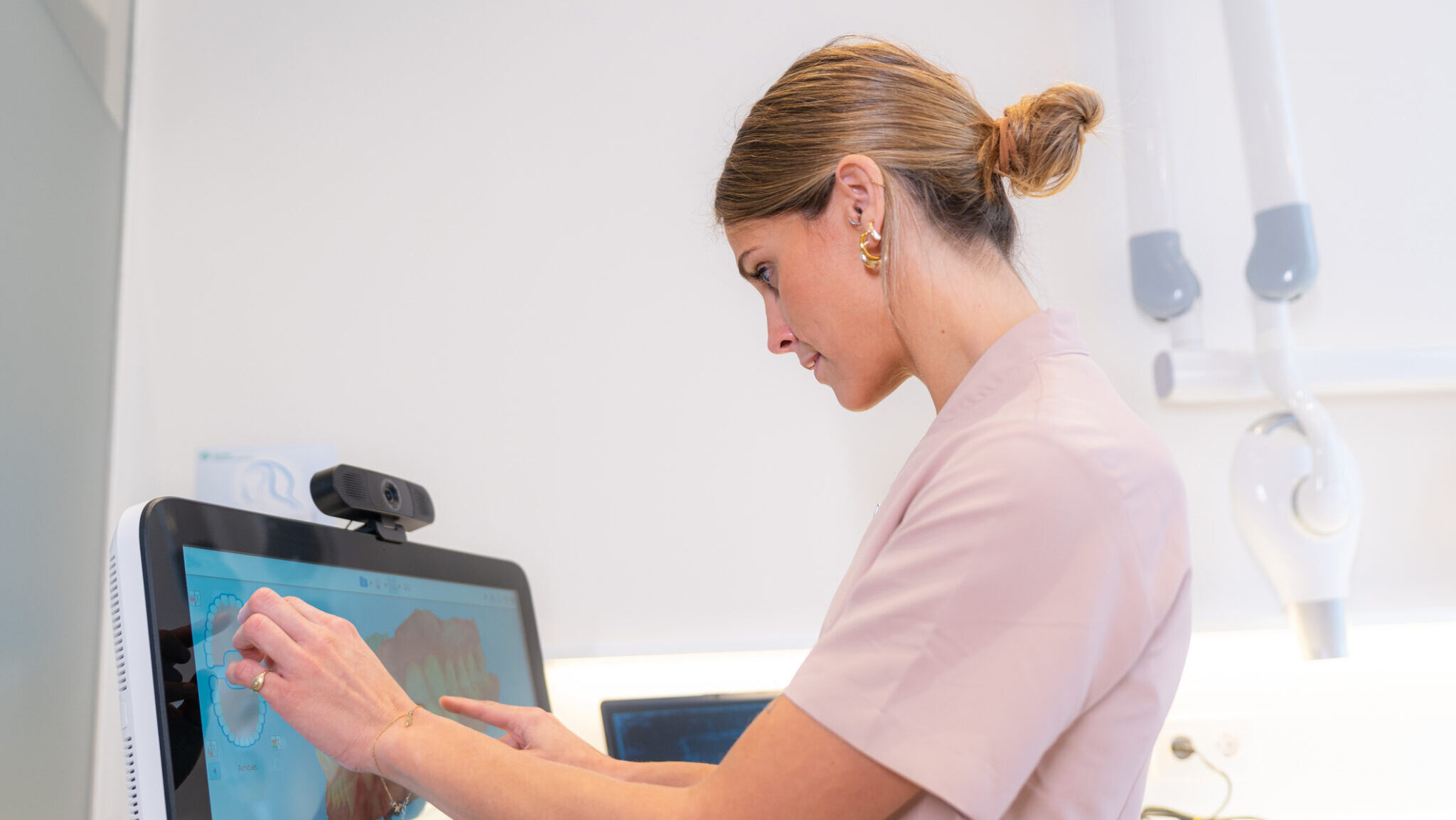
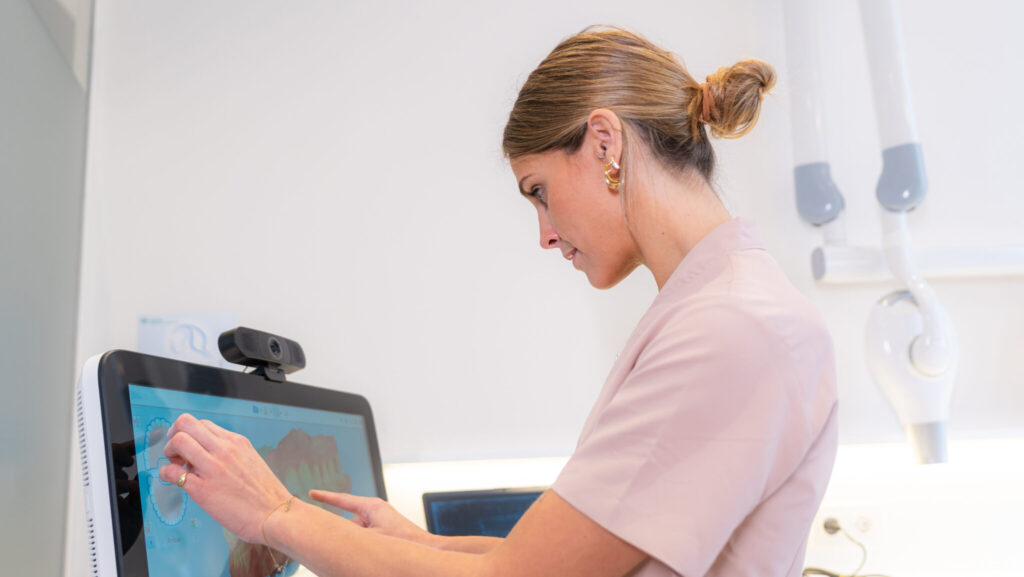
Artificial intelligence (AI) is spearheading transformative changes across numerous sectors, with dentistry standing out as a prime example. This cutting-edge technology is fundamentally reshaping the delivery of dental care, enhancing the precision of diagnostics, refining treatment methodologies, and elevating the overall management of patient care.
For dental professionals, the adoption of AI transcends mere technological integration; it involves augmenting their skills and capabilities to maintain the highest standards of patient care and accurate diagnostics. Below, we’ll explore a few AI advancements making an incredible impact in today’s dentistry.
10 Ground-Breaking Roles of AI in Dentistry
Precision in Diagnostics
The deployment of AI in dental diagnostics marks a significant advancement in medical technology. Sophisticated AI algorithms are adept at scrutinizing various forms of dental imaging, such as X-rays, CT scans and MRIs. These algorithms are designed to detect intricate patterns and anomalies that might escape even the most experienced professionals. The capability for early detection of issues – including cavities, gum disease and potential oral cancers – is a crucial advantage. Such early detection facilitated by AI can lead to timely and often life-saving treatments, significantly improving patient outcomes.
Optimization of Treatment Planning
AI’s impact is also profound in the domain of treatment planning. Dental professionals can leverage AI-enhanced software to simulate multiple scenarios, helping them to craft personalized and optimal treatment strategies for their patients. For instance, AI’s predictive capabilities in orthodontics allow for the anticipation of teeth movements under various treatment plans, enabling orthodontists to choose the most effective, minimally invasive, and aesthetically pleasing options. This not only delivers superior results but helps optimize treatment durations and boost patient satisfaction as well.
Enhancing Patient Management
AI can be utilized to significantly streamline patient management by automating the organization and analysis of extensive patient data, including treatment records and dental histories. This automation supports dentists in monitoring progress and foreseeing potential complications. Predictive AI models are particularly valuable as they can provide early warnings about possible health issues before they manifest, promoting a proactive approach in dental care.
Revolutionizing Routine Tasks
When employed within a dental practice, AI can simplify numerous routine tasks such as scheduling, billing and record-keeping. The automation of these tasks frees up staff to focus more on patient care rather than administrative duties. Additionally, incorporating AI-powered chatbots on the practice’s website or answering service can enhance patient engagement by promptly addressing inquiries and facilitating smoother appointment scheduling and other interactions, thereby improving operational efficiency.
Emotional Analytics for Enhanced Comfort
One pioneering implementation of AI involves the use of emotional analytics. Particularly advantageous for pediatric dentistry, AI systems equipped with facial recognition technology are being used to read children’s expressions during dental visits to assess their stress and anxiety levels. This technology allows dentists to adjust their approach in real-time so that they can create a more comforting environment. The goal is to use this technology to help alleviate fears and make visits less daunting for young patients.
Interactive AI and Gamification
Some pediatric clinics are also incorporating gamification into dental education through AI, which transforms routine hygiene practices into interactive and enjoyable activities. AI-powered apps and games are used to teach children about brushing techniques, flossing, and overall oral hygiene in an engaging way. This method educates children about oral health in a format they understand and enjoy while encouraging them to adopt healthy habits early on.
AI-Powered Custom Prosthetics
Another innovative use of AI in dentistry involves the design and creation of custom dental prosthetics. AI algorithms process imaging data to create precise models for dental restorations or orthodontic devices tailored specifically for the patient. These AI-designed prosthetics offer a more comfortable fit and effective treatment, significantly improving the management of dental corrections.
Elevating the Patient Experience
AI technologies can extend beyond operational and diagnostic improvements to significantly enrich the patient experience. For example, virtual reality (VR) integrated with AI provides interactive and comprehensible demonstrations of treatment plans and outcomes, greatly aiding in patient education. As patients gain a better understanding through this AI-driven personalized dental care, it helps foster improved health outcomes and cultivates a deeper trust and satisfaction among patients.
AI-Enhanced Oral Microbiome Analysis
A recent innovation involves the use of AI in analyzing the oral microbiome. Advanced AI algorithms are being employed to decode the complex bacterial ecosystems within the mouth. This analysis helps in identifying specific bacterial strains that may contribute to oral diseases such as tooth decay and gum disease. By understanding the microbial composition, dentists can provide highly personalized recommendations for oral hygiene or treatments that target harmful bacteria while preserving beneficial ones, leading to better preventive care and overall oral health.
Real-Time Feedback Systems in Dental Training
Last, but not least, AI is revolutionizing dental education through real-time feedback systems. These systems use AI to analyze the techniques of students during procedures, offering instant feedback on their performance. By integrating these systems into simulators, trainees can receive actionable insights on how to improve their drilling, filling, and surgical techniques. This not only accelerates the learning curve but also helps students adopt best practices early in their training, thus enriching the quality of care they will provide in their future practices.
Challenges and Ethical Considerations
Despite the promising horizon of AI in dentistry, its integration comes with challenges and ethical considerations. Issues such as data privacy, potential algorithm bias, adherence to regulatory standards and the necessity for ongoing professional training are paramount. It is critical that dentists and AI systems collaborate closely to prioritize patient care while navigating these complexities.
As AI continues to evolve, its role in enhancing dental practice is indisputable. However, it is imperative to maintain vigilant oversight so that its implementation adheres to the principle of “first, do no harm.”
Embracing the Future of AI for a Transformative Dental Practice
From what we’ve seen so far, the adoption of AI in dentistry is set to totally redefine the landscape of dental care. By increasing diagnostic accuracy, enriching treatment planning and improving patient management, AI empowers dental professionals to deliver care that is both more efficient and effective.
Going forward, AI integration is essential for dental professionals to stay at the forefront of their field and remain well-equipped to meet the complex demands of modern dental care with the most advanced tools available.
References
- https://adanews.ada.org/ada-news/2023/june/artificial-intelligence-and-dentistry/
- https://publishing.rcseng.ac.uk/doi/10.1308/rcsbull.2023.132#:~:text=Predictive%20AI%20can%20dramatically%20improve,to%20take%20a%20closer%20look.
- https://www.dentistryiq.com/practice-management/industry/article/14296391/ai-in-dentistry-the-revolution-is-now
About the Author

Dr. Sheila Harris is owner of Natomas Crossing Dental Care in Sacramento, California. Dr. Harris has been a licensed dentist since 2000, after graduating from Northwestern University School of Dentistry. She is a member of numerous dental organizations and has been selected as one of the top general dentists in the Sacramento area for the past five years.