
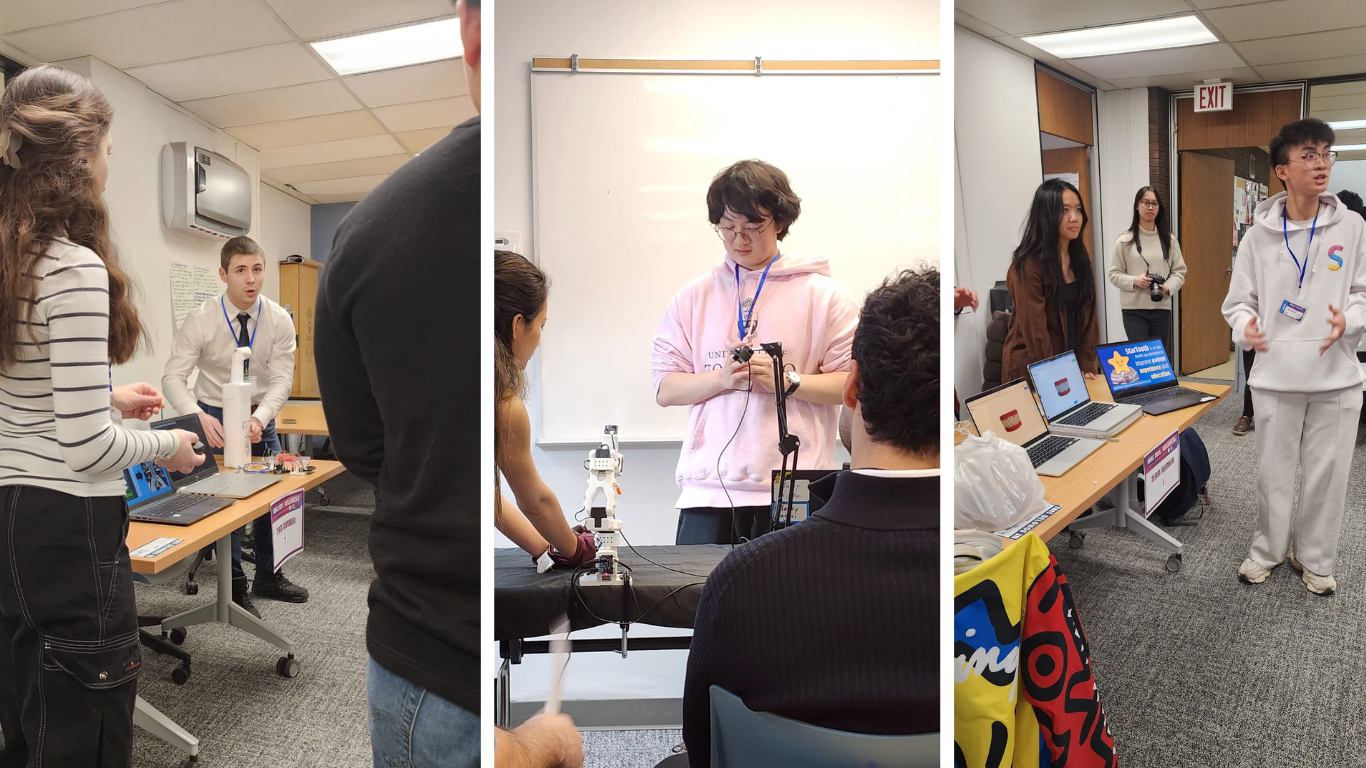
A prototype aimed at supporting gum healing using electromagnetic stimulation earned first place at the University of Toronto’s bioengineering competition, SmileHacks, on Saturday.
Ten teams — primarily undergraduate students — presented ideas ranging from xerostomia solutions and gamified pediatric oral health tools to robotic automation designed to address staffing shortages in dental offices.
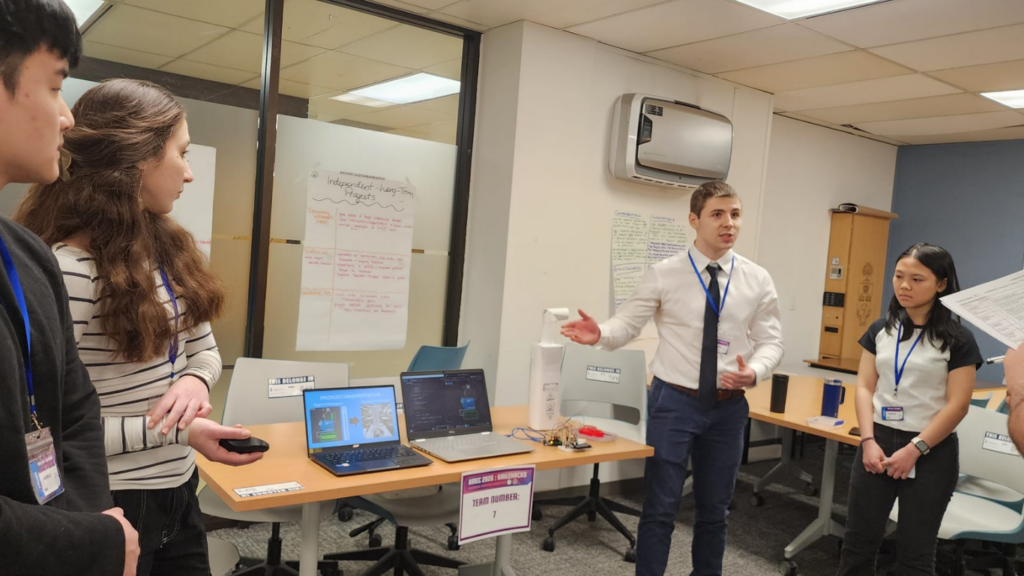
The $800 first-place prize went to Danai Adamopolous, Jaehyuk Lee, Aleksey Goroshko and Han Hsu Eain. Judges said the team’s early-stage prototype, which they called “Periowave,” stood out for combining research, clinical consultation and a working model.
“They spoke to the dean of dentistry about his research, incorporated a bit of that, and they had a prototype ready,” said Mayur Reddy, a third-year dentistry student who served as a judge. “It was a bunch of factors that gave them an aggregate score that was higher than everybody else.”
Fellow judge June Chen, also a third-year dentistry student, said the team supported its concept with research suggesting certain electromagnetic field therapies may enhance angiogenic signalling — a process involved in new blood vessel formation during tissue repair.
“I feel like that might help a lot in healing, especially post-surgery,” Chen said.
Research exploring electromagnetic field therapies has primarily examined wound-healing mechanisms, and its application in established gum recession is still emerging.
‘They spoke to 10 dentists’
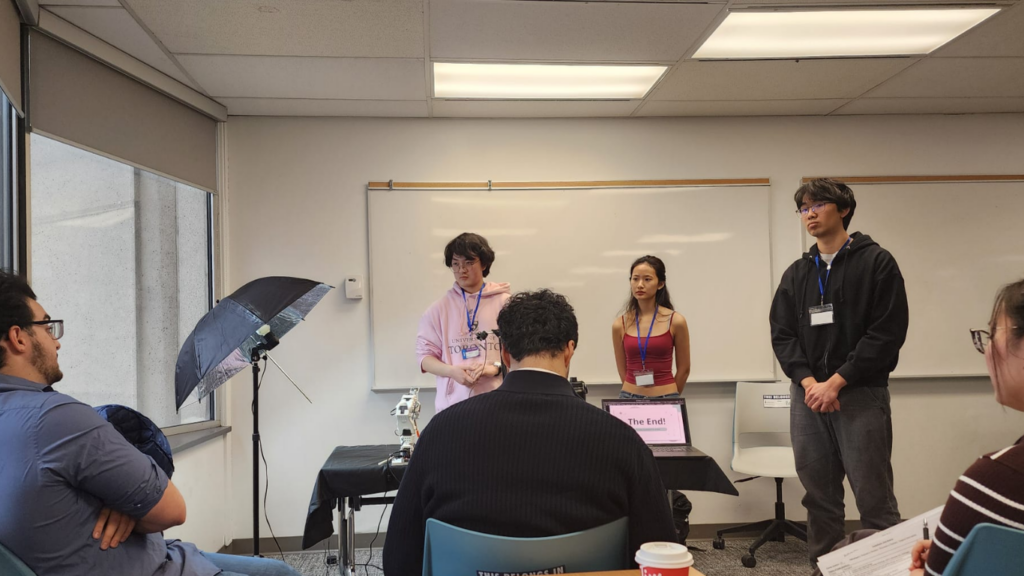
Second place — and $400 — went to Yang Yang Zhang, Emmy Dinh and Jacky Li for “Auto-Sucker 3000,” a robotic arm designed to assist with saliva suction. The team trained the device using machine learning and consulted practising clinicians before developing the concept.
“They actually went and spoke with 10 dentists,” Chen said. “They had a clear problem statement backed by research. The problem was staffing issues — especially dental assistant shortages.”
Chen said the project reflects broader automation trends emerging in dentistry.
“The fact that they built something and then used machine learning to train that robot was really impressive, especially within these 24 hours,” she said.
Third place went to StarTooth — Kaley Sung, Jack Le, Pascal Petherick and Hasan Malik — for a dual-interface app designed to improve communication between dentists and patients. The platform would allow radiographs to be integrated into a 3D visual model to help patients better understand diagnoses and treatment planning.
Related: Weekly Wisdom: How to Improve Patient Communication
“It can be hard to show patients what’s really happening in their mouth,” Chen said. “Having an integrative tool where radiographs can be plotted onto a 3D model helps promote patient involvement in their care.”
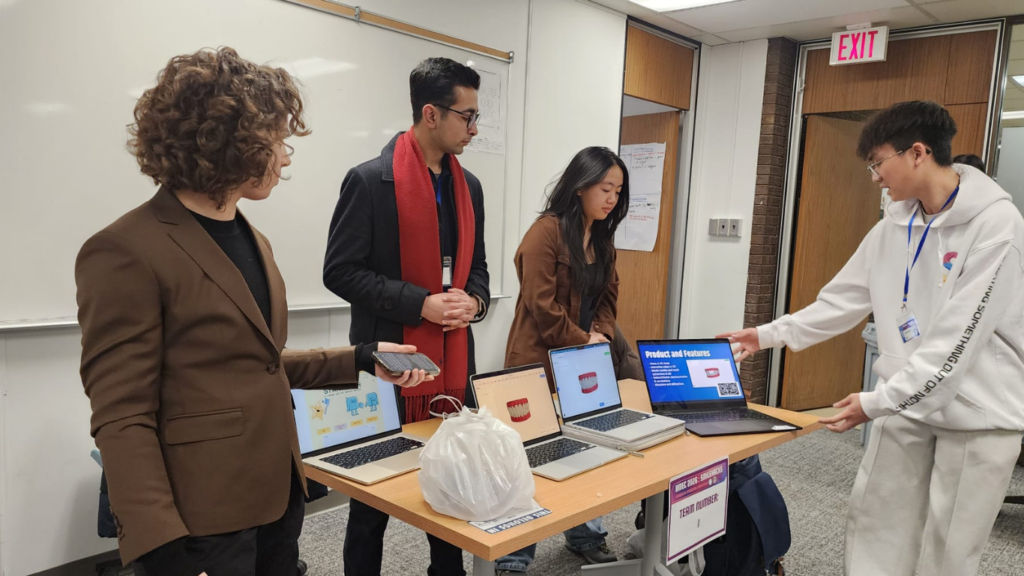
CDCP expansion drives dental focus
Judges emphasized that all 10 teams demonstrated strong research and preparation and encouraged participants to continue developing their ideas. The top three stood out for presenting physical prototypes, clearly defined clinical pain points and well-developed solutions within the competition’s 24-hour timeframe.
While most participants were from the University of Toronto, organizers said this year’s Biomedical Engineering Design Competition (BMEC) marked the first time the event expanded beyond the university, with a specific focus on dental health.
Organizers said dentistry was selected as the competition theme as oral health gains national attention.
As of Jan. 31, more than 3.8 million Canadians have received care under the Canadian Dental Care Plan (CDCP), according to federal figures. A total of 6.27 million people have been approved for coverage under the plan, which launched in 2023 and expanded in May 2025 to eligible Canadians aged 18 to 64.
Related: CDCP update: 3.8 million receive dental care as approvals reach 6.27 million