
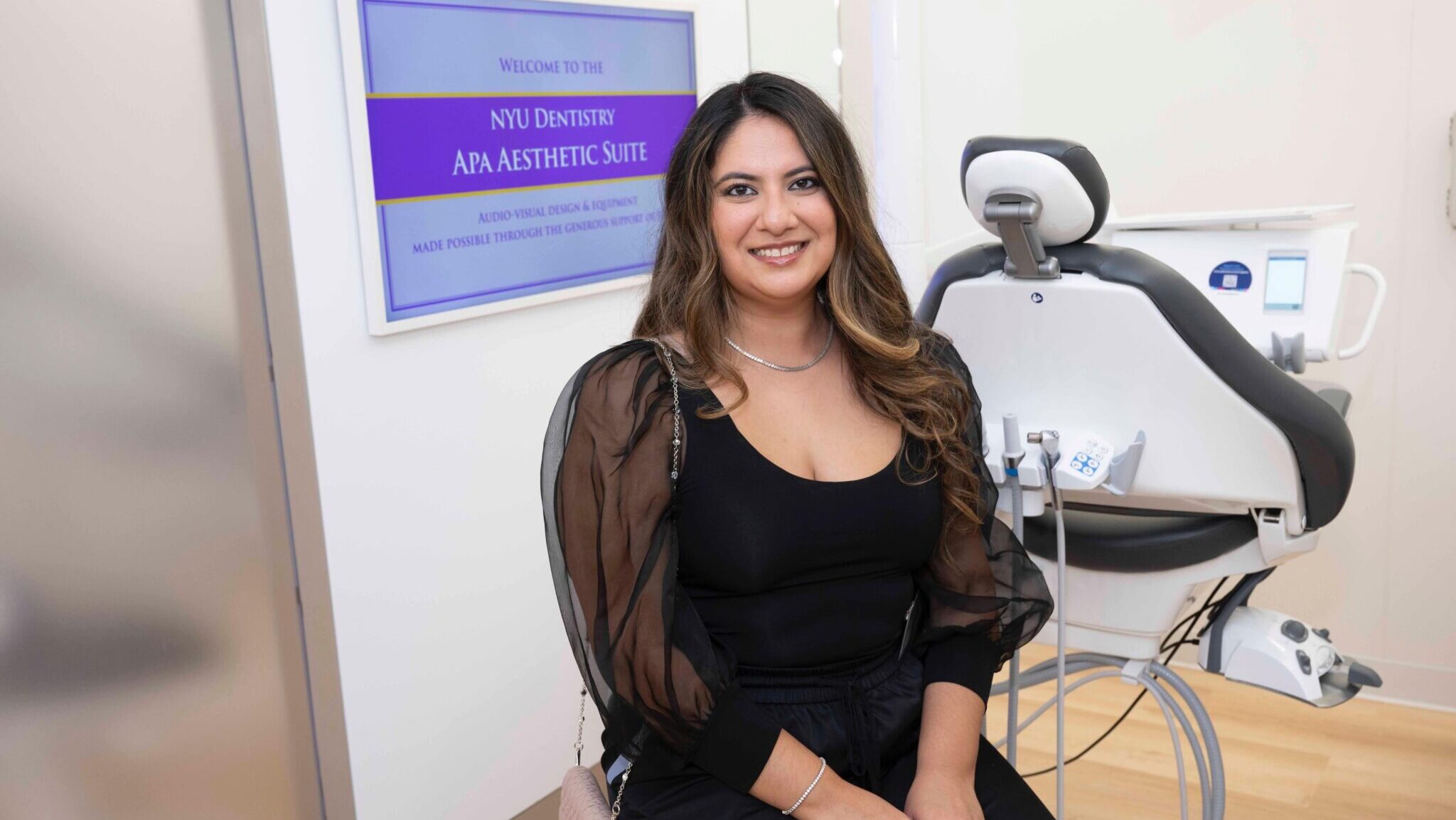
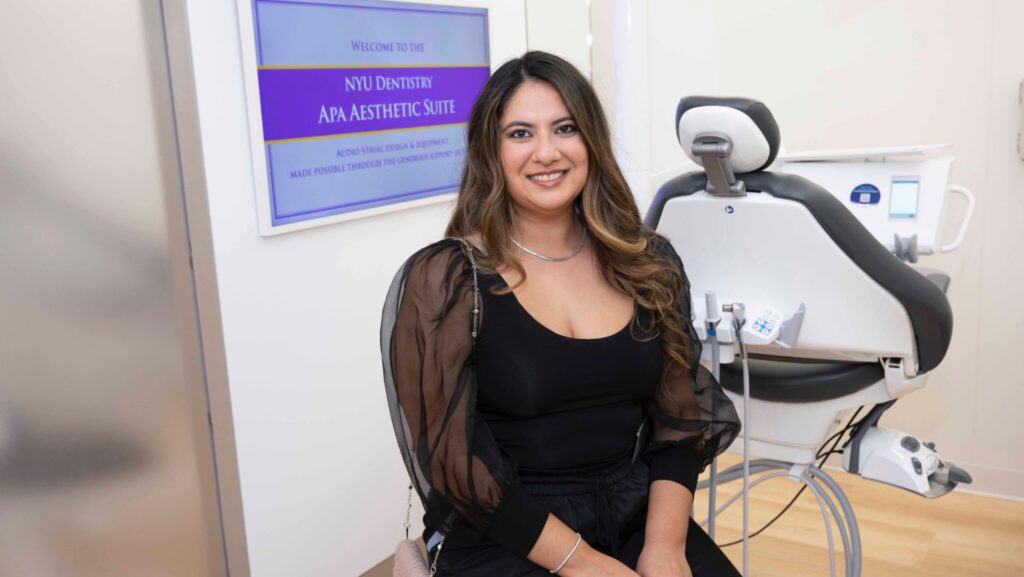
Dr. Nikita Puri always knew she wanted to become a dentist and was open to exploring what dental education looked like beyond Canada.
After completing her undergraduate degree at Queen’s University, Puri explored studying in the U.S. but was quickly deterred by the high cost of tuition. When her sister decided to attend medical school in Europe, Puri was inspired to investigate dental school opportunities overseas.
By the time she was ready to apply, the only schools with open applications were in Poland and Hungary. She enrolled at Poznan University of Medical Sciences in Poland, planning to transfer later to join her sister in the U.K. However, during her first year of dental school, she began researching other European dental schools and her plans changed.
“I found that there are actually a lot of dental schools in Europe that teach in English. One option was Spain, and I thought—coming from Canada, where we don’t get much sun—Spain might be a fun option. So, I applied, got in, and ended up going there,” says Puri.
Puri graduated from Universidad Europea de Madrid with a Bachelor of Dental Surgery in 2023. She then continued further training at the Apa Advanced Clinical Fellowship in Aesthetic Dentistry at the New York University College of Dentistry. After staying on as the program’s Chief Fellow, she is now able to practice as a dentist in the U.S. She has since received many inquiries from students interested in her experience.

The application process
For most European schools, no undergraduate degree is required —students can apply directly out of high school, which is an attractive option for many. However, each European school has its own specific requirements, so research into the application process is essential before applying.
“I think Europe is a great option for people who really want to become a dentist. Canada has a lot less dental schools than other countries, which can make it quite competitive,” she says, “It is a great choice for those who are ready to start studying dentistry right away and want to go straight from high school or even during their undergrad.”
For example, Puri’s application process to Poland involved chemistry, biology, and physics exams at the Toronto embassy, along with an interview. A dedicated University representative helped with applications and visas, easing the process for high school and undergraduate students.
If a student requires financial aid, Puri recommends checking with Canadian banks and securing assistance as early as possible—ideally before accepting an offer.
European dental school program structure
European dental programs typically last five to six years, compared to four in North America. The first couple of years focus on core science courses such as anatomy and microbiology. From the third year onward, students gain more clinical training and dental specialization.
“Looking back, if I could rewind and do it all again, I would have gone straight from high school,” says Puri. “The courses are tailored to exactly what you need for dental school. When I went to Queen’s, I had to take a broad range of courses including those not relevant to dentistry. A lot of what I studied then, I don’t use as a dentist today.”
Challenges of studying abroad
Despite many benefits—lower tuition, less competition, and the excitement of experiencing new cultures—studying abroad comes with challenges. Some of the biggest being homesickness, creating a support system abroad and navigating a new culture.
Language barriers can also be difficult if you study in a country where English isn’t the primary language.
“At the university, in order to be able to treat patients, you must pass a language test in Spanish,” says Puri. “It was difficult balancing dental school and becoming fluent in another language.”
“Although it was hard, I’m really happy that I am now fluent in Spanish ,” she adds. “I use Spanish frequently in the U.S. with patients. It has given me more career opportunities as well since I have been invited to speak at conferences in Spanish speaking countries. Looking back, I am grateful that learning a new language was a part of my curriculum.”
Transitioning back to North America
Canada has reciprocal accreditation agreements with four countries: Australia, Ireland, New Zealand, and the United States. Graduates of dental programs accredited by the respective dental councils in these countries can apply for certification with the National Dental Examining Board of Canada (NDEB).
For dentists like Puri, who are considered foreign-trained, credentials must be validated to meet Canadian standards. There are two primary NDEB pathways:
- NDEB Equivalency Process — Submit your degree and transcripts for approval, then pass three separate exams.
- Accredited Qualifying or Degree Completion Program — Pass the Advanced Dental Admission Test (ADAT) or, for some schools, the AFK exam to be considered for admission. Then complete the final two years of a DDS or DMD program before taking the NDEB exam.
“I hadn’t completely understood the timeline of the equivalency process when I decided to go to Europe,” says Puri, now practicing in the U.S. “It’s a long process with multiple exams offered only twice a year and limited seats. You must pass one to move on to the next and it can take years to complete.”
According to the NDEB’s Annual Report 2023/2024, 1,984 equivalency process applications were created in the fiscal year 2023/2024 and 1,746 in 2023/2022. The number of candidates who successfully completed the Equivalency Process in 2023/2024 was 445 while in 2023/2024 it was 321. Each year, over 50% of the dentists certified with NDEB receive their primary dental education outside of Canada.
“I know people who failed an exam and had to wait six months to rewrite it,” she adds. “When I did my U.S. boards, exam seats were available every day, so it was more accessible—and that makes the process of coming back to Canada more challenging.”
In the most recent fiscal year of 2023/2024, the success rate for the Equivalency Process exams is as follows: Assessment of Fundamental Knowledge (AFK) – 33.96%, Assessment of Clinical Judgement (ACJ) – 69.15%, NDECC Situational Judgement – 60.71%, and NDECC Clinical Skills Statistics – 42.61%.
More candidates are choosing the ADAT option in recent years. In 2024, over 1,000 people took the ADAT, the most administrations than any other year in the examination’s history.
Another option is completing a Commission on Dental Accreditation (CODA) program in the U.S. For example, an advanced standing program can be 2–3 years and allows graduates to be able to apply for certification with the NDEB. There is another equivalency path for those who have specialized in a dental field. There are many different pathways available so doing your research is paramount.
Alternatives to transitioning back to North America
Those with a European dentistry degree can practice as a dentist in any European country as long as they speak the local language. Some countries will ask for a government official language test or proof of studying in that language. Puri also holds a license to practice dentistry in the U.K. even though she graduated after Brexit. The U.K. still allows European graduates to apply for a licence to practice but they review this policy every few years to decide whether or not to extend or close this pathway.
“Having the option to practice in the U.K. without doing any exams or further training made studying in Europe an attractive option. Now, I think it is important to consider that the option to apply for a U.K. licence without exams may not exist in the future.”
Is it worth it to study abroad?
For Puri, the answer is yes. She gained a broader understanding of global health and patient care and believes that, despite the challenges, studying in Europe shaped her both academically and personally – through language, cultural immersion and the lifelong connections she formed along the way.
However, for students determined to return to Canada to practice, research and planning are essential. Understanding the equivalency process and its timeline is key.
“It depends on if you have flexibility in the country you want to practice in and if you’re willing to invest time after graduation to do more exams or further training,” says Puri.
Key advice for future students planning to study abroad
- Clarify your goals: Know if you plan to return to Canada and understand the equivalency process early.
- Prepare linguistically: Start learning the local language before arrival.
- Plan your finances: Explore funding options with Canadian banks well in advance.
- Stay flexible: The U.S. offers more postgraduate licensing pathways.
- Embrace the experience: Take advantage of the cultural growth and travel opportunities that come with studying abroad.
About the author

Marley Gieseler is the Managing Editor for the Oral Health Group. She is responsible for writing, editing and managing content across all OHG brands. She is a Media Studies graduate from the University of Guelph-Humber. If interested in submitting content to Oral Health, please reach out to her at marley@newcom.ca.