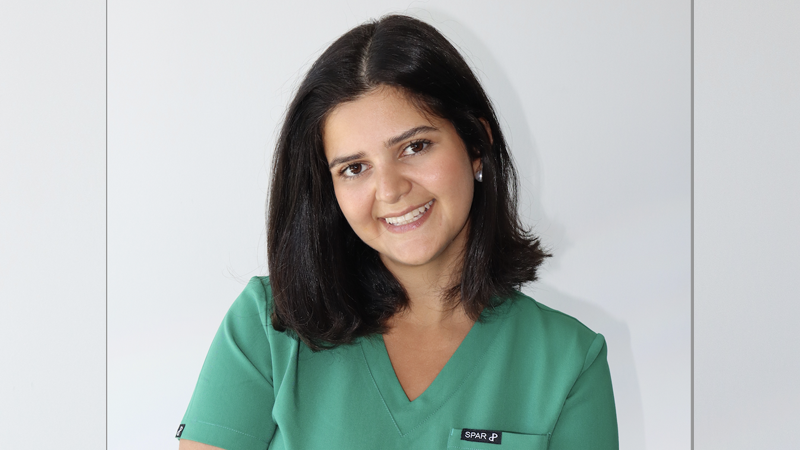
Next Gen of the Month is a monthly Q&A with a dental student or new dentist where we learn more about their experiences and accomplishments thus far in their dentistry journey. This month we are featuring Sara Arbabzadehbroujeni, a creative and patient-focused dental student at Dalhousie University School of Dentistry. She finds joy in hosting and writing, and as a member of the Comfidental team, she is working to improve patient comfort in dentistry.
What do you like to do for fun?
I really love hosting; it’s one of the ways I feel most myself. Bringing people together, creating an atmosphere, and curating experiences, whether it’s an intimate dinner, a wine-tasting night, or a more spontaneous gathering, feels both grounding and creative to me.
Hosting is how I slow down, connect, and turn everyday moments into something memorable.
Outside of that, writing is a big outlet for me. It gives me space to process ideas, emotions, and experiences in a way that feels honest and reflective. I’m drawn to multipurpose spaces and events, new environments, and anything that involves trying new things, travelling, and exploring unfamiliar places, even within a city I already know.
At the core of it all, I hope to live in the space between disciplines to be the best artist among dentists and the best dentist among artists.
You and a group of other dental students created the brand “Comfidental” with the mission of “bringing comfort to dentistry.” Can you tell us more about the company and why you started it?
Comfidental, co-founded by Arshia Sabet and Asra Khonsari, began with the development of ComfiDam, a re-imagined dental dam designed to address one of the most common pain points in clinical dentistry: patient discomfort. As students, we repeatedly noticed that while dental dams are essential for isolation and safety, they’re often associated with anxiety, breathing discomfort, and resistance from patients. We felt that comfort was being treated as secondary to function, and we wanted to challenge that.
ComfiDam was created with the goal of preserving the clinical benefits of traditional dental dams while improving the patient experience. By rethinking the material properties and overall design, we aim to make isolation feel less restrictive and more tolerable for patients, without compromising safety or efficiency for clinicians. The project has pushed us beyond the classroom into prototyping, patent development, and user-centred design, and it’s reinforced our belief that dentistry has real room for innovation when we listen closely to patient experiences.
Who is your biggest inspiration?
My biggest inspiration is my mother, and more broadly, my parents’ relationship. They’re both dentists, and growing up, I was convinced I didn’t want a shared profession or a business relationship to overshadow a romantic one. But with time, my perspective shifted. Looking back, I realize that what I witnessed wasn’t a business partnership and it was in fact a shared set of values. Their generosity, patient-centred approach, and genuine care for the people they served were deeply mutual, and those values extended far beyond the clinic. Seeing how compassion, respect, and purpose shaped both their work and their relationship has had a profound influence on me. It’s the kind of balance, between love, vocation, and integrity, that I hope to build in my own life.
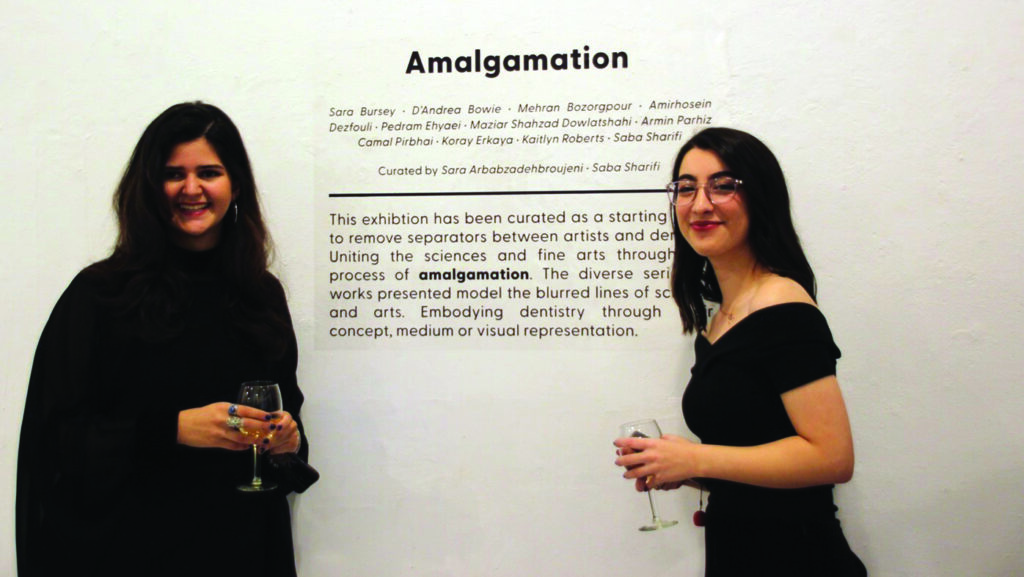
You hosted “Amalgamation,” a two-week public art exhibition with the theme of dentistry. Do you plan on hosting similar events in the future?
Putting together Amalgamation showed me that truly any idea, no matter how big or unconventional, can be brought to life if you’re brave enough to go after it. The experience taught me that no idea is impossible when you’re willing to ask for help, lean on community, and accept guidance from others. More than anything, it highlighted how essential courage is, the courage to start, to take up space, and to trust your vision before it feels fully formed.
Because of that, absolutely yes, I hope to create an extension of Amalgamation while in dental school with the support of instructors, students, and the wider community, I’d love to continue exploring dentistry as a cultural and artistic conversation, and to build spaces where ideas can exist beyond traditional academic or clinical boundaries.