


With increasing awareness of climate change, sustainability in dentistry has become more than just a talking point—it’s quickly becoming an expectation. Dentistry contributes roughly 3% of the total healthcare industry’s carbon footprint, largely due to disposable products, energy consumption, and travel emissions.1 This means dental professionals and practice owners have a unique opportunity: to deliver excellent patient care while also reducing their environmental impact.
Taking steps toward sustainability doesn’t have to be overwhelming. Simple but meaningful initiatives—such as developing a clear sustainability plan, carefully evaluating supply chain choices, and incorporating digital tools—can significantly reduce waste and emissions.2 Even small changes add up, and when adopted across practices, the impact can be substantial.
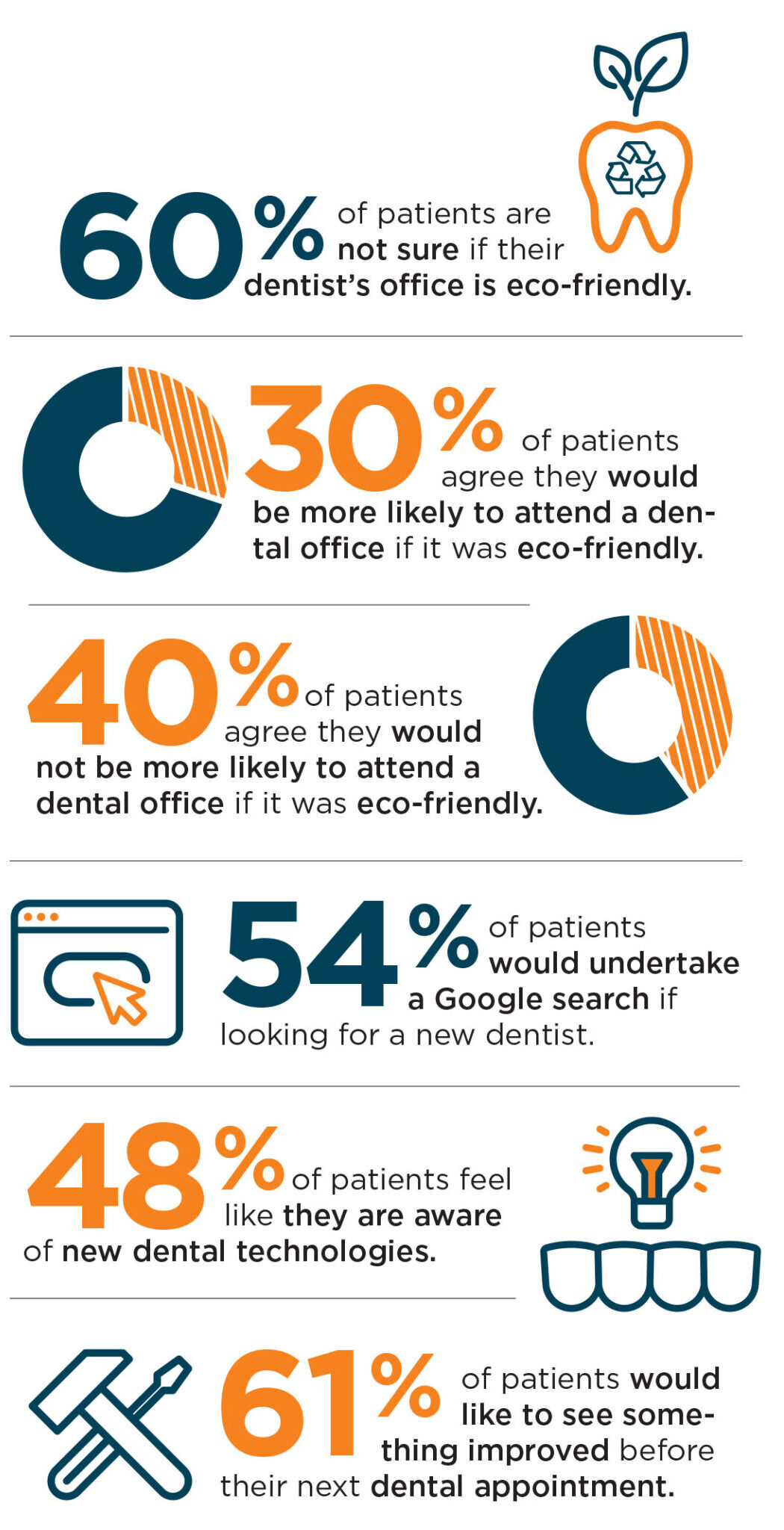
But sustainability isn’t just good for the planet—it’s also good for business. Patients are increasingly mindful of the environmental values of the companies they support. In one survey, more than half of patients admitted they didn’t know whether their dental office was eco-friendly. This means practices that are making changes have a powerful opportunity to stand out. By communicating your eco-friendly efforts in your marketing, you not only showcase your commitment to patients’ oral health, but also to the health of the planet.
One-third of patients said they would be more likely to visit a dental office if it were eco-friendly. That figure climbs even higher among younger patients, with more than half of those under 30 saying they’d prefer an environmentally conscious dental practice. If your office is looking to attract a younger demographic, highlighting your sustainability efforts could be a key differentiator that sets you apart from competitors.
References
- https://www.oralhealthgroup.com/features/the-hottest-topics-in-dental-hygiene-for-2025sustainability-in-dentistry/
- https://www.oralhealthgroup.com/features/getting-serious-about-sustainability-in-dentistry/
As seen in the print issue of Oral Health November 2025
In 2024 Bramm Research, a third-party independent research house, conducted a confidential online survey of general population Canadians who have visited a dentist within the past two years. The survey was limited to those 25 years or older, and nine age brackets were filled proportionally to the Canadian general population. Provincial proportions were also filled to proportionally represent English speakers in Canada of age 25 or higher. The target sample for gender was 50% female and 50% male. The survey launched on Friday, September 20th and closed on Thursday, October 3rd for a total of 14 days in field, and the number of completed responses was 1,000, the same as in 2019. With a total sample of 1,000, the margin of error is plus or minus 3.1 percentage points at the 95 percent confidence level. If, for example, 50% of the sample indicated that agreed with a statement, then we can be reasonably sure (19 times out of 20) of an accuracy within +/- 3.1%. This means that a total census would reveal an answer of not less than 46.9% and not more than 53.1%.
Sponsored by
