
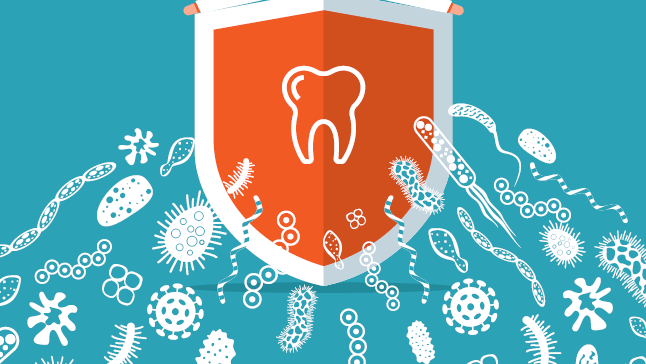
Did you know 90% of bacteria live in biofilms?1 Understanding the complexities of biofilm and the function of Dental Unit Waterlines (DUWLs) is essential for dental hygienists dedicated to providing safe, high-quality care. This article aims to demystify the processes involved in maintaining DUWLs by highlighting the importance of routine testing, effective product use, and best practices for waterline maintenance.
Biofilm is a complex aggregation of microorganisms that are protected by a sticky, gooey adhesive matrix known as the extracellular polymeric substance (EPS).2 This structure is ubiquitous in natural environments, including the oral cavity and dental waterlines, where it can pose significant challenges. In dental settings, biofilm can form in waterlines and handpieces, potentially exposing patients and clinicians to harmful pathogens through aerosolized water.
The Sterisil product line by Solmetex is a great resource for clinicians especially as it is the only end-to-end solution, and with DUWL products that are designed to work together to help in mitigating biofilm-related risks.
The importance of DUWL products
It is important to find products and tools that allow maximum safety, meet regulatory standards, and create efficiency in workflows. The first crucial aspects of water safety for dental practices are water treatment and maintenance. Since we know bacteria can double every 4–20 minutes, daily treatment of waterlines is crucial to maintain a minimal amount of colony forming units (CFUs) of heterotrophic bacteria.3 Utilizing straws with silver-activated technology within the unit’s water bottle is a best practice as the straw continuously disinfects the water by releasing silver ions.
The second crucial aspect of water safety for dental practices is testing. Monthly testing of waterlines has several benefits including meeting regulatory standards and understanding when something goes wrong. With Sterisil’s FASTCheck15™, in-office screening can be accomplished chairside and within 15 minutes. This allows fast, immediate, and affordable pass/fail results as compared to mailing a test to a lab – which can take days or weeks for results to be delivered.
Shocking is the third significant aspect of waterline safety. DUWLs should be shocked regularly to eliminate the majority of microbes and also whenever a test fails, ensuring comprehensive management of microbial growth. Together, these products form a robust defensive and end-to-end solution against biofilm, enabling dental practices to maintain high water quality standards with minimal effort.
The SAFEWATER Solution Protocol
It is essential for practices to incorporate a safe water protocol to enhance their waterline maintenance strategy to comply with current and changing health regulations. Neglecting waterline maintenance can lead to severe health risks, as evidenced by past outbreaks of Mycobacterium abscessus infections in pediatric dental settings.4 Contaminated waterlines can harbor pathogens that pose a risk to immunocompromised patients and disrupt practice operations through potential legal implications.
Sterisil’s SAFEWATER Solution Protocol is established to help clinicians and practice owners understand and comply with health recommendations and regulations. Though it can be daunting and a bit confusing when understanding how to adhere to guidelines set by authoritative bodies, reaching out to a water safety product manufacturer, like the Sterisil team, can help shed some light on what is recommended for your practice.
Incorporating an effective DUWL maintenance protocol is not merely a regulatory obligation but a critical component of patient and clinician safety in dental practices. By understanding the role of biofilm and implementing end-to-end solutions and safe water protocols, dental hygienists can proactively and confidently manage waterlines, ensuring a safe and compliant practice environment. 
Discloser: Melissa Turner is a Key Opinion Leader for Solmetex.
References
- https://www.ncbi.nlm.nih.gov/pmc/articles/PMC3312703/
- https://www.ncbi.nlm.nih.gov/pmc/articles/PMC2732559/#:~:text=Biofilms%20are%20co mposed%20primarily%20of,is%20primarily%20composed%20of%20polysaccharides.
- https://www.pnnl.gov/science/highlights/highlight.asp?id=879#:~:text=Why%20it%20matt ers%3A%20Bacteria%20are,as%20pathogenic%20strains%20of%20E
- https://www.wtkr.com/2018/01/17/whistleblower-claims-virginia-pediatric-dental-office- did-not-properly-sanitize-equipment-water-lines
About the author

Melissa K. Turner, is a fresh force of change and is on a powerful mission to transform the future of dentistry for both patients and practitioners. An award-winning speaker, key opinion influencer, and hygienist, Melissa represents a new generation in dentistry through a focus on inclusion, practitioner well-being, and innovative technology. She is a 2022 recipient of the Sunstar Award of Distinction, the dental hygiene industry’s highest honor, and is a top dental content creator nationwide. She leads the Cellerant Best of Class Hygiene Awards as their Chief Hygiene Officer and Director of Social Strategy. Learn more and contact her at www.melissakturner.com