


Most dentists know that they need more Google reviews to get more new patients. It makes sense, right? Humans are influenced by what other people think about products and services.
If you’re shopping on Amazon, you’re going to check the reviews before deciding if something is worth buying. The same goes for booking a hotel, trying a new restaurant, or even downloading an app on your phone. Reviews are everywhere, and they matter.
In fact, a study by BrightLocal found that 98% of consumers read online reviews for local businesses before making a decision.
Dentistry is no different. The reviews of a dental practice strongly influence a patient’s decision. Think about it: when someone searches “dentist near me” on Google, the first thing they see is the practice’s star rating and review count.
If the rating is low, most patients won’t even bother calling. If the rating is high, they’ll probably click in and read what others have to say before making their choice.
At RevUp Dental, we specialize in the dental industry and work exclusively with dental practices. Our software tracks everything from patient searches and calls to bookings and Google reviews. This access to real data is what allowed us to generate the insights on Google Reviews presented in this article.
1. More Google Reviews = More New Patient Calls
Reviews act as digital word-of-mouth. The more you have, the more likely patients are to trust your practice enough to pick up the phone.
Take a look at the chart below. Each dot represents a dental practice. The horizontal axis shows the number of Google reviews, and the vertical axis shows how many total calls that practice received from new patients in a month.
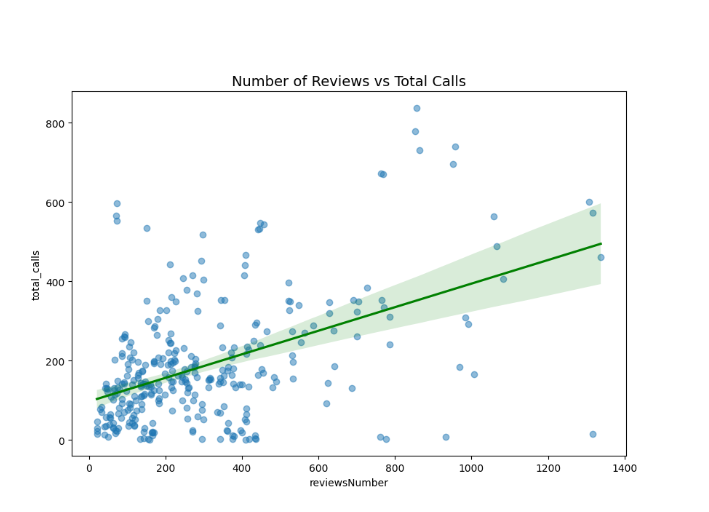
The trend line is clear: as reviews increase, so do calls.
- Practices with fewer than 100 reviews tend to cluster at the bottom, with under 200 calls per month.
- Once practices reach the 300–500 review range, call volume jumps significantly, often doubling or tripling compared to lower-review practices.
- The biggest payoff comes for offices with 500+ reviews, where calls regularly climb into the 400–600+ range.
Yes, there’s some scatter in the data: other factors like staff performance, SEO, or location also play a role but the overall trend holds true. The more reviews you have, the more your phone rings.
It’s not just about having a “good” star rating. A clinic with 30 reviews simply doesn’t compete with one that has 300 or more. Patients trust volume because it shows your practice is established and that many people have had positive experiences worth sharing.
Think about it this way: if you see two practices on Google—both with a 4.9-star rating—but one has 30 reviews and the other has 300, which one would you trust more as a patient? Most people will choose the practice with 300 reviews, because the larger sample size feels more reliable and reassuring.
Takeaway: If you want your phone to ring more often, focus on steadily growing your review count. Even just 5–10 new reviews per month builds momentum that compounds over time.
Related: What dentists need to know about Google ads
2. Ratings Below 4.7 Stars Struggle to Compete
Having a lot of reviews is important, but your star rating makes just as much of a difference.
In the chart below, each dot is a dental practice. The horizontal axis shows the average Google rating, and the vertical axis shows the total calls they received from new patients.
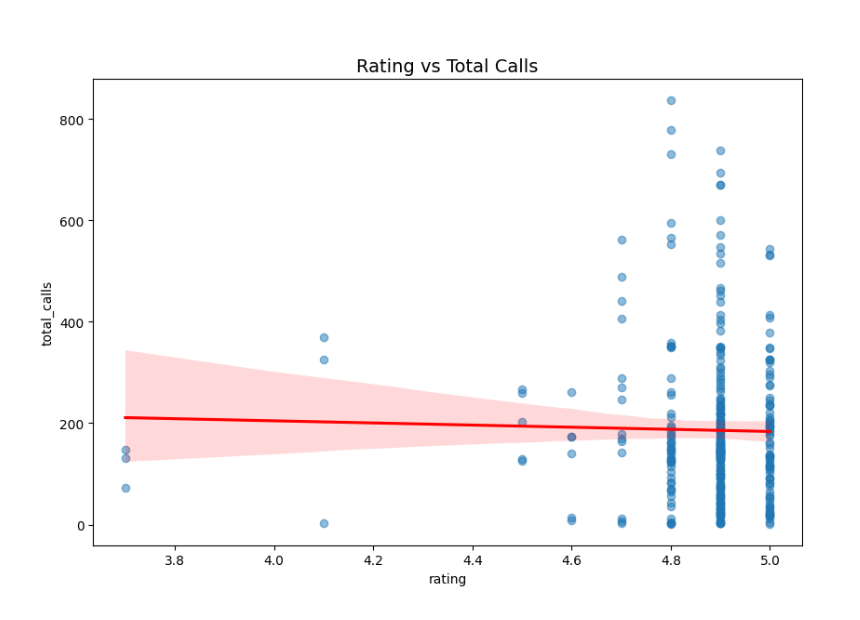
Our data showed a clear tipping point: most of the new patient calls cluster around practices with ratings of 4.7 stars or higher. Once a practice’s average dips into the low 4s (say, 4.4 or 4.5), call volume drops dramatically, even if the practice has a decent number of total reviews.
Patients have options. When they see two practices with similar review counts, the one with the higher star rating almost always gets the call. And for many prospective patients, a rating below 4.7 signals inconsistency in care or negative experiences—big red flags when choosing a new dentist.
Takeaway: Focus on delivering great patient experiences that naturally lead to positive reviews. Training your team, improving communication, and following up with satisfied patients can make all the difference.
Related: The most important elements when looking for a new dentist
3. Higher Ratings Boost Conversion Rates
Getting the phone to ring is only half the battle. The real question is: how many of those patients actually turn into new patient appointments?
The chart below compares practices with higher ratings (orange bars) versus those with lower ratings (blue bars). Here’s how we measured it: we lined up all the practices by rating from lowest to highest. The one in the middle is called the median. Half of the practices fall below that point (lower-rated group) and half fall above it (higher-rated group).
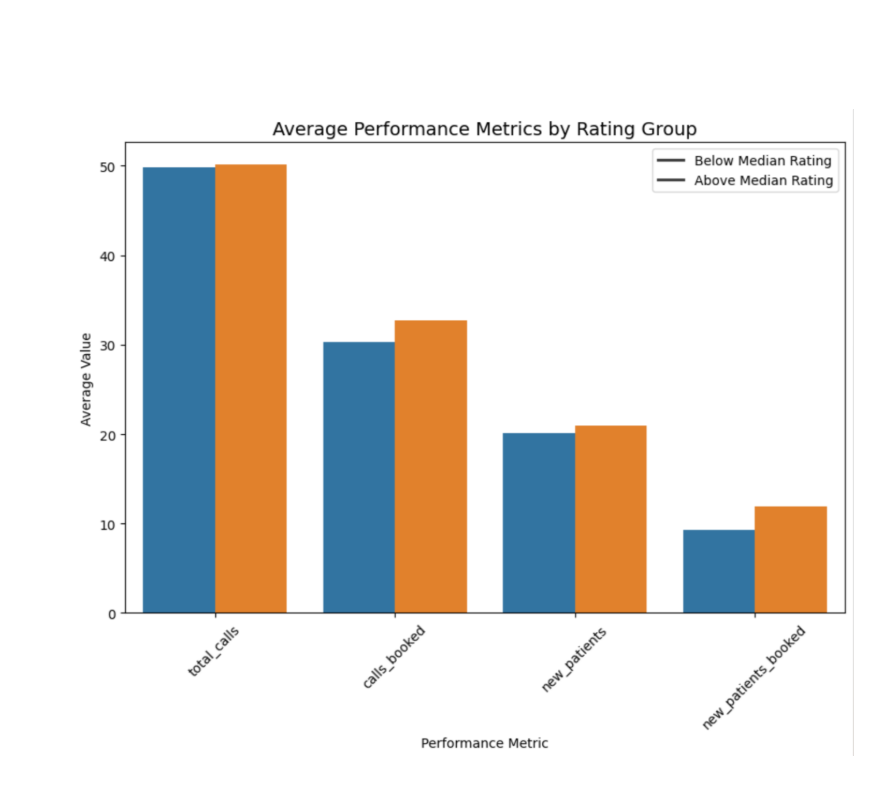
Here’s what the data shows:
- Calls booked into appointments are noticeably higher for practices with stronger ratings. Patients don’t just call—they actually commit when they see a practice with a great reputation.
- The number of new patients booked increased in the higher-rated group compared to practices below the median. This is the biggest difference and the clearest signal that rating builds trust.
Think about it from the patient’s perspective. If you’re comparing two dentists with similar availability and pricing, but one has a 4.9-star rating and the other a 4.4, who are you more likely to book with after making that first call? The higher rating provides reassurance that you’ll have a better experience.
Takeaway: A high rating is more than reputation—it’s a conversion tool. By building trust upfront, you increase the odds that callers will follow through and schedule an appointment.
The Power of Social Proof
You can spend thousands on Google ads, SEO or building a new dental website, but when a patient Googles your name (and they always do), the first thing they’ll see is your reviews. If your star rating is low, your review count is thin, or there hasn’t been activity in months, every other marketing effort instantly loses impact.
Reviews are the foundation of your online reputation, but they’re not the only factor patients consider. True social proof comes from multiple sources working together.
In addition to Google reviews, patients look for:
- Video testimonials – Hearing real patients share their stories feels authentic and relatable.
- Before-and-after photos – Visual results show patients what’s possible and build confidence in your clinical skills.
- Local awards and recognitions – These position your practice as trusted and respected in the community.
- Media mentions or features – Articles or interviews in local news outlets validate your expertise.
- FAQ videos – Short videos where you answer common patient questions (like “Does Invisalign hurt?” or “How long do dental implants last?”) show expertise, build trust, and let patients get comfortable with you before they even pick up the phone.
Social proof multiplies the effectiveness of all your other dental marketing strategies. It’s what turns clicks into calls, and calls into scheduled appointments.
Related: Should dentists be posting to Instagram and TikTok?
Final Thoughts
The evidence couldn’t be clearer: Google reviews shape the flow of new patients in your practice. A larger number of reviews makes the phone ring more often. A higher rating earns patient trust and keeps you competitive. And together, they don’t just attract more inquiries, they help you convert those calls into real, booked appointments.
In today’s digital-first world, patients decide with a quick glance at your online reputation. That reputation is either helping you fill the schedule or quietly sending patients to the office down the street.
About the author:

Adrian Clocusneanu is the Marketing Manager at RevUp Dental, where he leads the company’s marketing department. RevUp Dental is a dental marketing agency that brings proven systems from top-performing practices across North America and helps dental offices stand out online with marketing that actually works.