
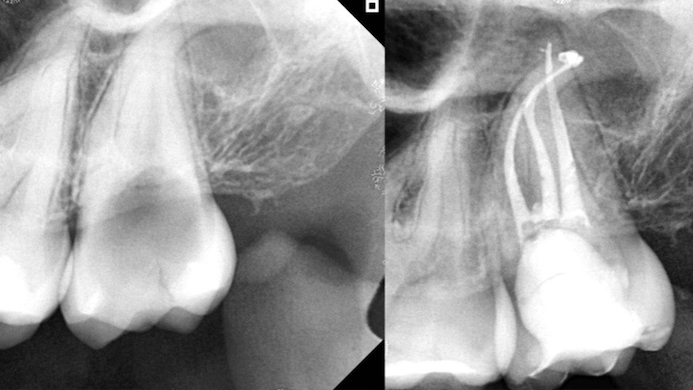
Endodontic engine-driven (rotary files) have revolutionized modern root canal therapy by providing increased efficiency and precision. Despite these advancements, file breakage continues to pose a significant challenge, complicating treatment and potentially jeopardizing patient outcomes. To mitigate the risks associated with file separation, various methods and technologies have been introduced. This article explores the heat-treatment manufacturing process of an innovative multi-phase heat-treated file system, emphasizing its importance in avoiding file separation.
File breakage in endodontics: Causes and contributing factors
Before discussing preventive measures, it is essential that we understand the primary causes of endodontic file breakage to use these instruments more effectively. Engine-driven endodontic files experience mechanical stress during operation, leading to two primary types of failure: torsional and cyclic fatigue.
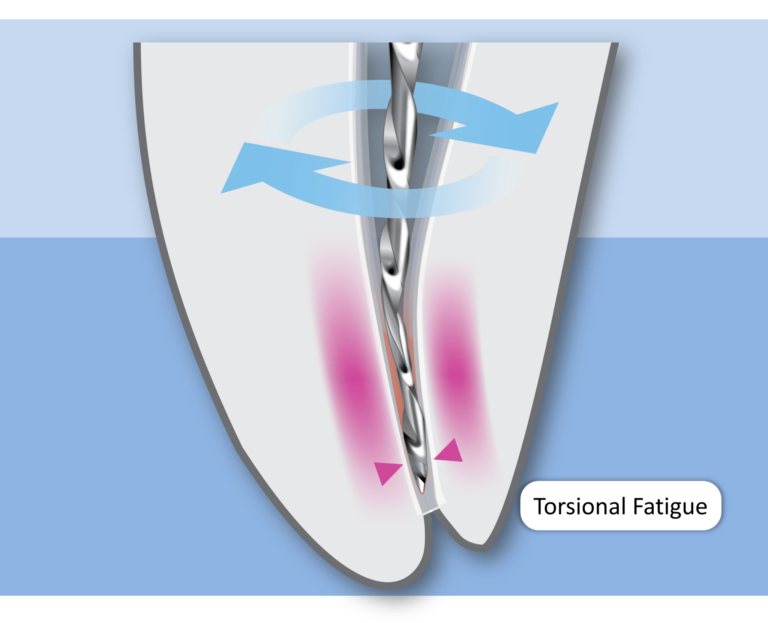
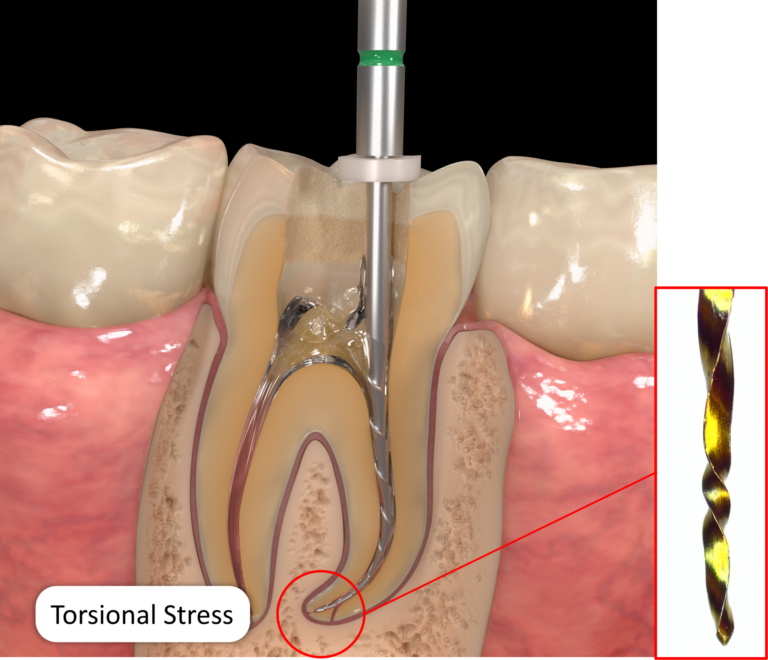
Torsional stress occurs when the file’s tip gets lodged or locked in the canal while the shank continues to rotate, creating excessive torque that can lead to fracture (Fig. 1). This is especially common in complex canal morphologies or when the file is operated beyond its recommended torque and rotational speed.
Fig. 1
Cyclic fatigue occurs when the file repeatedly bends while navigating the complex curves of the canal (Fig. 2). This bending leads to a gradual weakening of the file material, ultimately resulting in failure.
Fig. 2
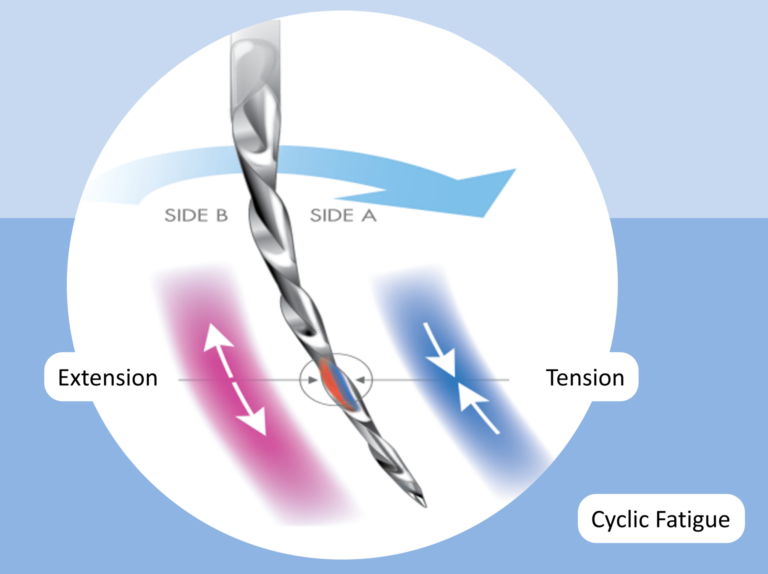
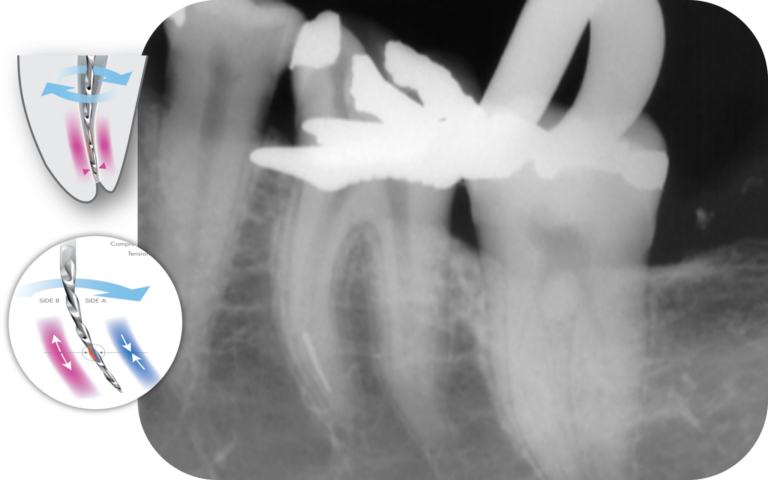
Each bending cycle exerts tension and compression on the metal alloy, gradually weakening the file’s structural integrity. Over time, repeated stress cycles can cause microscopic cracks, ultimately leading to file breakage during procedures (Fig. 3).
Fig. 3
Heat-treated nickel-titanium engine-driven files
The introduction of nickel-titanium (NiTi) alloy for manufacturing engine-driven instruments to shape root canals in the early 1990s marked a significant turning point in endodontics. Over the past thirty-five years, the development of NiTi endodontic file systems has significantly advanced the field. Innovations in metallurgical technology have led to new instruments with improved designs, blade geometries, and thermomechanical treatments, enhancing efficiency in dental procedures.1-7
Heat treatment aims to maximize a material’s efficiency under demanding service conditions. It involves carefully timed heating and cooling processes applied to an alloy in a solid state to achieve desired properties. Historical practices of swordsmiths and cutlers demonstrate that hardening steel requires plunging solid, red-hot steel into water, while toughening is achieved by tempering quenched steel at a moderate temperature.
Leading manufacturers of engine-driven files adopted post-grinding heat treatment procedures, ushering in a new generation of instruments. Each company developed a unique heat treatment method and identification colour. This advancement enhanced the safety and shaping performance of engine-driven files, particularly in navigating anatomical challenges like curved canals. Clinical studies also showed lower fracture rates associated with these heat-treated files.8-9
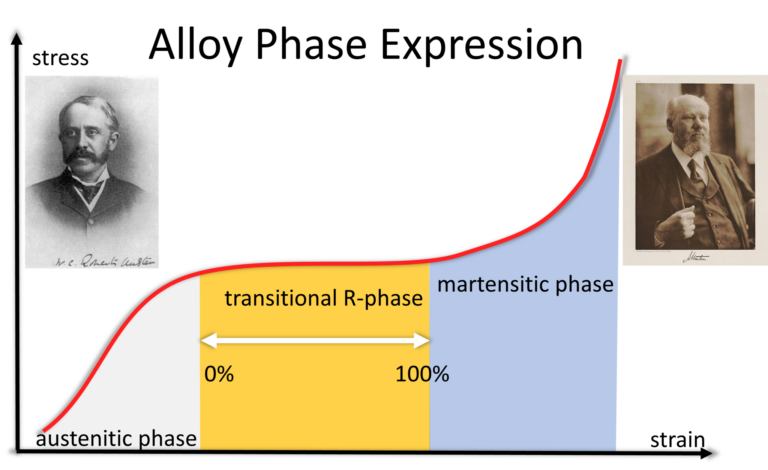
Heat treatment is crucial because the properties of each alloy phase vary significantly. For example, the proportions of the austenitic phase (which is more rigid and exhibits a spring-back effect) and the martensitic phase (which is more flexible and undergoes permanent plastic deformation) influence the performance of different instruments (Fig. 4). When in the martensitic phase, files are soft and can bend permanently (known as controlled memory). Conversely, the austenitic phase offers firmness, allowing instruments to return to their original straight shape when the load is removed. Consequently, martensitic instruments are preferred for navigating curved canals, as they are believed to better preserve the original canal path.10-13
Fig. 4
There is no one-size-fits-all solution to every challenge
Performance analysis of heat-treated instruments reveals that their alloy phase significantly affects effectiveness. The highly flexible martensitic alloy phase in control memory instruments can impede advancement into the apical third of the canal. While these martensitic instruments navigate curvatures more efficiently, they are also more susceptible to distortion under opposing forces during apical advancement (Fig. 5). Clinically, this leads to challenges in apical advancement due to high distortion and diminished cutting efficiency. The angle of angular deflection leading to fracture is so steep that the instrument distorts even before it engages the dentin walls. In contrast, engine-driven files with a higher proportion of the austenitic phase exhibit better torsional fatigue resistance, but they are less flexible and more prone to cyclic fatigue separation. If an instrument becomes wedged against canal walls and continues to rotate under heavy torque, it can quickly exceed its elastic limit, resulting in torsional fracture.
Fig. 5
Multiple expressions of alloy phases in the same working lamina
Instruments made entirely of austenitic alloy are less prone to torsional fatigue, making this phase preferable under significant torsional loads.14-15 Therefore, clinicians should select instruments with a higher austenitic content for the final millimeters of apical enlargement, where the tip’s performance is critical.
The body of the engine-driven file primarily shapes the root canal curvature through its taper design, allowing the widest section to engage with the pathway to the most apical part of the canal, thus creating a lateral cutting action. In curved areas, the more metal-rich section of the instrument is less susceptible to torsional fatigue. However, cyclic fatigue can significantly increase the risk of separation due to the added metal mass. Employing a martensitic alloy phase in this context is advantageous, as martensitic heat treatment enhances flexibility and reduces the risk of separation caused by cyclic tension-extension forces.
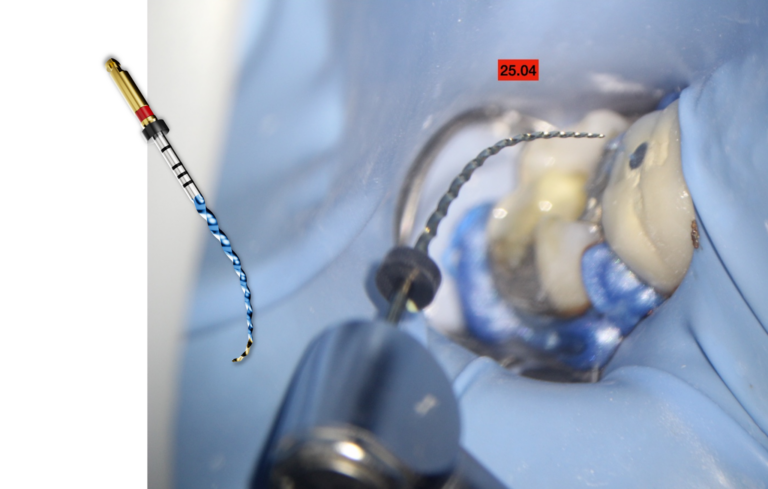
KP TriShade® (Kevin Peter KP, Guilin, China) engine-driven NiTi heat-treated files feature a design that allows for both rotary and asymmetrical right-cutting reciprocation motion. Launched internationally in 2024, this system is the first to implement customized heat treatments within a single lamina, achieving a balance between torsional strength and flexibility in different regions of the working tip. Through three specialized heat treatments, TriShade® optimizes torsional resistance (more austenitic in the last four millimeters of the apical segment of the file) and flexibility (more martensitic) in the file body, allowing for prebending (Fig. 6).
Fig. 6
Additionally, the file’s shaft is fully austenitic, enhancing control during up-and-down instrumentation movements (Fig. 7).
Fig. 7
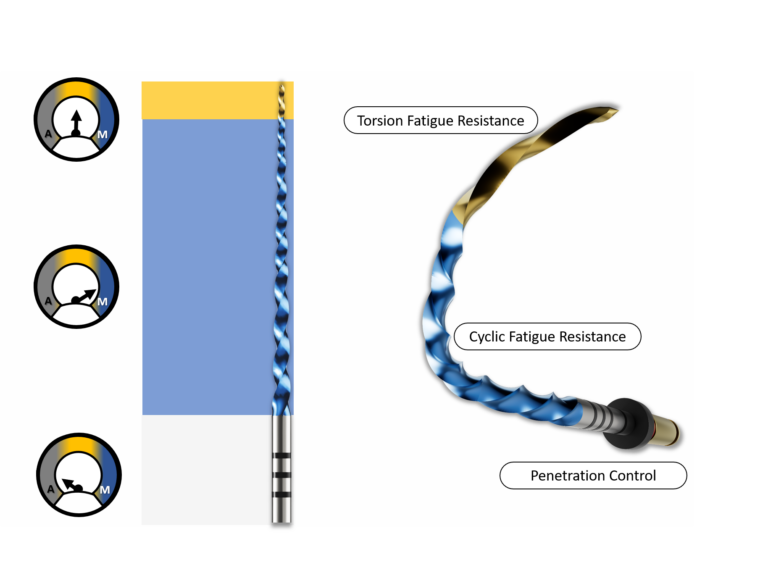
The last four millimeters of the apical segment underwent heat treatment that enhanced its austenitic phase, producing a gold stain. The more martensitic body resulted in a blue color, while the austenitic shaft acquired a silver hue.16 This combination of treatments optimizes performance across each instrument segment, improving resistance to torsional and cyclic fatigue challenges at different lengths of the same file (Fig. 8).
Fig. 8
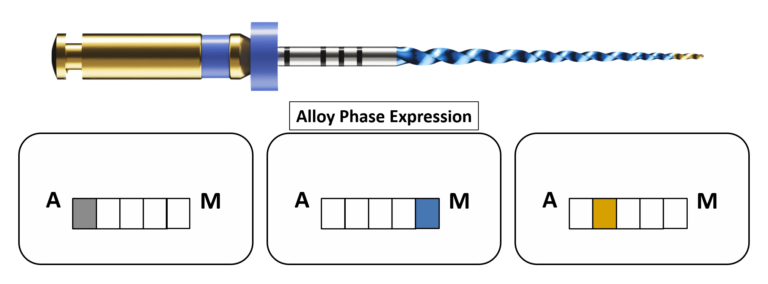
There is a growing trend toward customized heat treatments based on an instrument’s metallic mass. While various manufacturers offer systems with differentiated thermal treatments across sequences of files,17 none have applied such treatments within the same file, highlighting the need for tailored approaches to address separation forces.
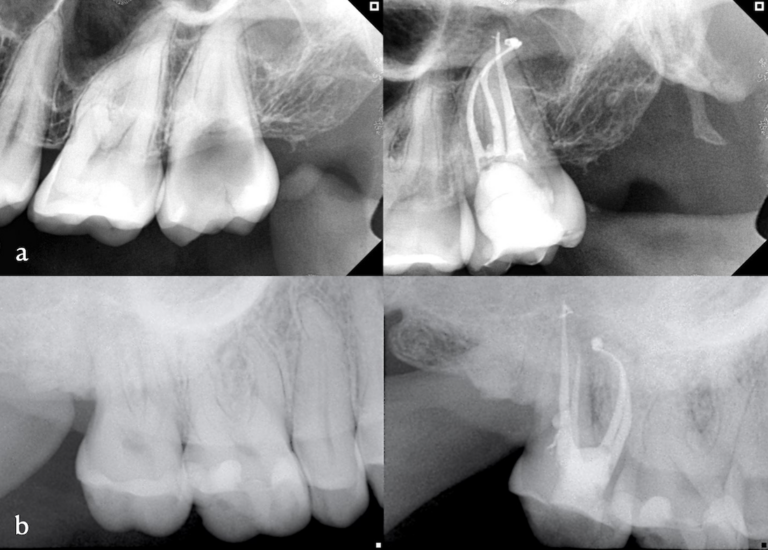
TriShade® represents a significant advancement in manufacturing, demonstrating a precise method for applying heat treatment to achieve three distinct alloy phase expressions across different segments of the working part (Figs. 9, 10).
Fig. 9
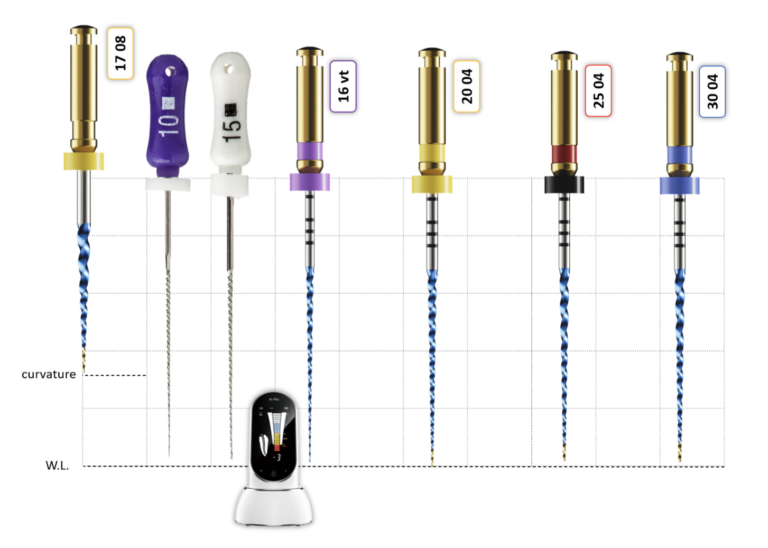
Fig. 10AB
Conclusions
Instrument separation during shaping procedures with rotary nickel-titanium (NiTi) systems is undesirable and can complete treatment resolution. The reported fracture rates, ranging from 1.98% to 26%, underscore the unpredictability of this issue in clinical practice Contributing factors include instrument design, improper techniques, inadequate irrigation, worn files, motor kinematics, root canal anatomy, and operator experience.
Preventing the breakage of endodontic files is a multifaceted challenge that requires careful attention to technique, equipment maintenance, and case-specific factors. Operators can significantly reduce the risk of file separation during endodontic procedures by implementing methods such as glide path preparation, using torque-controlled motors, ensuring adequate irrigation, and regularly inspecting files.
Additionally, extensive clinical and scientific research highlights the benefits of different heat treatments, which yield distinct instrument performance and help mitigate separation during instrumentation. As technology evolves, further innovations in file design and instrumentation techniques are expected to enhance the safety and predictability of endodontic care. 
Oral Health welcomes this original article.
References
- Gavini G, Santos MD, Caldeira CL, Machado MEL, Freire LG, Iglecias EF, et al. Nickel-titanium instruments in endodontics: a concise review of the state of the art. Braz Oral Res. 2018;32:e67.
- Haapasalo M, Shen Y. Evolution of nickel-titanium instruments: from past to future. Endod Topics. 2013;29:3–17.
- Peters OA. Current challenges and concepts in the preparation of root canal systems: a review. J Endod. 2004;30:559–67.
- Shen Y, Coil JM, Zhou H, Zheng Y, Haapasalo M. HyFlex nickel-titanium rotary instruments after clinical use: metallurgical properties. Int Endod J. 2013;46:720–9.
- Shen Y, Zhou HM, Zheng YF, Peng B, Haapasalo M. Current challenges and concepts of the thermomechanical treatment of nickel-titanium instruments. J Endod. 2013;39:163–72.
- Zhou H, Peng B, Zheng YF. An overview of the mechanical properties of nickel-titanium endodontic instruments. Endod Topics. 2013;29:42–54.
- Zupanc J, Vahdat-Pajouh N, Schafer E. New thermomechanically treated NiTi alloys—a review. Int Endod J. 2018;51:1088–103.
- Shen Y, Zhou HM, Zheng YF, Peng B, Haapasalo M. Current challenges and concepts of the thermomechanical treatment of nickel-titanium instruments. J Endod. 2013;39:163–72.
- Gambarini G, Piasecki L, Di Nardo D, Miccoli G, Di Giorgio G, Carneiro E, et al. Incidence of deformation and fracture of twisted file adaptive instruments after repeated clinical use. J Oral Maxillofac Res. 2016;7:e5.
- Sousa-Neto MD, Silva-Sousa YC, Mazzi-Chaves JF, Carvalho KKT, Barbosa AFS, Versiani MA, et al. Root canal preparation using micro-computed tomography analysis: a literature review. Braz Oral Res. 2018;32:e66.
- Arslan H, Yildiz ED, Gunduz HA, Sumbullu M, Bayrakdar IS, Karatas E, et al. Comparative study of ProTaper Gold, Reciproc, and ProTaper Universal for root canal preparation in severely curved root canals. J Conserv Dent. 2017;20:222–4.
- Bürklein S, Hinschitza K, Dammaschke T, Schäfer E. Shaping ability and cleaning effectiveness of two single-file systems in severely curved root canals of extracted teeth: Reciproc and WaveOne versus Mtwo and ProTaper. Int Endod J. 2012;45:449–61.
- Plotino G, Ahmed HM, Grande NM, Cohen S, Bukiet F. Current assessment of reciprocation in endodontic preparation: a comprehensive review—part II: properties and effectiveness. J Endod. 2015;41:1939–50.
- Thu M, Ebihara A, Adel S, Takashi Okiji T. Analysis of torque and force induced by rotary nickel-titanium instruments during root canal preparation: a systematic review. Appl Sci. 2021; 11: 3079
- Lopes HP, Gambarra-Soares T, Elias CN, et al. Comparison of the mechanical properties of rotary instruments made of conventional nickel-titanium wire, M-wire, or nickel-titanium alloy in R-phase. J Endod. 2013;39:516–520.
- Tian H, Schryvers D, Liu D, Jiang Q, Van Humbeeck J. Stability of Ni in nitinol oxide surfaces. Acta Biomater. 2011;7(2):892-899.
- Ramos, CAS. Endodontic files with hybrid metallurgical elastic characteristics and identification colors. US20230320815A1, https://patents.google.com/patent/US20230320815A1/en?q=(carlos+alberto+spironelli+ramos)&oq=carlos+alberto+spironelli+ramos2023.
About the authors

Dr. Ken Serota graduated from the University of Toronto Faculty of Dentistry in 1973, He received his Certificate in Endodontics and Master of Medical Sciences degree from the Harvard-Forsyth Dental Center in Boston, Massachusetts in 1981. In 2000, Dr. Serota founded ROOTS, the first online Endodontic forum which remains a force in endodontic education to this day.

Dr. Carlos Spironelli Ramos has taught researched, and developed endodontic products for over 35 years. He was the head of the endodontics department at Londrina State University in Brazil for 18 years. He holds numerous patents on apex locators, reciprocating movement, heat treatment, and ultrasonic irrigation.