
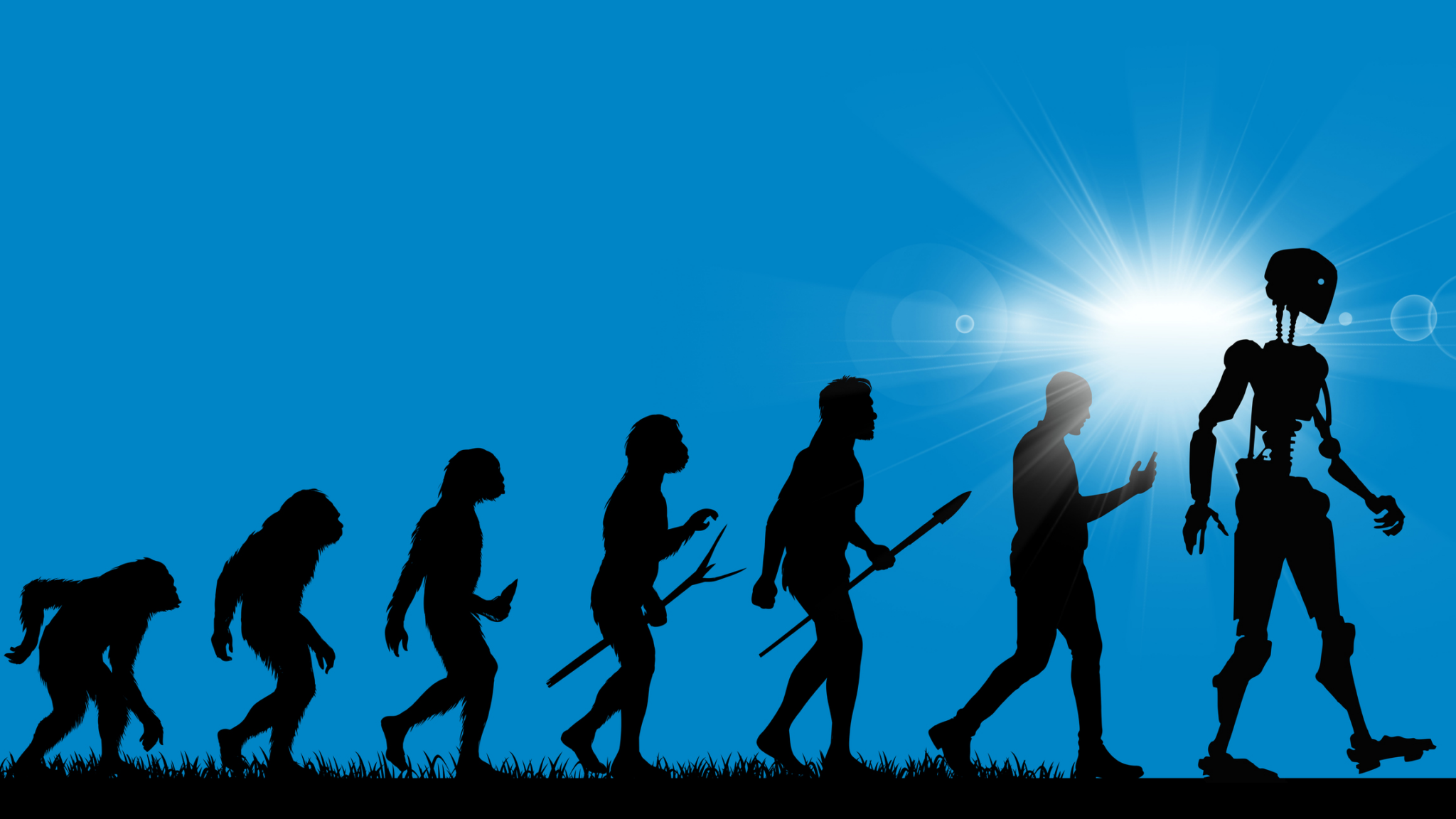
The history of artificial intelligence (AI) is a fascinating journey that spans centuries, from ancient myths to modern technological marvels. This essay explores the key milestones and developments that have shaped the field of AI.
The roots of artificial intelligence in Mesopotamia and Islamic civilization
Artificial intelligence (AI) might seem like a modern marvel, but its conceptual roots can be traced back to ancient Mesopotamia and the Islamic Golden Age. These civilizations laid the groundwork for algorithmic thinking and computational methods that are fundamental to AI today.
Mesopotamia: The Cradle of Civilization
Mesopotamia, often referred to as the “Cradle of Civilization,” was home to some of the earliest known forms of writing, mathematics, and complex societal structures. The Sumerians, who inhabited this region around 3000 BCE, developed cuneiform writing on clay tablets, which included some of the earliest recorded algorithms. These algorithms were used for various purposes, such as calculating land areas, distributing resources, and astronomical observations¹.
The Babylonians, who followed the Sumerians, made significant advancements in mathematics. They developed a base-60 number system, which is still used today in measuring time and angles. Babylonian mathematicians also created algorithms for solving quadratic equations and other mathematical problems². These early computational methods laid the foundation for more complex algorithmic thinking.
The Islamic Golden Age: A flourishing of knowledge
The Islamic Golden Age, spanning from the 8th to the 14th centuries, was a period of remarkable intellectual and scientific achievements. Scholars in the Islamic world made significant contributions to mathematics, astronomy, medicine, and engineering. One of the most notable figures was Al-Khwarizmi, a Persian mathematician whose works introduced the concept of the algorithm. In fact, the term “algorithm” is derived from his name².
Al-Khwarizmi’s book, “Kitab al-Jabr wa-l-Muqabala,” laid the foundations for algebra. His methods for solving linear and quadratic equations were revolutionary and influenced both Islamic and European mathematics. The translation of his works into Latin in the 12th century played a crucial role in the development of mathematics in the Western world².
Other scholars, such as Al-Kindi and Al-Farabi, made significant contributions to cryptography and logic, which are essential components of modern AI. Al-Kindi’s work on frequency analysis laid the groundwork for modern cryptographic techniques, while Al-Farabi’s explorations in logic and philosophy influenced later developments in computational theory².
The legacy of early algorithmic thinking
The advancements in mathematics and algorithmic thinking in Mesopotamia and the Islamic Golden Age were not isolated achievements. They were part of a continuum of knowledge that has influenced modern computational methods and AI. The early algorithms developed by these civilizations were foundational to the development of more complex mathematical theories and computational techniques.
Today, AI systems rely on algorithms to process data, make decisions, and learn from experience. The historical contributions of Mesopotamian and Islamic scholars to algorithmic thinking are a testament to the enduring legacy of these ancient civilizations. Their work continues to inspire and inform the development of AI and other advanced technologies.
Philosophical foundations
While the concept of artificial beings with intelligence dates back to antiquity, the philosophical foundations of AI were laid much later. In the 17th and 18th centuries, philosophers like René Descartes and Thomas Hobbes began to explore the idea of human thought as a mechanical process, laying the groundwork for future AI research.
The birth of modern AI
The modern era of AI began with the invention of the programmable digital computer in the 1940s. British mathematician and logician Alan Turing played a pivotal role during this period. Turing’s work on the concept of a universal machine, now known as the Turing Machine, laid the theoretical foundation for AI. In 1950, Turing introduced the famous Turing Test, a criterion for determining whether a machine can exhibit intelligent behaviour indistinguishable from that of a human4.
The Dartmouth Conference and the birth of AI research
The field of AI research was formally established in 1956 during the Dartmouth Conference, organized by John McCarthy, Marvin Minsky, Nathaniel Rochester, and Claude Shannon. This conference marked the beginning of AI as an academic discipline. Researchers at the conference were optimistic about the potential of AI, predicting that machines with human-like intelligence would be developed within a few decades3.
Early achievements and challenges
The 1950s and 1960s saw significant progress in AI research. Early AI programs, such as the Logic Theorist and the General Problem Solver, demonstrated the potential of machines to solve complex problems. However, the field also faced challenges. The limitations of early computers and the complexity of human cognition made it clear that creating truly intelligent machines was more difficult than initially anticipated3.
The AI winters
The optimism of the early years was followed by periods of reduced funding and interest, known as “AI winters.” The first AI winter occurred in the 1970s, triggered by criticisms from researchers like James Lighthill and the realization that progress was slower than expected. A second AI winter occurred in the late 1980s and early 1990s, as funding and interest waned once again3.
The rise of machine learning and deep learning
The late 1990s and early 2000s saw a resurgence in AI research, driven by advances in machine learning and the availability of large datasets. Machine learning algorithms, such as neural networks, began to outperform traditional AI methods. The breakthrough came in 2012 with the advent of deep learning, a subset of machine learning that uses neural networks with many layers. Deep learning revolutionized AI, enabling significant advancements in image recognition, natural language processing, and other fields3.
AI in the 21st Century
Today, AI is an integral part of our daily lives. From virtual assistants like Siri and Alexa to autonomous vehicles and advanced medical diagnostics, AI technologies are transforming industries and society. The field continues to evolve rapidly, with ongoing research in areas such as reinforcement learning, generative models, and ethical AI3.
Conclusions
The history of AI is deeply intertwined with the intellectual heritage of Mesopotamia and the Islamic Golden Age. The early algorithms and mathematical advancements from these periods laid the groundwork for the sophisticated AI systems we have today. As we continue to push the boundaries of AI, it is essential to recognize and celebrate the contributions of these ancient civilizations to the field of algorithmic thinking.
Furthermore, the history of artificial intelligence is a testament to human ingenuity and perseverance. From its philosophical roots to the cutting-edge technologies of today, AI has come a long way. As we look to the future, the potential of AI to solve complex problems and improve our lives remains boundless.
References
- History of artificial intelligence | Dates, Advances, Alan Turing …. https://www.britannica.com/science/history-of-artificial-intelligence.
- History of artificial intelligence – Wikipedia. https://en.wikipedia.org/wiki/History_of_artificial_intelligence.
- AI Timeline: Key Events in Artificial Intelligence from 1950-2024. https://www.theainavigator.com/ai-timeline.
- Artificial intelligence – Wikipedia. https://en.wikipedia.org/wiki/Artificial_intelligence.
- en.wikipedia.org. https://en.wikipedia.org/wiki/History_of_artificial_intelligence.
- The Opportunities and Risks of Artificial Intelligence in … – CUSPE. https://www.cuspe.org/wp-content/uploads/2016/09/Hamid_2016.pdf.
- Lindsay Society to hold conference in Sheeld – Nature. https://www.nature.com/articles/s41415-023-6299-2.pdf.
- The Democratization of Artificial Intelligence: Theoretical Framework. https://www.mdpi.com/2076-3417/14/18/8236.
- How artificial intelligence aids ancient history – Prospect. https://www.prospectmagazine.co.uk/ideas/philosophy/language/62344/how-ai-aids-ancient-history.
- Computing in Early Civilizations – SpringerLink. https://link.springer.com/chapter/10.1007/978-3-030-66599-9_2.
- History of Iraq – Wikipedia. https://en.wikipedia.org/wiki/History_of_Iraq.
- History of Mesopotamia | Definition, Civilization, Summary, Agriculture …. https://www.britannica.com/place/Mesopotamia-historical-region-Asia.
- Groundbreaking AI project translates 5,000-year-old cuneiform at push …. https://www.timesofisrael.com/groundbreaking-ai-project-translates-5000-year-old-cuneiform-at-push-of-a-button/.
About the author

Dr. Ameed Khalid Abdul Hamid, a renowned dentist and global leader in dental aesthetics, has significantly contributed to the integration of artificial intelligence (AI) in dentistry. His pioneering work has not only advanced dental practices but also set new standards and advancements in the field of dental AI, such as in clear aligners and laser treatments and combining halitosis with AI. Dr. Ameed has played a pivotal role in promoting the adaption of AI in dentistry in the Middle East, as the Chairman of the Middle East Branch of the Dental Artificial Intelligence Association (dentalaia.org). Dr. Ameed has been honoured by Queen Elizabeth II and recognized as the “Dentist to the Royals” and “Sheikh of Dentists.” His accolades include numerous awards for his achievements in dental innovation, reflecting his commitment to advancing the field through AI.