
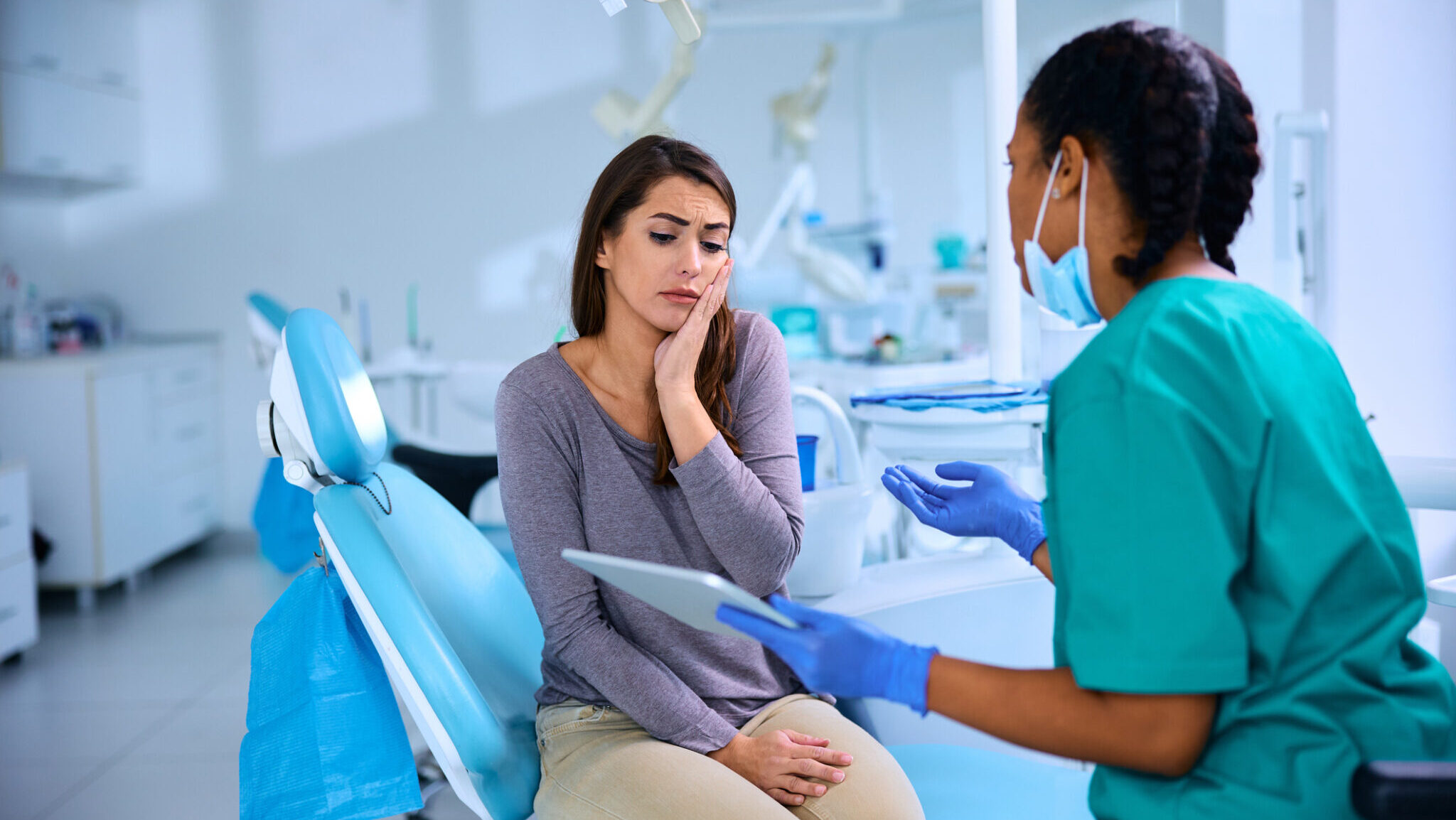
Meet Cheryl, a 52-year-old patient who has been coming to your office every six months for over a decade. She’s loyal. She’s trusting. And like many patients, she doesn’t ask too many questions, until something didn’t add up.
At her last visit, she saw a dental hygienist she had not met before. This time, her clinical findings showed: 5–6 mm pockets, generalized bleeding, moderate bone loss in the posteriors on the radiographs, and no updated periodontal charting in over 3 years.
“Has it always been this bad?” she asked.
The dental hygienist paused. “Well, I can’t say for sure… but it looks like this didn’t just start yesterday.”
Cheryl’s eyes narrowed. “Then why didn’t anyone ever tell me?”
She felt betrayed and confused. And that, right there, is the cost of inconsistency.
The hidden costs you can’t afford to ignore
Inconsistency in dental hygiene doesn’t just risk clinical oversight; it erodes trust, reduces treatment acceptance, kills productivity, and damages your brand.
- One dental hygienist probes. Another skips it and says they do not have enough time.
- One books a 4–6-week re-evaluation. Another leaves the patient on 6-month recalls indefinitely.
- One uses an intraoral camera and explains everything. Another polishes, chats, and walks the patient out early.
This chaos doesn’t just hurt the patient; it breaks the patient’s trust. Patients may not always understand perio, but they understand when things don’t feel right. And when trust starts to slip, loyalty goes with it.
The financial fallout is real
Every missed or delayed periodontal diagnosis represents lost revenue from untreated disease, weakened case acceptance due to inconsistent messaging, increased liability, team burnout from unclear standards and frequent patient confusion, and patients leaving quietly… or loudly.
You can have the most skilled clinicians in the chair, but without clear systems, calibration, and accountability, you are gambling at every appointment.
Ask yourself: Where are you falling short?
These questions aren’t comfortable, but they are necessary:
1. Do all of your dental hygienists follow the same periodontal protocol, written, trained, and followed every day? Or is each appointment a wild card based on who’s in the room?
2. When was the last time you audited dental hygiene charts for consistency in assessments, diagnoses, and follow-up care? And if you never have, how can you confidently say you are delivering optimal care?
3. Do patients experience the same level of clinical communication, technology use, and education regardless of which dental hygienist they see? Or are you unintentionally teaching them that oral health is hit or miss?
Consistency builds confidence, in everyone
Let’s be clear: consistency doesn’t mean robotic care. It means reliable excellence. It means systems that support the right decisions, every time, with every patient.
❱ When dental hygienists are calibrated, clinical confidence rises.
❱ When messaging is consistent, patients say yes.
❱ When systems are clear, your practice grows, ethically, sustainably, and predictably.
You won’t always hear the truth from your patients before they leave. But rest assured, they will talk, even if it’s not to you.
Don’t be the office they say, “never noticed” their gum health declining. Be the one that said, “We caught this early, and we have a plan for you.”
About the author

 Jennifer is a powerhouse in dental hygiene, transforming practices through strategic growth, clinical excellence, and patient-centered care. In 2025, she was globally recognized as one of the “10 Most Ambitious Women in Business.” A two-time Dr. Bicuspid Award winner for Educator of the Year and recognized as one of the “10 Most Influential Healthcare Leaders to Watch,” Jennifer’s impact is undeniable. With executive roles at 123Dentist, dentalcorp, the College of Dental Hygienists of Ontario, and the Canadian Dental Hygienists Association, along with a history of leadership, training, and education, she is a sought-after expert and dynamic speaker. A true trailblazer, Jennifer elevates teams, drives innovation, and redefines success in dental hygiene.