
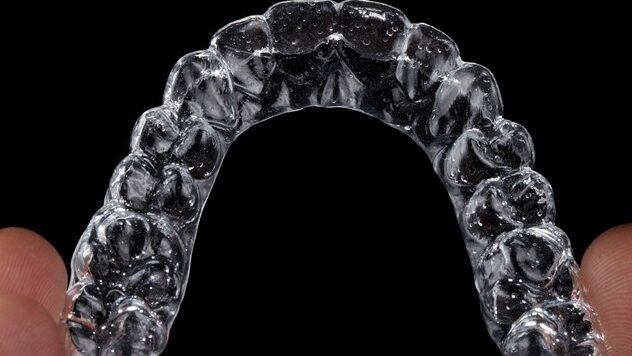
Artificial intelligence is like a divine power that can turn dust into gold. The progress in machine learning and artificial intelligence is revolutionizing all aspects of human life. It streamlines tasks, saves time, reduces costs, and frees humans from the hassle of tiring activities. Many believe that the advent of AI programs is the next big invention after the creation of the wheel. The corporate sector is aptly utilizing the benefits offered by AI, but the good thing is that its application is not limited to big business firms and computer-people.
Fortunately, AI stands at the forefront of the continuously evolving medical landscape. For decades, healthcare professionals have strived to improve clinical efficiency, reduce health burden, and enhance prognosis. However, with AI in the picture, doctors from across the globe have reported significant improvements in clinical efficiency, patient management, and treatment results. Reports suggest that the healthcare AI market is expected to reach above $188 billion by 2030.
How AI is revolutionizing orthodontics and dentistry
AI programs are based on machine learning (ML) algorithms that use pattern recognition. These highly advanced algorithms identify patterns in the provided data and can differentiate between normalcy and abnormalities based on these patterns. ML finds applications in numerous healthcare fields including radiology, genetics, neuroimaging, etc. Complex forms of machine learning are neural networks and deep learning algorithms.
In deep learning, the program analyzes the provided data more deeply than the human eye. This allows AI to pick up details that a human may miss. Paired with the deep learning model is a neural network (a learning model) that mimics the human brain in decision-making. These programs undergo unsupervised learning, so they learn from the patterns present in the provided data pool. This makes them free of bias and decision noise.
Multiple aspects of dental treatment are augmented with the incorporation of healthcare AI. Orthodontists have reported considerable improvements in the following facets of orthodontic treatment:
Diagnosis
Diagnosing malocclusion is a laborious task as it involves going through radiographs, patient records, and clinical pictures. An in-depth analysis of a patient’s condition requires the orthodontist to identify landmarks on cephalometric x-rays, determine the skeletal age of the patient (using cervical vertebrae maturation stage i.e., CVM), and diagnose maxillomandibular relationships. The process of reaching an accurate diagnosis requires the extensive skills of the healthcare provider. Moreover, it takes a lot of time and effort.
But with AI, there is an astonishing improvement in the working procedures. It takes the burden off of the dentist in multiple ways. AI programs like YOLOv3 (You Only Look Once Version 3) can accurately identify as many as 80 cephalometric landmarks (that too in a matter of seconds!). In a study comparing human subjects and AI algorithms, the automated system repeatedly excelled against the human competitor. The AI-based diagnostic analysis had faster speeds, less variability, and minimal detection error. It also allows you to delve into a broader landscape of orthodontics by giving a diagnosis based on the complete facial profile (instead of the conventional jaw relations).
As per a 2024 study, the brilliance in diagnostic capabilities of AI is attributed to the continuous iterations in AI systems. The incorporation of artificial intelligence algorithms allows enhanced visualization of outcomes and precise diagnoses.
Treatment planning
As AI algorithms offer reliable and quick diagnoses, doctors can rely on the treatment plans offered by the automated system. A keen eye for radiographic images, facial profiles, and extensive machine learning training enables the AI software to provide workable solutions for orthodontic problems. According to studies, high-quality artificial neural networks (ANNs) can help provide the right diagnosis to even inexperienced orthodontists.
Extracting or going for interproximal reduction (IPR) is a key question in orthodontics. When dealing with humans, every case is different and even the most experienced orthodontists can get stuck in decision-making. AI can make life easier yet again!
The latest clinical studies reveal that automated systems perform “exceptionally well” and have shown accuracy and precision similar to trained professionals. The advanced algorithms can guide you regarding the required type of orthodontic treatment, and/or the need for orthognathic surgery.
Appliance manufacturing
Another commendable feature of artificial intelligence used in routine orthodontic practice is the manufacturing of highly precise and effective orthodontic appliances. Additive manufacturing (or 3D printing) is an advanced industrial process that develops precise geometric 3D appliances/devices.
The collaboration of AI software and innovative hardware allows orthodontists to create orthodontic appliances (such as aligners, orthopedic appliances, and retainers) that are more precise and reliable than conventional methods. A 2023 study concluded that orthodontic retainers built via 3D printing had the following benefits:
- Time and cost-efficient
- More comfortable to wear
- Solve esthetic problems
- Retainer materials do not interfere with Magnetic Resonance Imaging (MRI)
- Help resolve periodontal issues
Creating the “Perfect Smile Retainer”: Amalgamating technology with innovation
Artificial intelligence also enables you to think out of the box. With smart AI applications and professional bravura, orthodontists can visit unexplored territories. One such innovation resulting from AI incorporation is the “Perfect Smile Retainer” aka PSR.
The PSR is a unique, and multi-purpose product that has multiple therapeutic advantages (which we will discuss later!). The perfect smile retainer is a modified type of orthodontic retainer that additionally acts as a smile enhancer. There are plenty of reasons to love the perfect smile retainer but first, let’s know about an orthodontic retainer.
What is an orthodontic retainer?
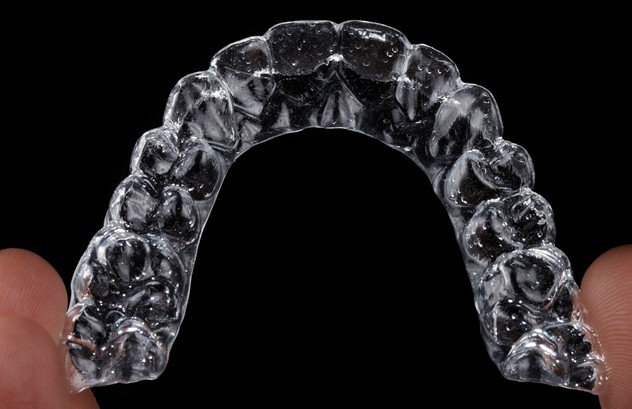
An orthodontic retainer is a custom-made device given to an orthodontic patient after the completion of the treatment. The main aim of a retainer is to keep the straightened teeth in their new position and to prevent relapse. There are different types of retainers including:
Hawley retainers: These are removable retainers and are made out of a metal wire and acrylic plate.
Clear plastic retainers: Common types of modern clear aligners include Essix, Zendura, and Vivera retainers. Such types of retainers have a transparent look and are made out of plastic/polyurethane.
Fixed retainers: These are permanently bonded/fixed to the teeth. Bonded retainers are usually made out of metal wires (nickel-titanium or copper, etc.).
Perfect Smile Design Retainer: A remarkable modification
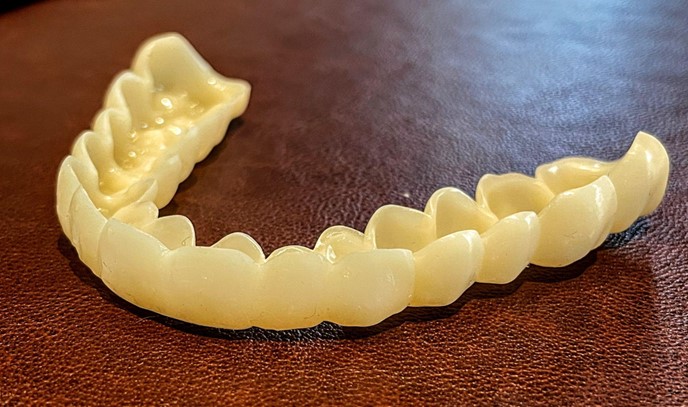
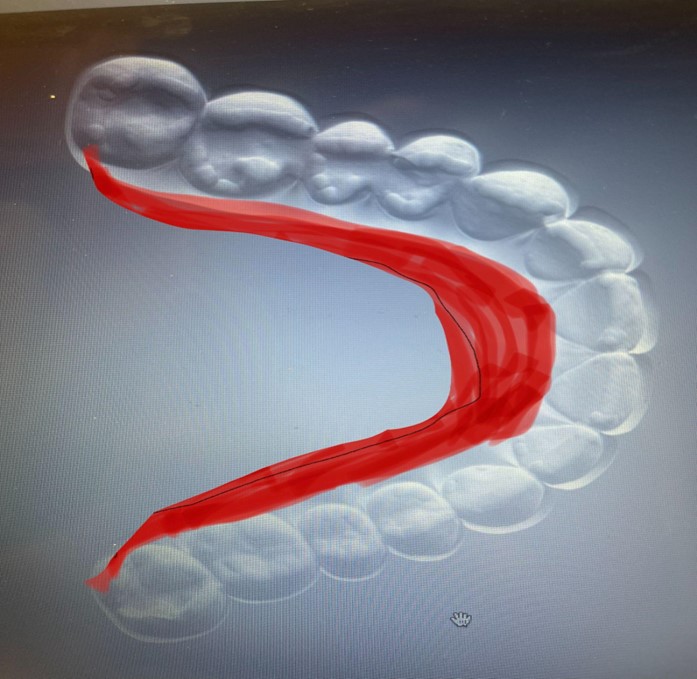
The PSR is a modified form of a clear plastic retainer that provides aesthetic enhancements to your smile. The PSR has a palatal extension for support and retention that aptly holds the orthodontically corrected teeth in place.
The facade (front-facing side) of the retainer can be modified according to the patient’s needs. So, if someone isn’t satisfied with the shape, color, or size of his/her teeth and doesn’t want to spend hefty amounts on cosmetic dental treatment can opt for this potent appliance. All such patients can enjoy a pleasant smile with the help of the “perfect smile” design. Some evident and unique features of the smile design include:
- The appliance is flexible and very easy to use. As it is custom-made for each patient, the retainer device snaps onto your teeth without any trouble or hassle.
- Facade modifications allow the patient to choose between transparent/clear appliances or the addition of whiter tooth shade to make their teeth look ultra-white.
- It ensures the ideal finishing of orthodontic cases. As the appliance is developed using the Golden Proportions SmarTooth app, the retainer can serve as a check for Bolton’s discrepancies in finished cases.
- Unlike the prevalent orthodontic retainer, the PSR is worn during the daytime and left out during the night (sleep time). This feature is attributed to the esthetic enhancement effects of the appliance.
Who can benefit from a Perfect Smile Retainer?
- Orthodontic patients who have completed treatment and need retainers.
- Patients who want to enhance their smile while they are in retention. This includes anyone unsatisfied with the shape and size of the teeth (after completion of treatment).
- People with crooked teeth, who are looking for an affordable smile makeover until they plan for more permanent teeth straightening and reshaping therapies.
- Individuals who are unsatisfied with the shape and color/shade of their teeth and want a more affordable provisional solution.
The amazing iPhone SmarTooth app
Expert orthodontists developed the multi-purpose smile analysis tool i.e., the “Perfect Smile Design” by using advanced AI-based programming.
One such application is the SmarTooth iPhone Application developed by the Medical College of Georgia Orthodontic Department. It is a great app that helps dentists (orthodontists, cosmetic dentists, etc.) get an idea of the ideal width and height of teeth and points out any anatomical discrepancies. Furthermore, the application can be used to get analyses like Moyers and Tanaka-Jhonston’s analyses, Bolton’s size discrepancies, and smile analysis. All you have to do is insert one tooth measurement (upper or lower) and the smart algorithm measures and provides you with the ideal widths/heights of all the teeth.
You can download this amazing free app from the Apple App Store by clicking here!
EXOCAD App: A game changer
The EXOCAD app owned by the Invisalign Company is another application that is required for the development of the Perfect Smile Retainer. It is computer-aided design software used by dental specialists across the globe. The apps have different modules that allow dentists to get perfect 3D (digital) scans (intra-oral and facial). This app has proven to be a significant factor in the development of the perfect smile-designed retainer. EXOCAD has revolutionized the world of digital dental diagnostics.
Doctors can learn how to use the software by following the tutorials. You can get the EXOCAD app by clicking here!
Benefits of a Perfect Smile Retainer using AI designs
The amalgamation of a retainer with a smile enhancer has so many benefits that it will blow your mind. So, get ready to be impressed with the Perfect Smile Retainer:
Exceptional aesthetics
The one feature that benefits wearers is the exceptional aesthetics offered by the PSR unique orthodontic retention device. Patients seeking revamping of their smiles are ecstatic with the results. The specially designed retainer is developed using the SmarTooth app which gives esthetic solutions based on the golden proportions.
Great minds of ancient times identified specific patterns in the creation of Mother Nature. Therefore, they concluded that the universe follows certain rules and proportions to be in its best form. Leonardo da Vinci, a famous artist and engineer drew the ideal man by considering the golden proportions of the body (including the teeth). The golden proportions include the specific width, length, and height of the teeth. These proportions are still considered the gold standard in the field of esthetic dentistry.
The Perfect Smile Retainer helps patients emulate the golden standards for beauty. Thus, exceptional smile esthetics are guaranteed with this innovative orthodontic retainer!
Boosts confidence
Your perception of yourself plays an integral role in determining the level of your self-confidence. Researchers have found that smile type and wrongly positioned teeth are directly associated with low confidence in smiling. It was found in a study that both males and females preferred having the whitest shades of teeth to get optimal self-confidence levels.
The perfect smile retainer not only covers tooth size discrepancies but also allows you to get a whiter shade of the teeth by custom modifications of the facade. Therefore, retainer wearers report significant boosts in confidence. The raised self-confidence is linked to betterment in different aspects of life. Research suggests that individuals with high self-confidence and self-ability have better employee performance. Thus, by wearing the perfect smile, you can feel internally motivated which may help you land that dream job!
Moreover, an attractive smile profile can also aid in getting the best boyfriend/girlfriend/partner. The famous proverb goes “beauty lies in the eyes of the beholder”. However, you can alter the beholder’s perception by shining your radiant perfect teeth into his/her sight. An ideal smile is sure to attract many new friends!
Ideal results
In addition to embellishing your facial features, the perfect retainer serves a more functional purpose. When given to finished orthodontic cases, it ensures there are no anatomical disparities. The palatal extension ensures solid support and retention. This keeps the corrected teeth in position and the AI Smile Design eliminates Bolton discrepancies (i.e., one side of the mouth may have wider or smaller tooth dimensions than the other).
Comfort and ease of use
The perfect retainer does not require you to undergo extensive dental work (bridges, veneers, comprehensive orthodontic treatments) to achieve the perfect smile you’ve always wanted. It is a hassle-free appliance that tightly fits on your teeth and lets you wear your ideal smile. Patients report that wearing the PSR is easy, and they love how it firmly snaps onto their teeth without the need for dental cementation.
Better patient compliance
The PSR is designed to allow better patient compliance. Contrary to today’s common retainers, this retainer is worn during the day and left out at night. This allows patients to have better, uninterrupted sleep. It also amplifies facial aesthetics and patients are inclined towards wearing it throughout the day (when interacting with people). Thus, this unique type of retainer has better patient compliance potential than its counterparts.
How is the Perfect Smile Retainer developed?
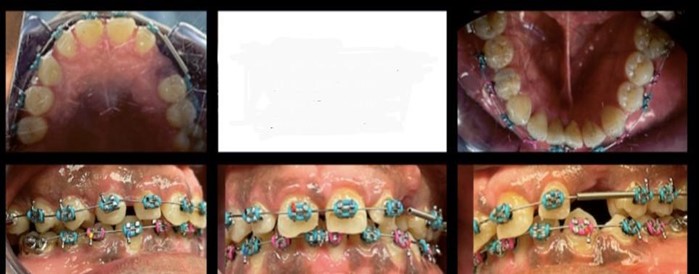
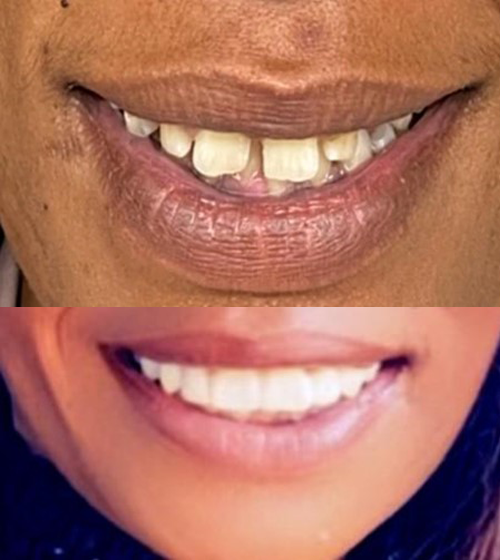
Here we discuss a clinical case treated with the Perfect Smile Retainer appliance by myself, Dr. Paul Ouellette. The patient was treated for spacing in teeth with adjunctive orthodontic treatment with fixed braces and retained by the Perfect Smile Retainer.
Application use
The start of the treatment plan relies on the use of two well-developed applications, i.e., EXOCAD and the iPhone App SmarTooth.
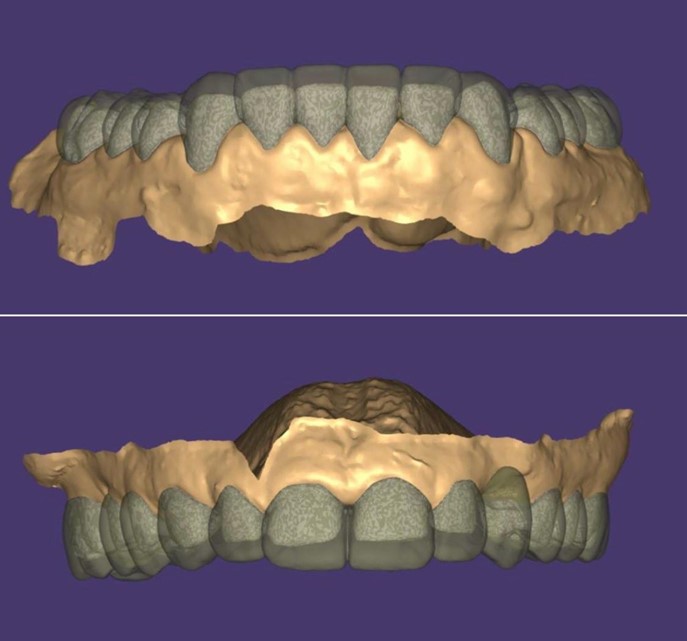
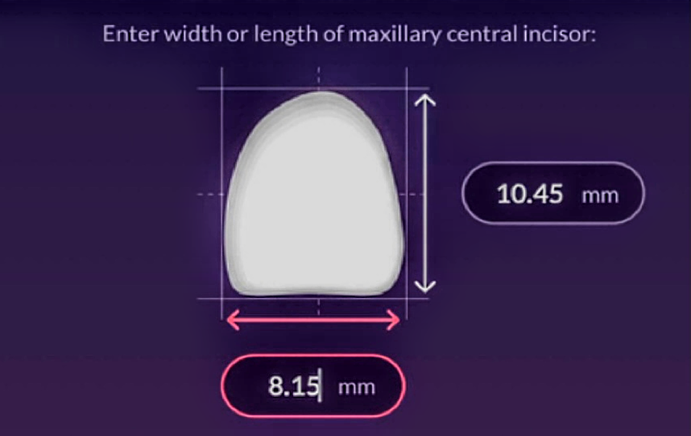
Designing the Perfect Smile Retainer with DaVinci golden proportions
Conclusion
The combined use of professional craftsmanship and automated intelligence leads to the creation of unique and effective things. The implementation of AI in healthcare has led to significant improvements. Similarly, AI orthodontics has enhanced clinical efficiency and sped up the process of diagnosis. Moreover, AI and machine learning algorithms provide persistent and reliable treatment options for orthodontic problems.
The PSR is a multi-purpose appliance that also can be used as a provisional trial smile device before orthodontics or cosmetic dentistry. It is designed with the latest technology, i.e., digital impressions using the EXOCAD app and smile proportions with the smarTooth app with 3D printing. Certain features set the PSR apart. It has a palatal extension that offers robust support and prevents relapse after orthodontic correction. The modification of the trial smile facade allows patients to use the retainer as a smile enhancer (adjusts teeth width and height according to the DaVinci golden proportions). It also allows the patient to alter the color of their teeth. Unlike conventional appliances, the Perfect Smile Retainer is worn during the day and left out during the night.
Numerous clinical studies show that patients with an AI-enhanced smile are more employable, desirable, and more quickly accepted into society. Patients with the Perfect Smile Retainer have boosted self-esteem and confidence and are highly likely to land a higher-paying job. Getting accepted in society and being attracted to the opposite gender is also relatively easy. The appliance easily snaps into place and has greater acceptability. Thus, the retainer has better patient compliance and is undoubtedly an exceptional innovation in the field of dentistry.
References
- https://www.statista.com/statistics/1334826/ai-in-healthcare-market-size-worldwide/
- Habehh, H., & Gohel, S. (2021). Machine learning in healthcare. Current genomics, 22(4), 291.
- Hwang, H. W., Park, J. H., Moon, J. H., Yu, Y., Kim, H., Her, S. B., … & Lee, S. J. (2020). Automated identification of cephalometric landmarks: Part 2-Might it be better than human?. The Angle Orthodontist, 90(1), 69-76.
- Kazimierczak, N., Kazimierczak, W., Serafin, Z., Nowicki, P., Nożewski, J., & Janiszewska-Olszowska, J. (2024). AI in orthodontics: Revolutionizing diagnostics and treatment planning—A comprehensive review. Journal of Clinical Medicine, 13(2), 344.
- Li, P., Kong, D., Tang, T., Su, D., Yang, P., Wang, H., … & Liu, Y. (2019). Orthodontic treatment planning based on artificial neural networks. Scientific reports, 9(1), 2037.
- Khanagar, S. B., Al-Ehaideb, A., Vishwanathaiah, S., Maganur, P. C., Patil, S., Naik, S., … & Sarode, S. S. (2021). Scope and performance of artificial intelligence technology in orthodontic diagnosis, treatment planning, and clinical decision-making-a systematic review. Journal of dental sciences, 16(1), 482-492.
- Bartkowiak, T., & Walkowiak-Śliziuk, A. (2018). 3D printing technology in orthodontics–review of current applications. Journal of Stomatology, 71(4), 356-364.
- Tsoukala, E., Lyros, I., Tsolakis, A. I., Maroulakos, M. P., & Tsolakis, I. A. (2023). Direct 3d-printed orthodontic retainers. a systematic review. Children, 10(4), 676.
- Alassiry, A. M. (2019). Orthodontic retainers: A contemporary overview. J Contemp Dent Pract, 20(7), 857-862.
- smarTooth app developer credits: Augusta University
- smarTooth app link: https://apps.apple.com/us/app/smartooth/id1007662611
- EXOCAD app link: https://exocad.com/about-us/about-exocad
- Vadachkoriia, N. R., NSh, G., & Mandzhavidze, N. A. (2007). ” Golden proportion” and its application to calculate dentition. Georgian medical news, (142), 87-94.
- Muniz, F. W. M. G., Cavalcante, D. J., Moreira, M. M. S. M., Rodrigues, L. K. A., de Oliveira Fernandes, C. A., de Almeida, P. C., & de Sousa Carvalho, R. (2017). Association between confidence in smiling and esthetic characteristics. Journal of Esthetic and Restorative Dentistry, 29(2), E56-E66.
- Ansari, S., Alsanie, Y., AlOjan, M., AlKhalifah, T., Hafez, A., & Alfadda, A. (2020). Desired smile and effect of facial esthetics on the confidence level of the Saudi public: a survey-based study. Journal of Dentistry and Oral Sciences, 2, 1-20.
- Dabuke, A. M., Zainal, V. R., & Hakim, A. (2023). The Effect of Self-Ability and Self Confidence on Employee Performance: A Literature Review. Dinasti International Journal of Digital Business Management, 4(2), 286-296.
About the author

Dr. Paul Ouellette, President of the Dental AI Association North America and Chair of the Division of Orthodontics, is a Diplomate of the American Board of Orthodontics and a Clinical Professor of Orthodontics. His leadership and expertise significantly influence the field of dental AI and orthodontics.