


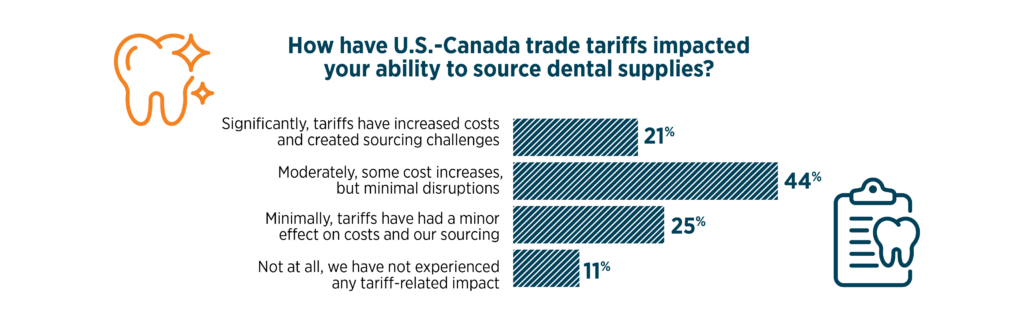
U.S. tariffs affect Canadian dental practices in several ways, most notably through higher costs and supplier disruptions. However, the extent to which tariffs affect a practice’s ability to source dental supplies varies. In an Oral Health survey, 21% of respondents reported that tariffs have significantly increased costs and created sourcing challenges, while 44% said they were moderately impacted (Figure 1). A closer look at the data reveals which dental practices are most at risk.
Fig. 1
When considering years in practice, most groups reported being moderately impacted by tariffs. Dentists practicing for five years or less were the least affected, with 44% indicating they were only minimally impacted. Many in this group may not yet be practice owners and therefore may not feel the full effect of rising costs. In contrast, dentists in the mid-career ranges reported the greatest impact: 72% of those practicing for 11–20 years and 60% of those practicing for 21–30 years experienced either significant or moderate effects. Among dentists practicing for more than 30 years, 56% reported significant or moderate impact, while 14% indicated no tariff-related impact at all.
Geographically, Ontario dentists appear to be the most affected, with 65% reporting moderate to significant impacts. Dentists in Quebec and the Atlantic provinces were the least affected, with 55% reporting moderate to significant impacts. Notably, 33% of respondents in these regions reported no impact from tariffs.
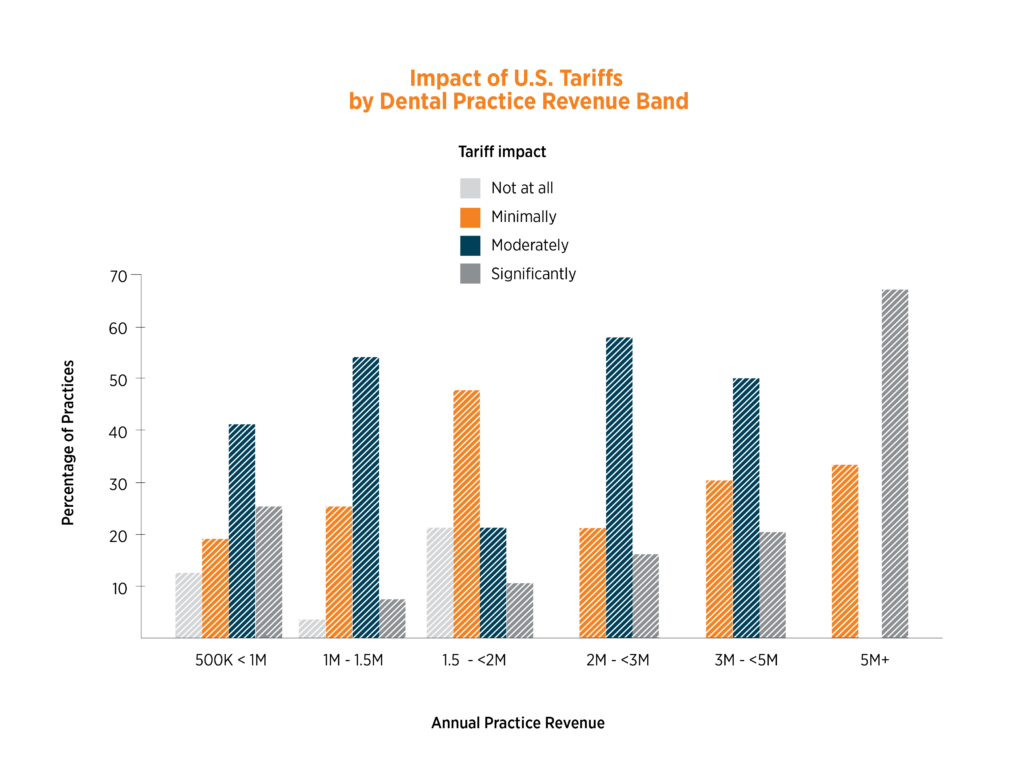
Practice revenue also plays a role. Dental practices earning between $1 million and $2 million annually appear to be less affected by tariffs than practices earning under $1 million or over $2 million. Figure 2 provides a more detailed breakdown of these findings.
Fig. 2
When examining practice type, solo practitioners and multi-dentist practices were more likely to report significant impacts compared to corporately owned practices. In fact, 67% of corporate practices reported minimal or no impact, suggesting that the support of a dental network may help offset some of the challenges associated with tariffs.
Dental practices experiencing significant tariff-related effects can help mitigate financial strain by controlling costs through supplier negotiations, bulk purchasing, participation in group purchasing organizations, and diversifying supply sources.
Subscribe to Oral Health’s bi-weekly Data Driven Dentistry e-newsletter.