
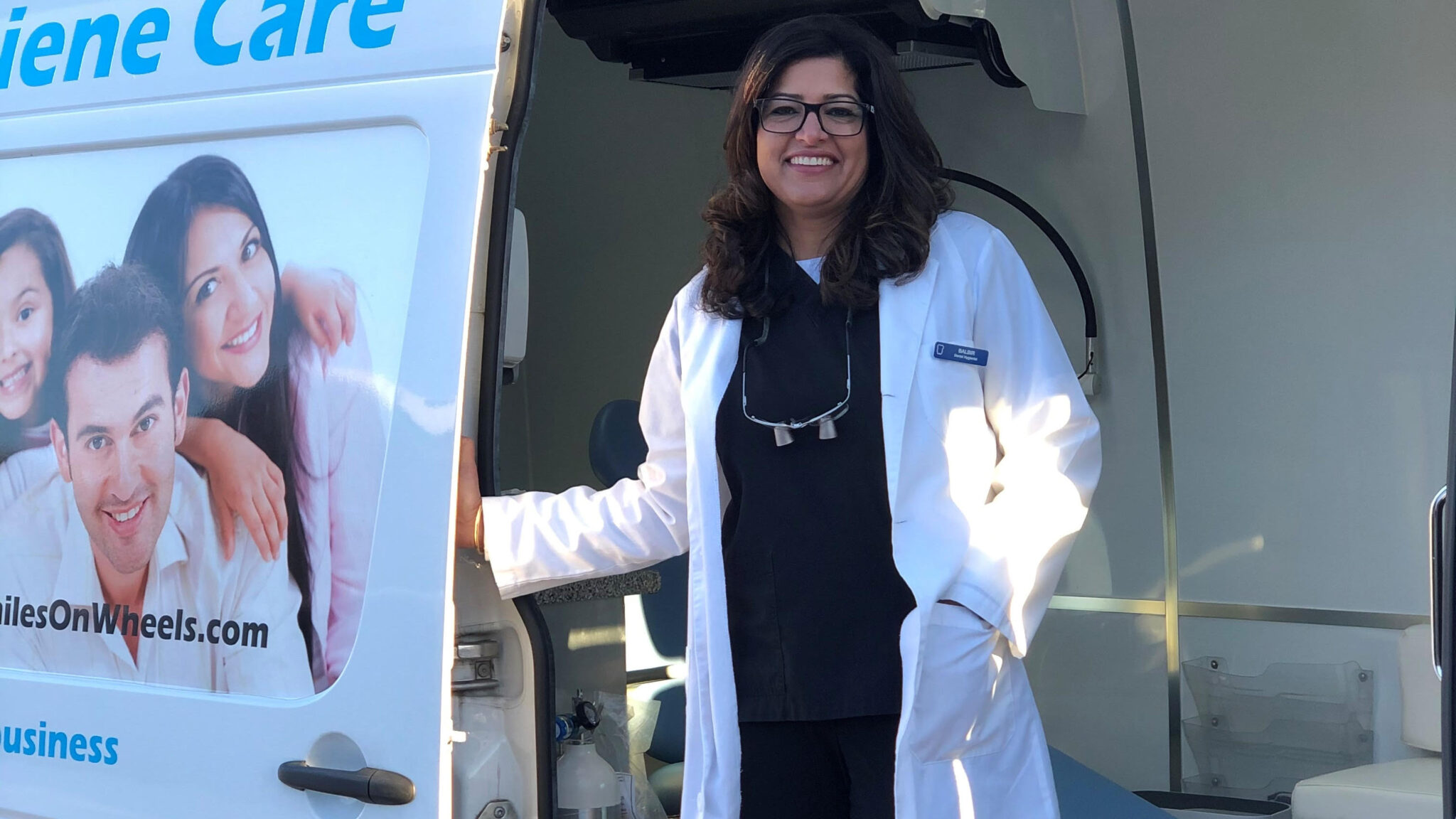
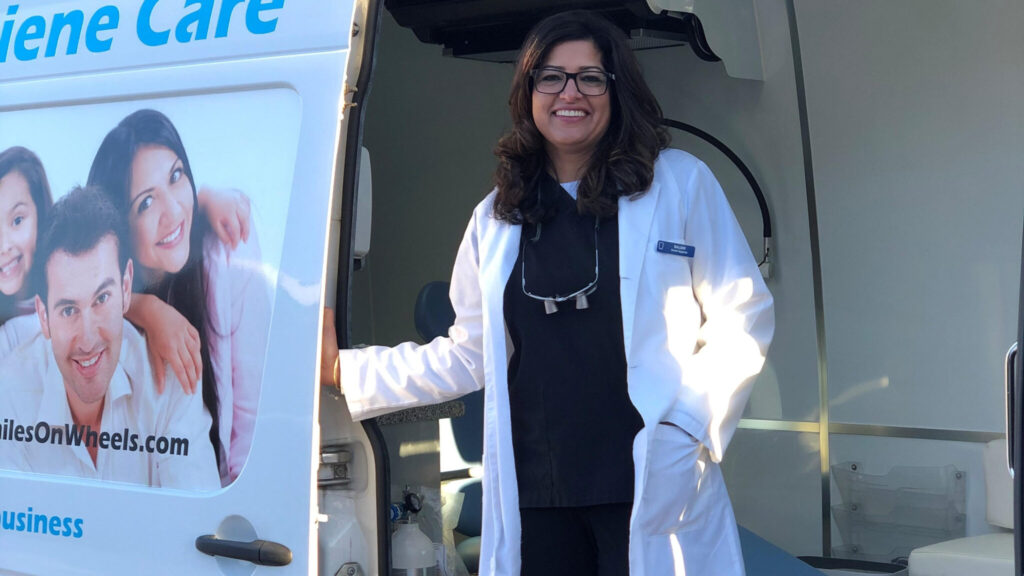
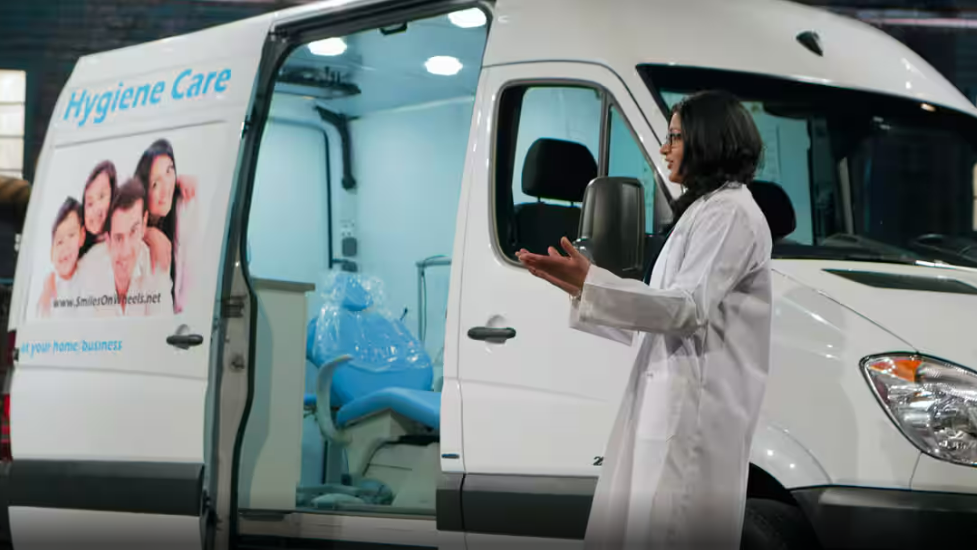
In 2017, on Season 11 of Dragons’ Den, dental hygienist Balbir Sohi unveiled her “Smiles on Wheels” business on national TV. She showcased her refurbished van, equipped with all the tools needed for a mobile hygienist to provide care right in a parking lot.
Although she didn’t achieve her goal of launching her own franchise due to Canadian health care regulations, Sohi continues her mobile hygienist venture. She now operates two trucks and employs several hygienists who work either hourly or as associates, based on their preference.
Sohi has noticed a growing trend of hygienists opting for mobile practices.
“More and more hygienists are taking this mobile route,” she said. “I’ve mentored hygienists across Canada, the U.S., and even in England. I’ve helped around six or seven hygienists set up their own trucks,” she added.
Are figures showing an upward trend?
When asked about this trend, Donna Wells, RDH, BA, manager of professional practice at the Canadian Dental Hygienists Association (CDHA), said, “We are seeing an increase in the number of mobile practices being opened in the last year.”
Indeed, some hygienists made headlines last year.
“It’s more exciting,” registered dental hygienist Elzara Arifova from Edmonton told CTV after starting her mobile dental clinic.
However, Wells noted that the CDHA does not have precise figures on how many dental hygienists own mobile practices.
The CDHA, representing more than 31,000 dental hygienists nationwide, has 1,695 active UIN users—billing numbers used to charge insurance companies.
However, more hygienists are going independent.
“We’ve seen a 48 per cent increase in the number of independent practices being opened in the last five years, but I don’t have a breakdown of how many of those are mobile dental hygienists,” she added.
Hygienists seeking to feel valued
In addition to the freedom and excitement of mobile practices, other factors are driving this trend.
According to CDHA data, retirement is a major reason dental hygienists anticipate leaving the profession, with about 39 per cent citing a desire for a career change or feeling undervalued at their current workplace.
“We hope all dental practices will foster a healthy and respectful workplace where not only dental hygienists, but the entire team, feel valued for their contributions,” Wells said.
Sohi shares this sentiment.
“Dental hygienists are now seeking more respectful work environments and realizing they can operate independently,” she explained. “Many are leaving traditional settings because they feel rushed and unable to provide proper oral hygiene instructions. Personally, I left because I didn’t have enough time to do my job properly.”
No shortage, but ‘maldistribution’
As more hygienists embrace independence, the discussion continues about a perceived shortage of hygienists, particularly with the federal government’s rollout of the Canadian Dental Care Plan (CDCP) to expand dental insurance coverage.
In early July, Jean-François Lortie, president of Quebec’s Order of Hygienists, warned of a shortage of at least 1,400 hygienists in the province, with only about 300 licensed each year.
To address this, the College of Dentistry at the University of Saskatchewan (USask) introduced a new dental hygiene program to tackle workforce shortages and improve oral health care for residents across the province.
However, Wells argues that what is often described as a shortage is more accurately a case of “maldistribution.”
“While we’ve seen claims of a dental hygiene shortage, what we actually see is a maldistribution,” she said.
She explained that while some areas struggle to find dental hygienists, this is not the case everywhere.
Mobile hygienists boost accessibility
Mobile hygienists are filling gaps in more remote rural areas.
In August, Claire Hudson, a dental hygienist in Whitehorse, highlighted the legal challenges of providing services to rural communities in Yukon as an independent hygienist. Hudson told the CBC that many patients from rural areas face challenges traveling to Whitehorse for dental care due to financial or mobility issues.
Even in urban settings like Sohi’s, accessibility remains a concern.
“People who are wheelchair-bound or bedridden find it really hard to access dental care,” Sohi said. “I have a large clientele I visit at home to perform procedures. Recently, a dentist joined me because many of these patients hadn’t seen a dental professional in five or six years and needed more advanced care, like temporary fillings, beyond my scope.”
“With long wait lists for long-term care and retirement homes, more people are staying at home, and we’re helping meet that need.”
It’s also cost-effective for patients, who would otherwise have to rent an ambulance for $1,000, along with additional expenses, just to visit a dental office.