
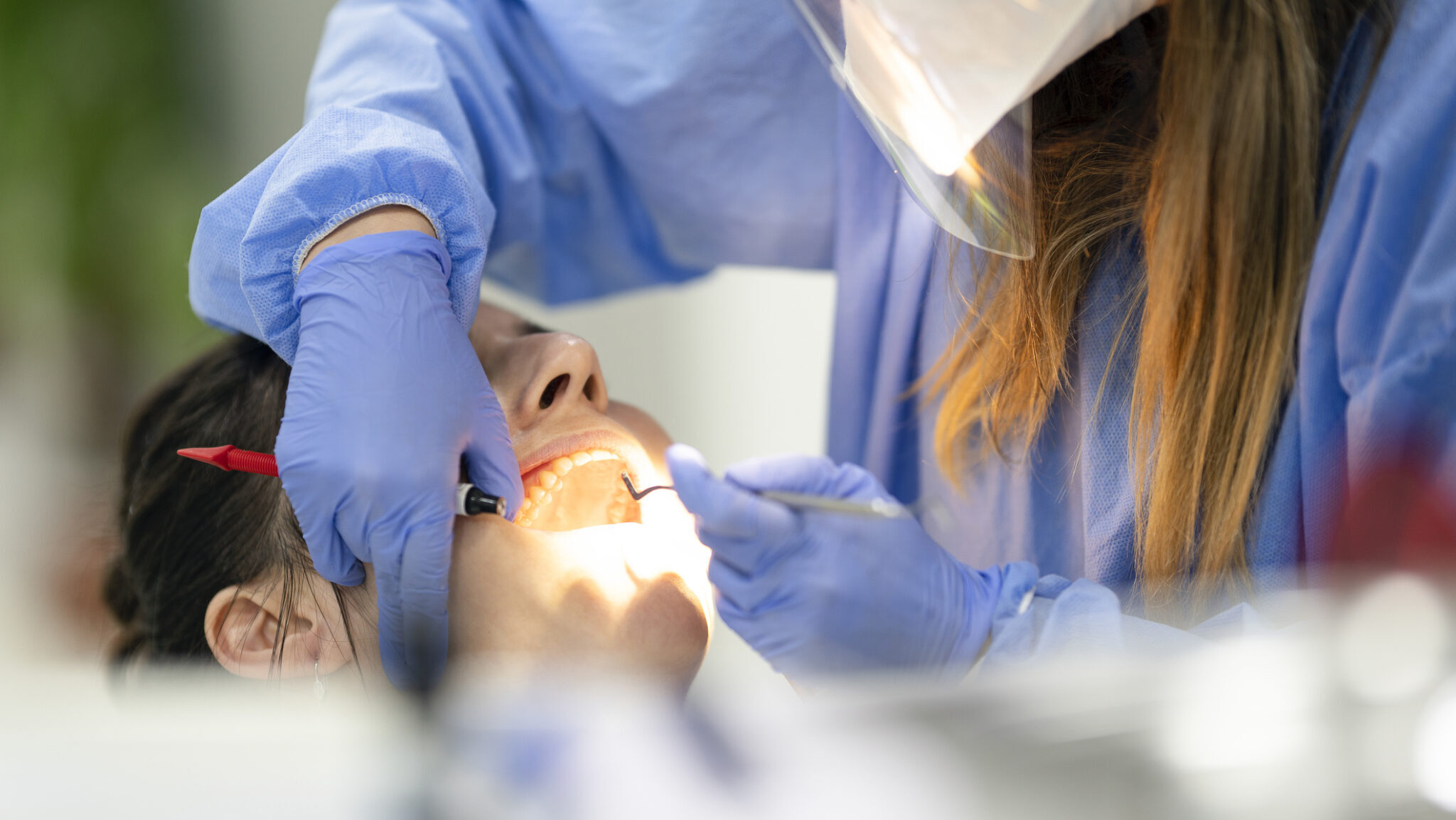
Last year, I joined a group of volunteer dental hygienists in the Seal Grenada dental outreach program which had the goal of placing 1000 sealants on children in Grenada over 5 days. Not only did we reach our goal, we almost tripled it! While that is something to cheer about, here is something that we shouldn’t. Every day I was there, I extracted a permanent molar on a child under 10 years old. Why? Because the occlusal decay was so wide and deep that the teeth were unrestorable. It was devastating. Those extractions could have been prevented with dental sealants.
Dental sealants work and we need to be doing more of them. Read the answers to common questions about sealants. Let’s make a goal of saving teeth by placing more dental sealants.
How Effective are Dental Sealants?
- The Centers for Disease Control and Prevention states, “Dental sealants prevent 80% of cavities over 2 years in the back teeth, where 9 in 10 cavities occur.”1
- The American Academy of Pediatric Dentistry (AAPD) states, “…sealants are effective in preventing and arresting pit-and-fissure occlusal carious lesions of primary and permanent molars in children and adolescents compared with the nonuse of sealants or use of fluoride varnishes.”2
- A Cochrane Systematic Review states, “Our review found moderate‐quality evidence that resin‐based sealants reduced caries by between 11% and 51% compared to no sealant, when measured at 24 months.”3
Who Can Place Dental Sealants?
- Dentists
- Registered Dental Hygienists
- Qualified Dental Assistants
What are the Indications for Sealants?
- Primary or permanent teeth
- Teeth with deep grooves
- Any age
- No dentin decay
- Medium to High Caries Risk
- Cooperative patient
What are the Contraindications for Sealants?
- Decay into dentin
- Allergy to materials
- Uncooperative patient
How Can I Determine if the Tooth Should Get a Sealant?
- Assess the tooth using visualization and an explorer
- Radiographs are not required, but can be helpful along with other ways to detect caries
- Determine depth of decay
- Determine whether sealants can be placed based on the International Caries Detection and Assessment System (ICDAS). Sealants can be placed on teeth with ICDAS 0-3 (sound tooth surface to enamel decay)4
- Determine caries risk using a guide such as the ADA Caries Risk Assessment5
Which Sealant Material Should I Use?
A report of the American Dental Association and the AAPD does not recommend one material over another.6
The different materials which can be used for sealants are:
- Glass Ionomer
- Resin-based
- Resin-modified glass ionomer sealant
- Polyacid modified resin sealant (compomer)
Select the material which works best in your hands.
Glass ionomer has the advantage of being moisture tolerant. A glass ionomer sealant should be selected when it is challenging to isolate the tooth.
Which of the Following Teeth Should Get a Sealant?
A)

B)

C)

D)

Answer: All of them.
- This tooth has deep pits and fissures with enamel decay. It is indicated for a sealant.
- This tooth has deep pits and fissures with partial loss of sealant material. Some parts of the pits and fissures have an intact sealant whereas others parts are unsealed. A sealant can be placed over the existing sealant and the unsealed pits and fissures.
- This tooth is partially erupted with decalcification. A glass ionomer sealant should be used as it cannot be isolated for a resin based sealant.
- This tooth has sound tooth structure with deep pits and fissures. The client has decay on other teeth. A dental sealant is indicated as the client has a high risk of decay.
Conclusion
Let’s place more dental sealants! They are effective, painless, inexpensive, and can be placed quickly. Placing sealants prevents the unnecessary need of restoring and extracting teeth due to pit and fissure decay.
I will be returning to Grenada in August to volunteer in the second year of Seal Grenada. I hope to be placing more sealants and doing less extractions. We need more volunteers to accomplish our goal of preventing decay in a country with a low access to dental care. Would you like to join me? Contact me at sanjuktamohanta@hotmail.com or send me a DM on Instagram @drsanjmohanta
References
- Centers for Disease Control and Prevention. (2021, March 29). Dental sealants. Centers for Disease Control and Prevention. https://www.cdc.gov/oralhealth/fast-facts/dental-sealants/index.html
- Evidence-based Clinical Practice Guideline for the Use of Pit-and-Fissure Sealants. Pediatr Dent. 2016 Oct;38(6):263-279. PMID: 27931466. https://pubmed.ncbi.nlm.nih.gov/27931466/
- Cochrane Library. (2017, July 31). Pit and fissure sealants for preventing dental decay in … https://www.cochranelibrary.com/cdsr/doi/10.1002/14651858.CD001830.pub5/full
- Gugnani, N., Pandit, I. K., Srivastava, N., Gupta, M., & Sharma, M. (2011). International caries detection and assessment system (ICDAS): A new concept. International journal of clinical pediatric dentistry. https://www.ncbi.nlm.nih.gov/pmc/articles/PMC5030492/
- American Dental Association. (2023, July 18). Caries risk assessment and management. American Dental Association. https://www.ada.org/resources/ada-library/oral-health-topics/caries-risk-assessment-and-management
- American Academy of Pediatric Dentistry. (2016). Use of Pit and Fissure Sealants. https://www.aapd.org/research/oral-health-policies–recommendations/pit_and_fissure_sealants/
About the Author

Dr. Sanjukta Mohanta is a general dentist practicing in Brampton, Ontario. She graduated from the University of Toronto, Faculty of Dentistry in 1999. She founded the New Dentist Study Club and hosts their podcast. She can be contacted on Instagram @drsanjmohanta @newdentiststudyclub