
As Founder, Owner, and CEO of the Jaw and Facial Pain Centre in Toronto, Ontario, Canada, I will highlight the need for effective and safe pain management to ensure a positive patient experience in dental care. With a growing number of people experiencing Temporomandibular Joint Disorder (TMD)—one of the fastest-growing musculoskeletal issues—managing pain has become more critical than ever.
The double burden of pain: Patients and practitioners
Patients aren’t the only ones suffering. Dentists face their own challenges, enduring musculoskeletal strain from prolonged, awkward positions during procedures. This often leads to chronic pain, numbness, and reduced career longevity. Traditional pain management methods rely heavily on pharmaceuticals, which may not account for the unique ways individuals experience pain.
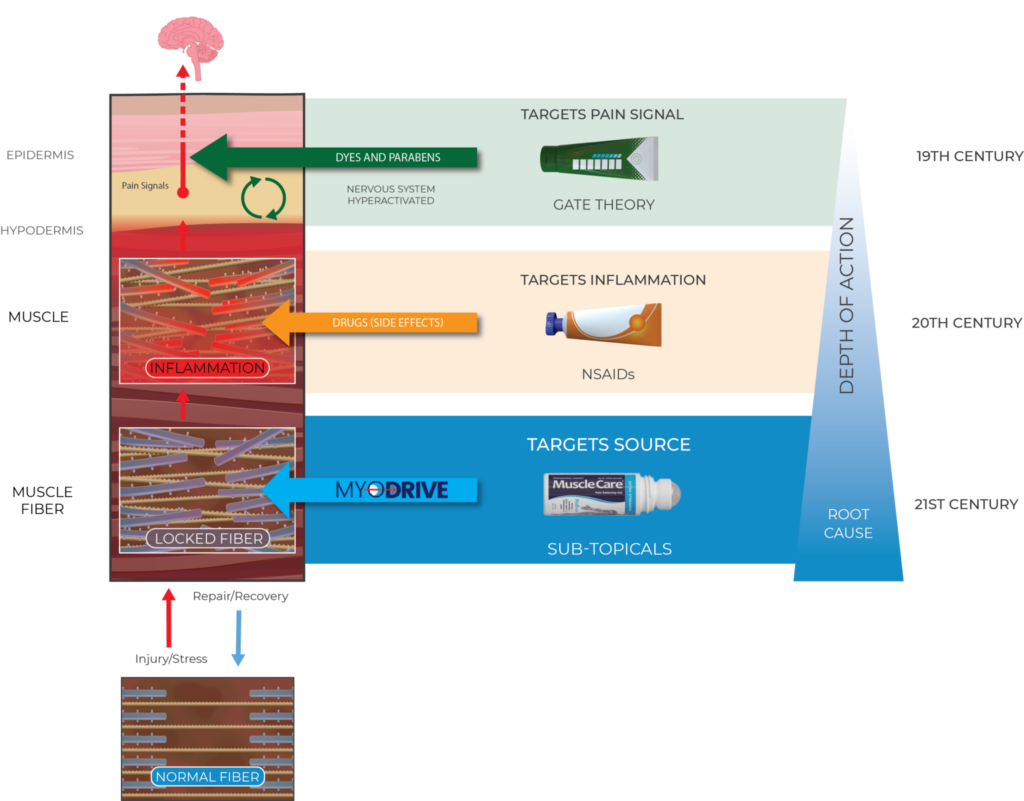
Breakthroughs in pain management must address how pain signals travel through soft tissues, creating cycles of contraction, stress, and circulation blockages that worsen discomfort. A more holistic approach is needed to improve outcomes for both patients and practitioners.
Understanding the pain cycle
Pain is a complex physiological process. When nerves fire pain signals, they travel through muscles, tendons, and fascia to the spinal cord and brain. This triggers soft tissue contractions, which exert pressure on joints and nerve roots. Poor circulation then leads to nutrient deprivation and an accumulation of inflammatory chemicals, further worsening the pain.
Traditional treatments like painkillers and topicals often provide temporary relief but fail to address the underlying dysfunctions causing chronic pain. Breaking the cycle requires targeting tissue hypertonicity and restoring circulation. Investing in solutions that address root causes can revolutionize dental care, benefiting both patient outcomes and practitioner well-being.
Fig. 1
Chronic pain: A growing public health crisis
Chronic pain is rising rapidly, with 20% growth between 2016 and 2022.1 Currently, 116 million Americans are affected.2 For dentists, prolonged static postures and fine motor movements exacerbate musculoskeletal strain, leading to high rates of neck, back, and wrist pain. Statistics reveal:
Patient
Head & neck pain: Up to half of the adult population may experience neck pain within a given year.3
Migraine: The second most common pain condition.4
TMD (Temporomandibular Disorder): The fastest-growing musculoskeletal issue, affecting 31% of the population.5
Dentist
Dentists suffer from pain more than other health care professions. 61% of dentists had MSD pain, compared to 37% of surgeons and 20% of physicians.6
- Roughly 20% of the dentists reported decreased productivity of their work due to pain and discomfort, and over 6% reported poor-to-moderate work ability.7
- 15% of dentists studied left clinical work or cut their hours as a direct result of MSD pain.8
The shift toward non-pharmaceutical solutions
Public preference for non-pharmaceutical pain relief has grown exponentially. In 2010, only 25% of people sought alternatives to prescribed medication. By 2024, that number had risen to 78%.9 This demand creates opportunities for safer, more effective pain management solutions, particularly for dental professionals wary of recommending over-the-counter options due to potential contraindications.
Introducing MuscleCare: A game-changer in pain management
Fig. 2
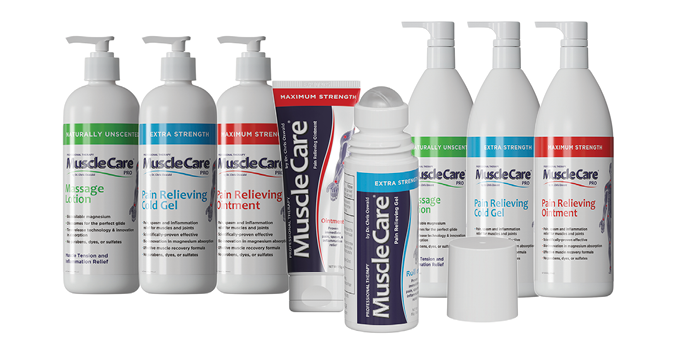
Products
MuscleCare is a sub-topical innovation designed to address the root causes of pain, offering long-lasting relief without relying on pharmaceuticals. Supported by extensive research, I developed MuscleCare, which directly targets tissue dysfunction with active ingredients like magnesium, MSM, and glucosamine. Its patent-pending Myodrive technology restores circulation within 30 seconds, flushing out inflammation and relieving pain.
MuscleCare has undergone rigorous clinical testing:
- Superior efficacy: Outperforms leading brands like Biofreeze and IcyHot, increasing pain and pressure tolerance.10
- Validated effectiveness: Matches the results of Voltaren (NSAID cream) in controlled trials.11
- Safety assurance: Proven safe for pregnant women and infants through systematic meta-analysis.12
Empowering dentists and patients
MuscleCare offers tailored applications for dental settings:
Pre-treatment: Relaxes patient muscles, reducing discomfort during long procedures.
Post-treatment: Promotes faster recovery and minimizes residual pain.
By integrating MuscleCare, in their practice dentists can enhance patient care, build stronger relationships, and foster practice growth. The product’s natural formula, free from harsh chemicals and strong odors, makes it ideal for sensitive areas.
Stretching: The perfect companion to MuscleCare
Effective pain relief requires more than just topical treatments. Every MuscleCare purchase includes access to pain-specific stretch routines and ergonomic assets via a QR code on its packaging. These routines, developed from my 36 years of clinical experience, help patients and practitioners address their unique pain challenges.
Setting a new standard in pain management
MuscleCare represents a paradigm shift in how dental professionals and patients approach pain management. By addressing the root causes of pain and prioritizing long-term health, MuscleCare is transforming dentistry into a field where both patients and practitioners can thrive. 
Oral Health welcomes this original article.
Disclaimer: The author is the creator and CEO of MuscleCare.
References
- https://www.cdc.gov/nchs/products/databriefs/db518.htm
- Virtual Mentor. 2013;15(5):449-454. doi:\10.1001/virtualmentor.2013.15.5.pfor1-1305.
- Benyamin RM, Singh V, Parr AT, Conn A, Diwan S, Abdi S. Systematic review of the effectiveness of cervical epidurals in the management of chronic neck pain. Pain Physician. 2009 Jan-Feb;12(1):137-57. PMID: 19165300.
- Steiner, T.J., Stovner, L.J., Jensen, R. et al. Migraine remains second among the world’s causes of disability, and first among young women: findings from GBD2019. J Headache Pain 21, 137 (2020). https://doi.org/10.1186/s10194-020-01208-0
- Li DTS, Leung YY. Temporomandibular Disorders: Current Concepts and Controversies in Diagnosis and Management. Diagnostics (Basel). 2021 Mar 6;11(3):459. doi: 10.3390/diagnostics11030459. PMID: 33800948; PMCID: PMC8000442.
- Rambabu, Tanikonda, and K. Suneetha. “Prevalence of Work-Related Musculoskeletal Disorders Among Physicians, Surgeons and Dentists: A Comparative Study.” Annals of Medical and Health Sciences Research, vol. 4, no. 4, 2014, pp. 578-582.
- Marklund S, Mienna CS, Wahlström J, Englund E, Wiesinger B. Work ability and productivity among dentists: associations with musculoskeletal pain, stress, and sleep. Int Arch Occup Environ Health. 2020 Feb;93(2):271-278. doi: 10.1007/s00420-019-01478-5. Epub 2019 Oct 25. PMID: 31654126; PMCID: PMC7007882.https://pmc.ncbi.nlm.nih.gov/articles/PMC7007882/
- Moodley, Rajeshree, et al. “The Prevalence of Occupational Health-Related Problems in Dentistry: A Review of the Literature.” Journal of Occupational Health, vol. 60, no. 2, 2018, pp. 111-125.
- https://www.palmer.edu/wp-content/uploads/2021/12/americans-prefer-drug-free-pain-management-over-opioids.pdf
- Avrahami D, Hammond A, Higgins C, Vernon H. A randomized, placebo-controlled double-blinded comparative clinical study of five over-the-counter non-pharmacological topical analgesics for myofascial pain: single session findings. Chiropr Man Therap. 2012 Mar 21;20:7. doi: 10.1186/2045-709X-20-7. PMID: 22436614; PMCID: PMC3337242.
- Goodman JM, Sless RT, Guist BP (2022) Muscle Care™ Pain Relief Therapy vs. Voltaren® in the Relief of Trapezius Trigger Point Musculoskeletal Pain: A Placebo Controlled, Randomized, Double-Blinded Controlled Trial. J Musculoskelet Disord Treat 8:109. doi.org/10.23937/2572-3243.1510109
- Alsaad, A.M., Fox, C. & Koren, G. Toxicology and teratology of the active ingredients of professional therapy MuscleCare products during pregnancy and lactation: a systematic review. BMC Complement Altern Med 15, 40 (2015). https://doi.org/10.1186/s12906-015-0585-8
About the author

Dr. Chris Oswald is a chiropractor of 36 years, entrepreneur, and speaker. He owns and operates the largest multi-disciplinary pain clinics in Canada, The Centre for Fitness, Health, and Performance, and he’s the co-founder of CFFHP’s subdivision, The Jaw Centre. He is the creator and CEO of MuscleCare, the natural, root-cause, sub-topical spasm, inflammation, and pain reliever and Co-CEO of OFPT, the advanced training certification for TMD care. He’s the author of the bestselling stretching book, Stretching for Fitness, Health & Performance, as well as the creator of ‘Stretch’ for Massage Envy. He has also held the position of Official Ergonomics Officer for Office Depot USA.