
The demands and expectations for oral health care professionals are increasing. Patients are seeking high-quality care and personalized attention and education at an affordable cost. Moreover, there is a shift in focus on oral health-related quality of life, which is evidenced by a greater number of patients seeking answers regarding their oral health online.
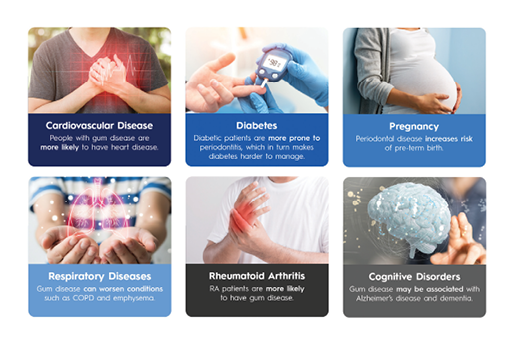
Another issue that is gaining more traction from patients and professionals is the oral-systemic health connection that refers to the bidirectional relationship between oral health and overall well-being. Poor oral health can contribute to various systemic diseases, and conversely, systemic diseases can negatively impact oral health. This connection is significant because it highlights the importance of oral hygiene and regular dental care for maintaining overall health.
In a recent study published out of the University of Saskatchewan College of Dentistry, we conducted an online survey that was distributed to members of a representative panel in North America, consisting of 774,206 potential respondents.1 The purpose of the study was to understand patients’ behaviors and to identify factors contributing to a positive patient experience at the dental office. Panelists were pre-screened to identify those who were 25 years of age or older and had visited a dentist in the past year. Pre-screened panelists were invited to participate by e-mail. The survey contained a mix of multiple choice, short answer and numerical ranking questions regarding demographic information (age, gender, region, race, education), frequency of dental visits, patient satisfaction with the dental office, importance of dental office attributes and dental product recommendation expectations. The survey received 400 responses with 54% from females and 46% from males.
The average number of dental visits per year was 2.1. Notably, half of the respondents had been seeing the same dental office for over two years, indicating a positive sign of continuity and satisfaction. This is an important finding as dental professionals are increasingly being seen as key players in preventive care. Regular examinations help identify, treat and prevent periodontal disease, which has been linked to systemic conditions such as diabetes mellitus, cardiovascular disease, and Alzheimer’s.2
Experience with the current dental office
Overall, 84% of panelists indicated satisfaction with their dental office, 14% were somewhat satisfied and 2% were not satisfied. Attributes mentioned by patients as driving satisfaction were related to good customer service (48%) and quality dental care/services (42%). These two elements form the foundation of a positive experience.
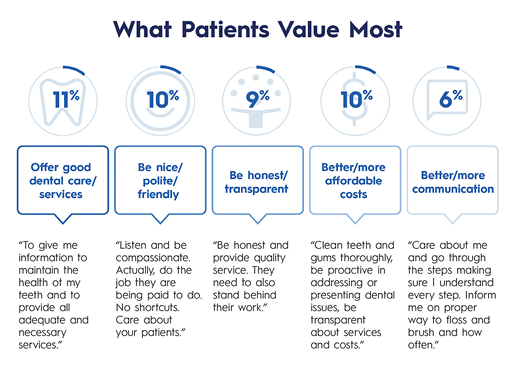
Most common factors cited by patients as contributing to patient trust included: offering good services (11%), polite and friendly behavior (10%), affordable cost (10%), transparency (9%) and clear communication (6%).
Simply put, patients want a provider who communicates effectively, shows compassion, and possesses strong clinical expertise. Communication becomes especially important when oral diseases have broader health implications, as patients will need ongoing support and education throughout their care (Fig. 1).
Fig. 1
Respondents were asked to rate various dental office attributes, and the ones that stood out were: “cares about my time” (82% rated it extremely or very important), “dental team is gentle” (79%), “cares about me as a person, not just a patient” (78%) and “has improved my oral health” (78%).
These preferences underscore a growing movement in healthcare toward patient-centered care, which places the individual at the center of every decision. By focusing on each patient’s unique needs, concerns, and values, this approach moves beyond standardized treatment, aiming instead to create more meaningful and effective care.
Furthermore, attributes related to immediate gratification, personalized communication and positive health outcomes have high importance to patients who are extremely likely to recommend the dental office, adhere to treatment recommendations, keep appointments and maintain a relationship with the dental office.
Expectations for self-care recommendations
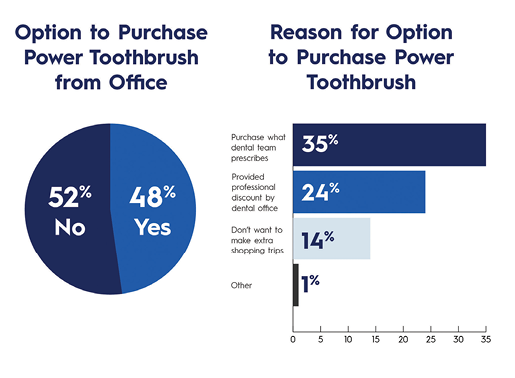
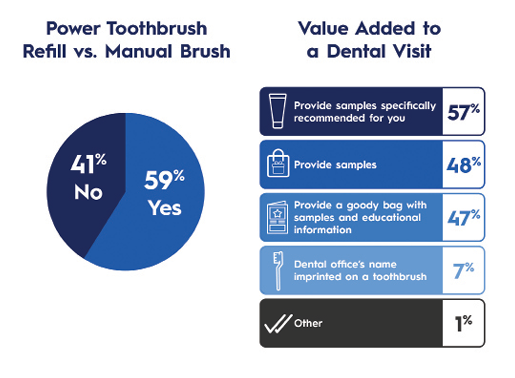
The majority of respondents (55%) indicated they expect recommendations for specific brands to treat their specific oral care issues. 48% of the respondents would like the option to purchase a power toothbrush from their dental office. Accessibility to the product recommended was of high importance to the respondents (Fig. 2).
Fig. 2
In addition, toothpaste and toothbrush samples were rated as the most important samples to respondents followed by floss, mouthwash and whitening strips. 59% of the respondents would prefer to receive a power toothbrush refill instead of a manual toothbrush. Finally, approximately half of the respondents said samples and educational material add value to the dental visit (Fig. 3).
Fig. 3
Patients value product advice that is personalized to their specific needs. When recommended products are easy to access, patients are more likely to appreciate and use them. This is especially critical when it comes to managing chronic conditions that start in the mouth but affect the rest of the body. The bidirectional relationship between periodontal disease and diabetes mellitus underscores the critical connection between oral and systemic health.3 Chronic inflammation associated with periodontal disease can impair glycemic control, exacerbate insulin resistance, and complicate diabetes management. In turn, poorly controlled diabetes can worsen periodontal health by weakening the immune response and promoting the growth of pathogenic bacteria, increasing the risk of infection and disease progression. This interplay highlights the need for proactive, preventive oral care as a key component of diabetes management. Personalized product recommendations can empower patients to take charge of their oral health, support improved clinical outcomes and contribute to better long-term control of systemic conditions like diabetes.
Motivators for today’s dental patients
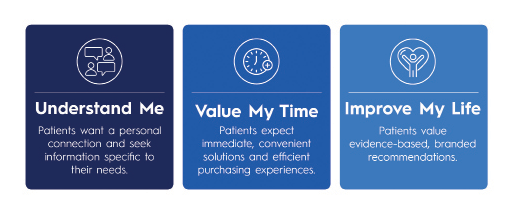
The survey findings can be practically applied and related to 3 key drivers of dental patient motivation4 (Fig. 4):
Fig. 4
et al., 2025.1
1. “Understand me” – Patients want personal connection
Patients want their dental care to feel personal, not one-size-fits-all. When dental professionals take time to listen, explain clearly, and tailor treatment plans to individual needs, patients are more likely to trust their provider, follow recommendations and stay loyal to the practice. This kind of care makes patients feel seen and heard. Other studies in dentistry and medicine show that personalization leads to improved outcomes and patient commitment.
2. “Value my time” – Make each appointment count
Patients want their visits to be efficient without sacrificing quality. That means using the appointment to not just treat, but educate and coach, including offering tips and tools to improve oral health between visits. In addition, technology can be implemented into the practice to stay in touch with patients and support care outside the clinic.
3. “Improve my life” – Give me tools to stay healthy
Patients aren’t just looking for quick treatment—they want to feel healthier and in more control of their oral health. As awareness of the oral-systemic link grows, many patients are beginning to understand that oral health is not isolated, it plays a critical role in their overall well-being. This increased understanding motivates them to take prevention more seriously and engage more actively in their care. They value personalized home care advice, clear instructions on how to prevent problems and product recommendations that are backed by science.
Evidence-based recommendations show that electric toothbrushes, particularly those with oscillating-rotating heads, consistently outperform manual brushes in removing plaque and improving gingival health.5,6 Toothpastes containing stannous fluoride are clinically proven to reduce plaque regrowth, decrease plaque virulence, and improve gingival health.7,8 Additionally, app-connected toothbrushes that provide real-time feedback and coaching have been shown to enhance brushing habits and boost patient confidence in their oral care routines.9,10
Dental professionals who recommend the appropriate tools empower patients to maintain their oral health well beyond the appointment. Patients are motivated to achieve lasting improvements in both their oral and overall systemic health (Fig. 5).
Fig. 5
What’s next?
Based on the findings, dental offices can take several steps to improve the patient experience. Regularly gathering patient feedback provides valuable insight into satisfaction levels and highlights areas for improvement. Training staff in personalized communication and education ensures that patients feel informed, understood, and supported throughout their care journey. Providing branded, science-backed product recommendations tailored to individual needs promotes more effective at-home care and builds trust in professional guidance. Additionally, incorporating technology tools, such as digital reminders or interactive care platforms, can boost patient engagement and encourage consistent self-care between visits.
This study offers a clear message: patients want more than clean teeth. They want a personalized experience. They want dental professionals who understand their unique needs, value their time and help them take control of their oral health. When dental professionals combine strong clinical skills with personal connection, clear communication, and tailored advice, they build lasting relationships. In a competitive and fast-paced healthcare world, that kind of trust is valuable and essential.
Today’s patients are thinking about how oral care fits into their overall health. The oral-systemic link is becoming a motivator for people to prioritize preventive dental care, adopt healthier habits, and trust providers who are knowledgeable in these areas. For dental professionals, this is both a responsibility and an opportunity. By embracing their role in supporting total wellness, dental professionals can make a profound difference in people’s lives. 
Oral Health welcomes this original article.
References
- Levin L, Khehra A, Kowal S, Romer K. A National Survey Reveals the Keys to Trust, Satisfaction, and Motivation in Oral Health Care. Int Dent J. 2025 Apr;75(2):1003-1010. doi: 10.1016/j.identj.2024.10.011.
- Villoria GEM, Fischer RG, Tinoco EMB, Meyle J, Loos BG. Periodontal disease: A systemic condition. Periodontol 2000. 2024 Oct;96(1):7-19. doi: 10.1111/prd.12616.
- Mealey BL, Oates TW. Diabetes mellitus and periodontal diseases. J Periodontol. 2006 Aug;77(8):1289-303. doi: 10.1902/jop.2006.050459.
- Edher F. Elevating patient experiences: the three key drivers of patient motivation. Available from: https://www.dental-care.ca/en-ca/thought-leader-articles/elevating-patient-experiences; 2023 [Accessed 13 July 2025].
- van der Sluijs E, Slot DE, Hennequin-Hoenderdos NL, Valkenburg C, van der Weijden FGA. The efficacy of an oscillating-rotating power toothbrush compared to a high-frequency sonic power toothbrush on parameters of dental plaque and gingival inflammation: a systematic review and meta-analysis. Int J Dent Hyg. 2023;21(1):77–94. doi: 10.1111/idh.12597.
- Clark-Perry D, Levin L. Systematic review and meta-analysis of randomized controlled studies comparing oscillating-rotating and other powered toothbrushes. J Am Dent Assoc. 2020 Apr;151(4):265-275.e6. doi: 10.1016/j.adaj.2019.12.012.
- Biesbrock A, He T, DiGennaro J, Zou Y, Ramsey D, Garcia-Godoy F. The effects of bioavailable gluconate chelated stannous fluoride dentifrice on gingival bleeding: meta-analysis of eighteen randomized controlled trials. J Clin Periodontol. 2019;46(12):1205–16. doi: 10.1111/jcpe.13203.
- Clark-Perry D, Levin L. Comparison of new formulas of stannous fluoride toothpastes with other commercially available fluoridated toothpastes: A systematic review and meta-analysis of randomised controlled trials. Int Dent J. 2020 Dec;70(6):418-426. doi: 10.1111/idj.12588.
- Zou Y, Grender J, Adam R, Levin L. A Meta-analysis Comparing Toothbrush Technologies on Gingivitis and Plaque. Int Dent J. 2024 Feb;74(1):146-156. doi: 10.1016/j.identj.2023.06.009.
- Khehra A, Levin L. Utilizing technology to enhance compliance and oral health. Acta Stomatologica Marisiensis 2021;4(1)1-6. https://doi.org/10.2478/asmj-2021-0001.
About the authors

Liran Levin is a Professor of Periodontology and Associate Dean for Research and Graduate Studies at the College of Dentistry, University of Saskatchewan. He has published more than 400 articles and book chapters that received more than 20,000 scientific citations. Dr Levin has been lecturing extensively nationally and internationally on dental implants, periodontal diseases, and dental trauma.

Anahat Khehra is a periodontist and Master of Medical Sciences graduate from Harvard School of Dental Medicine. She earned her DDS and BMedSc from the University of Alberta. Her work includes multiple peer-reviewed publications, with interests in clinical periodontics, research, education, and organized dentistry.