Cosmetic Simulation: Every Nail Deserves a Hammer
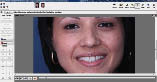
Figure 14. Zoomed out view of the completed diastema closure simulation.

If you are like me and enjoy spending your time working in the front of the mouth as opposed to repairing lower second molars and the like, then you are ever watchful for anterior dentistry projects. I find this not only healthy for my back (I can usually sit upright when “rehab-ing” smiles) but also … Read more
Lasers in Dentistry: An Application That Found its Purpose

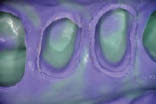
Figure 6.  High magnification view of impression showing differences in impression of gingival sulcus with cord (left) and laser (right) but acceptable results with both methods.

INTRODUCTION In 2008, Dr. Gordon Christensen wrote an article in JADA comparing the soft tissue cutting ability of diode lasers versus that of electrosurgery (radiosurgery) units.1 In that article, he compared these two technologies against each other, and cited advantages and disadvantages of each alternative. In this article, Christensen cited that although both technologies were … Read more

Aqualizer Muscle Directed Bite Registration – A Perfect Bite the First Try

Figure 8.

Dentistry is abundant in devices that promise more but deliver less. For every therapy that is founded in strong, “evidence-based” science and reasonable practice, there are countless others that are endorsed and sold whose usefulness is suspect. Therapies for TMD (Temporal Mandibular Disorder) are probably the most vulnerable to this kind of misrepresentation. Patients with … Read more

Vertise™ Flow Composite; A Breakthrough in Adhesive Dentistry

FIGURE 17.

INTRODUCTION For many years, dentists have been looking for the ideal restorative composite material. To date, this material has not been found so much so that a plethora of composite materials is currently available on the market and the research in this field is increasing. Developed 50 years ago, thanks to the work of Michael … Read more

A Novel Concept: The Introduction of Cross-Linking Monomers into a Self-Etch Adhesive to Create a More Hydrophobic & Durable Bond

Figure 17.

Dental bonding agents (adhesives) have been rapidly evolving since the 1950s.1 Based on the adhesion strategy, today’s adhesives can be classified as “etch-and-rinse” (4th and 5th generations) and “self-etch” (6th and 7th generations). The novel incorporation of cross-linking monomers within today’s bonding agents is allowing “smart” manufacturers to significantly improve current adhesives that may soon … Read more

Cerec and Paradigm

Figure 13.

In the last six months I have only used a matrix band one time, and I am enjoying class two and class three restorations more then ever, thanks to my CEREC machine and Paradigm composite blocks. I like to joke and tell people that CEREC and I are the same age in dentistry, because the … Read more

Chairside Fabrication of an IPS e.max CAD Posterior Crown Restoration

Figure 12. Postoperative occlusal view of the IPS e.max CAD crown after cementation with a self-adhesive luting composite.

IPS e.max® CAD (Ivoclar Vivadent, Amherst, NY) is a lithium disilicate glass-ceramic that demonstrates a flexural strength of 360 MPa. Available to dentists for several years, this ceramic is milled to the desired shape while still in its metasilicate or “blue” state (i.e., approximately 130 MPa). After a 20-minute crystallization/firing process, the material achieves its … Read more

Regulating the Regulations

Janice Goodman graduated from University of Toronto Dental School in 1979. She teaches Essix Minor Tooth Movement, was on the advisory board for Dentsply Raintree Essix and practices general practice dentistry in Toronto. She is on the editorial board of Oral Health Journal.

When I built my office, I don’t think I gave that much thought to rules and regulations that were imposed from groups other than the College of Dentistry. I relied on the company that set up my office to make sure that things like the X-ray machines and sterilizing equipment were up to standards and … Read more

Dental Internet Directory (March 01, 2011)

ASSOCIATIONSAssociation of Dental  Technologists of OntarioThe official voice of Registered Dental Technologists in Ontariowww.ADTO.org Ccanadian Dental Protective AssociationBecause bad things happen to good dentists.www.cdpa.com Ontario Academy of General DentistryQuality of care through life long learning.www.ontarioagd.org Toronto Academy of DentistryToronto Meetings Calendar, CE, Winter Clinic, Society Listings, etc.www.tordent.com CONTINUING EDUCATIONFaculté of Orthodontic Research & Cont. Ed.Lectures … Read more

SHOW US WHERE YOU READ ORAL HEALTH

Photo 6.

Dr. Jodi Monaghan and her hygienist Nicole Spaling of Lethbridge, AB., took part in a dental relief mission organized and run by Project LACE (loving abandoned children everywhere) in Cambodia. On January 5th, 2011, Dr. Jodi, Nicole, and 18 other medical professionals headed to Cambodia … Dr. Jodi being the only dentist on the mission. … Read more

ODA ASM11

April 28-30, 2011 Metro Toronto Convention Centre (south building) www.odaannualspringmeeting.com www.oda.on.ca

Is It Dangerous? (February 01, 2011)

 A ll professionals in their interactions/interviews with patients/clients, have to prepare for “The Question“. The Question is a question that when answered correctly, removes barriers to your services. In general dentistry, it’s “How much will it cost?”; in endodontics, it’s “How much will it hurt?”; in teaching, it’s “Will this be on the test?”; and … Read more

Safety-Engineered Needles for Dentistry: Some Clinical Impressions

The Needle Safety Regulation (O. Reg. 474/07) under Ontario’s Occupational Safety and Health Act (OSHA) was extended to include dental offices as of July 1, 2010. This Regulation mandates the use of safety-engineered needles (SEN) as opposed to conventional hollow-bore needles in dentistry, as well as in other healthcare professions and locations. This Regulation is … Read more

Letters To The Editor

Re: The Ethics of Cosmetic Dentistry: Beneficence, Beauty or Bucks? October, 2010 I applaud the work of Karen Faith and the important message she brings in her discussion paper on ethics and jurisprudence. I do however, have a concern that for many of those who choose only to scan the title and don’t actually read … Read more

Fibre Posts ARE the State-of-the-Art

Practicing clinicians in advanced countries generally acknowledge and appreciate efforts by authors and editors to publish timely information attempting to summarize the techniques and materials and technologies that constitute the state-of-the-art or standard of care in their field. This is because few practicing dentists have the time available to scour all of the scientific data … Read more

All of these sites are hotlinked at www.oralhealthjournal.com To have your company listed, please contact: Kahaliah Richards, Dental Group Assistant • Tel: 416-510-6777 • Kahaliah@newcom.ca (February 01, 2011)

ASSOCIATIONS ASSOCIATION OF DENTAL TECHNOLOGIES OF ONTARIOThe official voice of Registered Dental Technologists in Ontariowww.ADTO.org CANADIAN DENTAL PROTECTIVE ASSOCIATIONBecause bad things happen to good dentists.www.cdpa.com ONTARIO ACADEMY OF GENERAL DENTISTRYQuality of care through life long learning.www.ontarioagd.org TORONTO ACADEMY PF DENTISTRY Toronto Meetings Calendar, CE, Winter Clinic, Society Listings, etc.www.tordent.com CONTINUING EDUCATION CANADIAN INSTITUTE FOR COSMETIC … Read more

Are You Frustrated Dealing with Hypoplastic First Permanent Molars?

Dr. David Farkouh is a pediatric dentist working in private practice in Toronto, ON, and is a staff pediatric dentist in the Department of Dentistry at The Hospital for Sick Children, Toronto. Dr. Farkouh is the pediatric dentistry editor for Oral Health.

One of the most challenging scenarios for dentists treating school-aged children is how to effectively treat hypoplastic first permanent molars. Hypoplastic and hypomineralized first permanent molars are a frequent finding in children. Studies have reported that approximately one in five 7-13 year olds have at least one hypoplastic first permanent molar.1,2 The exact causes of … Read more