


It’s an exciting time in my career, as I begin two roles that mean a great deal to me. My name is Daniel Richmond, and I’m honoured to serve as the new editor for the orthodontics edition of Oral Health Journal. At the same time, I’ve recently opened my start-up practice, Kallos Orthodontics—a vision years in the making that has finally come to life. Before I share my thoughts on where orthodontics is headed, let me tell you a little about the road that brought me here.
I grew up in London, Ontario—not England (you’d be surprised how often I have to clarify that, even to Canadians). I completed my undergrad degree in anatomy and cell biology at Western, then moved to Montreal for dental school at McGill. I thought I’d learn French (didn’t happen) and use their medical-heavy curriculum to boost my chances of getting into an oral surgery program (also didn’t happen… didn’t even apply). Once I realized I was more the orthodontist type, I shifted my focus and started gearing up for orthodontic residency applications. After dental school, I spent a year working with my dad in his pediatric dental practice in London, then attended the University of Toronto for my orthodontics training. To delay “grown-up” life a little longer, I completed a Craniofacial Orthodontics Fellowship at NYU—something I’m extremely passionate about, especially after conducting my research on the medical necessity of orthodontic care.
Opening a new orthodontic office today feels a bit like stepping into a maze—full of possibilities, but with no single, obvious path forward. I’ve been reflecting on how starting a practice now means navigating a very different orthodontic landscape than even a decade ago. The choices are both exciting and uncertain. Do you stay rooted in braces and wires, or embrace the ever-expanding capabilities of aligners? Go fully digital with scanners and 3D printing, or stick with trusted tools like alginate impressions and stone models? Outsource production, or keep it in-house for tighter control and potentially lower costs? Lean into virtual care, or keep every visit face-to-face? Even promising technologies come with a price tag that may not always translate into significantly better outcomes, and these decisions shape not only the patient experience but also how a team works together. In the end, it raises an important question—which choices truly move us forward, and which core principles will endure no matter the tools we use?
Regardless of how you answer those questions, in line with your vision for orthodontics, I believe some things will remain the same. Diagnosis and treatment planning will always be the orthodontist’s defining superpowers. The biology and biomechanics of tooth movement will never change. Strong collaboration between orthodontists, general dentists, and other specialists will continue to be key to delivering the best care for our patients. And perhaps just as important, the respect, empathy, and genuine care we show our patients will always matter as much as the clinical outcome—sometimes even more. As Marcus Aurelius reminded us, “To have contemplated human life for forty years is the same as to have contemplated it for ten thousand years. For what more will you see?” In other words, even as the technology surrounding orthodontics evolves, the core concepts and fundamentals of how we move teeth and care for the people attached to them were established long ago and will persist into the future.
I see many parallels between opening a practice and curating content for this journal—both involve sifting through countless new options and deciding what matters most. My challenge to myself as editor is to present both cutting-edge innovations and time-tested fundamentals. I want the orthodontics edition to explore the full spectrum: new technologies, the foundations of diagnosis and treatment planning, and the wide range of appliances and modalities we have at our disposal. I hope you’ll see that balance reflected in my first edition, and I look forward to growing in this role. I invite you to engage, share feedback, and explore these topics together in future editions.
 About the editor
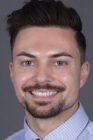
Dr. Daniel Richmond grew up in London, Ontario, and attended the University of Western Ontario where he earned his BMSc in Anatomy and Cell Biology. He received his DMD from McGill University in 2019 and subsequently worked with his father in his paediatric dental practice for one year. Following this, he pursued specialty training in orthodontics at the University of Toronto, graduating in 2023. Daniel then completed a fellowship in Craniofacial Orthodontics at New York University. He recently opened his private practice, Kallos Orthodontics, in London, Ontario.