
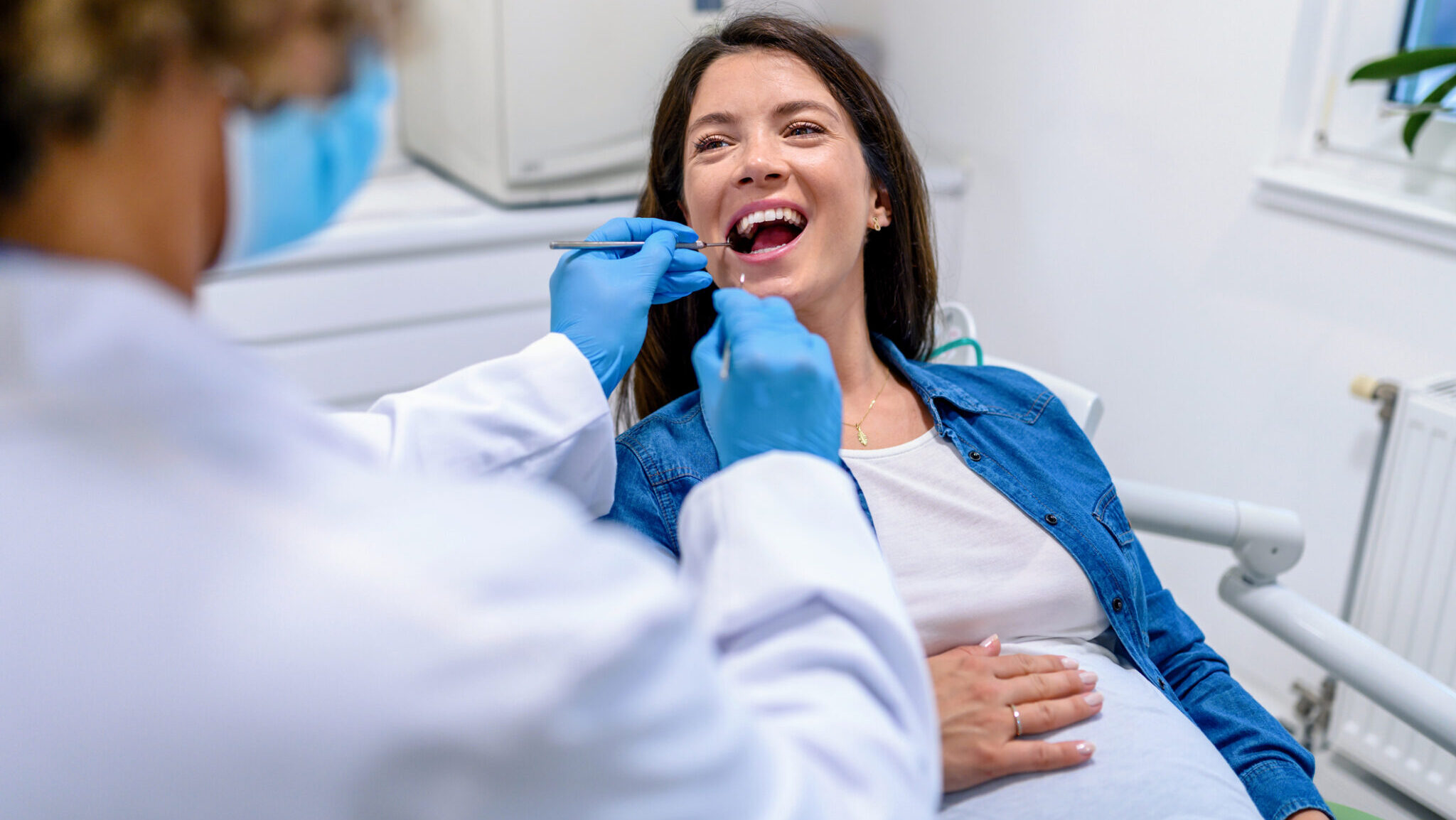
A recent paper in Oral Health explored the important topic of oral health and pregnancy. Very helpful information was provided on the hormonal and physiological changes which occur through the pregnancy as well as useful information for the oral health care provider assisting the expectant mother in managing her potentially elevated needs during the pregnancy and through to term.1 That conversation, however, is incomplete without addressing whether pregnant women in Canada can actually access the care being described — and whether our systems are designed to support them when they do. As we are aware, the initiation of the first ever national dental care plan targeting care for populations at higher risk for oral diseases has been widely embraced by those populations and the oral health care professions. Currently, as of January 31, 2026, 6.3 million applicants for care have been approved for the Canadian Dental Care Plan (CDCP) for the 2025-26 fiscal year.2 Of those people, 3 million have received care during this fiscal year while 3.9 million have received some care since the start of the CDCP in 2024.2 Therefore, approximately 50% of people accepted for care have not accessed that care.
This last statistic is not surprising when examining actions of people from higher risk populations generally. These include persons with lower to mid-level family incomes, their children, seniors, and persons living with disabilities.3 There are several reasons suggested for these populations to not access care to which they are entitled. These include lack of transportation to care facilities, lack of special facilities appropriate for their disability, lack of knowledge of the importance of oral care, fear of risks to mother and developing child caused by dental procedures, and their assigning a lower priority to oral health care in the overall stresses of daily life.4 The net result of these constraints is episodic care, mostly for urgent or emergent oral health problems.
Related article: The CDCP and data: You don’t improve it if you don’t measure it
Consider the current possibilities for the expectant mother if eligible for care under the CDCP. IF she initiates care, both a comprehensive oral evaluation and further carefully managed care can assist in managing oral disease risk.5, 6 It further affords the opportunity for further knowledge transfer about her oral health needs and those of the coming infant.7
Consider the possibilities for the child. We know that most infants are inoculated with the Strep Mutans bacterium through the caregiver.7-19 If the mother has been identified and put on a pathway to better managing her oral health risk during pregnancy, this lowers risk for caries and periodontal disease post-partum while also increasing her likelihood of establishing good oral health practices with her infant. It further allows for planning of an initial exam for her infant within the first year of life. If the child is found to be at risk for caries, appropriate risk management procedures can be put in place arresting any further progression of the caries process. Positive health outcomes are more likely for both mother and child, the child’s introduction to oral care is positive, appropriate risk management care is provided, and the system is saved otherwise significant cost of repair of diseased teeth.20-26
The current reality of care under the CDCP is significantly less positive. We can roughly estimate that only 50% of women who know they are pregnant and are otherwise eligible for care under the CDCP will access that care if approved. Care for these women and planning for their coming child is solely dependant on the interest of the mother and the abilities of the care community. It is essentially a passive care delivery model. No further supportive efforts from the wider public health community are possible due to a lack of data from the CDCP or wider integration of that data with overall health data. That gap, between what is possible and what is currently measurable, is the central problem this paper addresses. An example of enhancements of a proactive positive model rests with the work done in the United States through the Dental Quality Alliance (DQA) and its quality health measures.
The DQA is a subsidiary of the American Dental Association. It is an organization of major stakeholders in oral health care delivery with the stated mission to advance performance measurement as a means to improve oral health, patient care, and safety through a consensus-building process.27, 28 Its quality health measures are now embedded across U.S. Medicare and Medicaid, a system with notable parallels to the CDCP.
DQA pediatric, adult, special population and pregnancy health measures all benefit from significant integration of overall health data and dental claims data.29-31 The absence of this integration potential in Canadian data will limit the full analytic potential of those dental quality measures when analyzing the CDCP data.
Expanding on this further, a look at the DQA quality health measures on utilization of services and oral evaluation during pregnancy can help us understand the potential for these measures as part of the CDCP data analysis while also underscoring their limitation within current Canadian practice. DQA questions on oral care during pregnancy identify whether a pregnant woman has received a comprehensive oral examination and/or any oral treatment.29, 31 The ability to identify status of oral health, in and of itself, is useful data. Because of a higher access to both oral data and overall health data, there is also ability at the local level to identify pregnant women, facilitate their entry into oral care with resultant improved level of oral health as well as impact on the future oral health of her infant, should that infant identify as a child at high risk for caries. This is a huge step forward in both mitigating risk and managing disease in identified high risk populations.
The comprehensive ability to achieve such outcomes starts with knowledge of pregnancy. Currently, in the registration process for the CDCP done annually, there is no question whether the applicant is pregnant. That is one step that would allow the beginning of collection of data on pregnant women receiving care. Integrating that information with locally available awareness of public health educators in responding to identified high risk communities can open the door significantly to further improved health outcomes for mother and child. We already have many Canadian cities that do mapping of their communities from which to identify those subset populations with higher needs for public health measures and many other needs.32-35
The federal government has taken meaningful steps alongside the CDCP to address longstanding oral health gaps. The Oral Health Access Fund is targeting remote communities, persons with disabilities, and other gaps in the CDCP. Statistics Canada received dedicated funding for additional data collection and creation of the Canadian Oral Health Statistics Program, which concluded in spring 2025. And through the Canadian Institutes of Health Research (CIHR), the first-ever National Oral Health Research Strategy was approved in June 2024,36 setting six priority research areas. The framework for national collaboration is now in place — what remains is the data infrastructure to make it actionable.
The framework is now in place for a true collaboration whereby oral health care takes a rightful place within the overall national health system within which we have available the potential for integration of oral health data and overall health data. Our absence on that system dates back to the development of the national health system in the 1960’s, during which dentistry was not included and rested at the local, provincial, and territorial level. We were left out, and now it is time for the oral health professions and data arising from our care to be a part of the overall national data system. The pregnant woman enrolled in the CDCP today is living proof of both what that exclusion has cost and what inclusion could mean. It must start with the CDCP and its data. As we have stated in an earlier paper, “Basic claims-based measures can immediately track the mix of preventive, diagnostic, and restorative services providing early signals about whether the plan is shifting care toward prevention, as intended. These insights should be shared in clear, public-facing reports so that policymakers, providers, and the public see how the plan is performing and where improvements are needed.”37 We have provided to government a detailed recommendation on such a system of data analysis with short-, mid-, and long-term specifics on how that can work.37
Beyond this pathway within the CDCP, and indeed with all government-funded dental plans in Canada, there is further a much greater opportunity for oral health data integrated with available medical data with much greater benefit to overall health outcomes in Canada.
The development of data analysis from claims and administrative data within the CDCP, in and of itself, will provide considerable impetus towards improvements in plan design and some elements of cost containment based on clinical evidence. A shift to this approach has wider implications in light of the other initiatives from government and the oral professions to advance improved oral care outcomes. These initiatives have the further potential of growing efforts integrating oral health more fully with overall health.
So, what of our pregnant woman and her coming child; what of all other eligible populations within the CDCP? Integrated data has the potential to allow local public health to identify the woman’s need, facilitate access to oral care in the community, and support full disease risk management for mother and infant alike. That same data can also help public health to identify higher risk communities, direct resources accordingly, and raise knowledge and health outcomes across the board.37, 38
The data from the CDCP can also inform plan design — shifting focus toward risk management and early intervention and enabling more cost-effective care delivery across the full spectrum of oral health services. Integrated oral and overall health data opens further possibilities: hospital emergency room data, for example, could identify patients requiring dental follow-up and track whether that care was received.39
The list of examples is significant. It is time for greater action. The CDCP is the starting point — but the opportunity is larger. This is a chance to get the right data, evolve the plan, and grow the momentum for change beyond oral care, beyond one level of government, drawing on the knowledge of other nations.
References
- Butt FA, Anjum, Z., . Oral Health in Pregnancy: Understanding risks, prevention and safe dental care Oral Health 2025;115(12).
- Canadian Dental Care Plan Statistics – Approved Applicants as of January 31, 2026. In: Canada H, editor. Canadian Dental Care Plan Statistics – Approved Applicants online: Government of Canada; 2026.
- Jessani A, Laronde, D., Mathu-Muju, K., Brondani, M. A., . Self-Perceived Oral Health and Use of Dental Services by Pregnant Women in Surrey, British Columbia. Journal of the Canadian Dental Association 2016;82(11).
- Kamalabadi YM, Campbell MK, Gratton R, Jessani A. Oral Health Status and Dental Services Utilisation Among a Vulnerable Sample of Pregnant Women. International Dental Journal 2025;75(2):524-36.
- Brambilla E, Felloni A, Gagliani M, et al. Caries prevention during pregnancy: results of a 30-month study. J Am Dent Assoc 1998;129(7):871-7.
- Gharehghani MAM, Bayani A, Bayat A-H, et al. Poor oral health-related quality of life among pregnant women: A systematic review and meta-analysis. International Journal of Dental Hygiene 2021;19(1):39-49.
- Thearawiboon S, Rojanaworarit C. Risk of Early Childhood Caries Estimated by Maternal Dental Caries during Pregnancy: A Retrospective Cohort Study. Eur J Dent 2024;18(1):329-40.
- Ramos-Gomez F. Early Maternal Exposure to Children’s Oral Health may be Correlated with Lower Early Childhood Caries Prevalence in Their Children. Journal of Evidence Based Dental Practice 2012;12(2):113-15.
- da Silva Bastos Vde A, Freitas-Fernandes LB, Fidalgo TK, et al. Mother-to-child transmission of Streptococcus mutans: a systematic review and meta-analysis. J Dent 2015;43(2):181-91.
- Ersin NK, Kocabas EH, Alpoz AR, Uzel A. Transmission of Streptococcus mutans in a group of Turkish families. Oral Microbiol Immunol 2004;19(6):408-10.
- Berkowitz RJ. Acquisition and transmission of mutans streptococci. J Calif Dent Assoc 2003;31(2):135-8.
- Alves AC, Nogueira RD, Stipp RN, et al. Prospective study of potential sources of Streptococcus mutans transmission in nursery school children. J Med Microbiol 2009;58(Pt 4):476-81.
- Childers NK, Momeni SS, Whiddon J, et al. Association Between Early Childhood Caries and Colonization with Streptococcus mutans Genotypes From Mothers. Pediatr Dent 2017;39(2):130-35.
- Mitchell SC, Ruby JD, Moser S, et al. Maternal transmission of mutans Streptococci in severe-early childhood caries. Pediatr Dent 2009;31(3):193-201.
- Douglass JM, Li Y, Tinanoff N. Association of mutans streptococci between caregivers and their children. Pediatr Dent 2008;30(5):375-87.
- Chaffee BW, Gansky SA, Weintraub JA, Featherstone JD, Ramos-Gomez FJ. Maternal oral bacterial levels predict early childhood caries development. J Dent Res 2014;93(3):238-44.
- Dye BA, Vargas CM, Lee JJ, Magder L, Tinanoff N. Assessing the relationship between children’s oral health status and that of their mothers. J Am Dent Assoc 2011;142(2):173-83.
- Latifi-Xhemajli B, Rexhepi A, Veronneau J, et al. Streptococcus Mutans Infections in Infants and Related Maternal/Child Factors. Acta Stomatol Croat 2021;55(3):308-15.
- Virtanen JI, Vehkalahti KI, Vehkalahti MM. Oral health behaviors and bacterial transmission from mother to child: an explorative study. BMC Oral Health 2015;15:75.
- Gomersall JC, Slack-Smith L, Kilpatrick N, Muthu MS, Riggs E. Interventions with pregnant women, new mothers and other primary caregivers for preventing early childhood caries. Cochrane Database of Systematic Reviews 2024(5).
- Gripp VC, Schlagenhauf U. Prevention of early mutans streptococci transmission in infants by professional tooth cleaning and chlorhexidine varnish treatment of the mother. Caries Res 2002;36(5):366-72.
- Köhler B, Andréen I. Mutans streptococci and caries prevalence in children after early maternal caries prevention: a follow-up at 19 years of age. Caries Res 2012;46(5):474-80.
- Li Y, Tanner A. Effect of Antimicrobial Interventions on the Oral Microbiota Associated with Early Childhood Caries. Pediatr Dent 2015;37(3):226-44.
- Söderling E, Isokangas P, Pienihäkkinen K, Tenovuo J, Alanen P. Influence of maternal xylitol consumption on mother-child transmission of mutans streptococci: 6-year follow-up. Caries Res 2001;35(3):173-7.
- Xiao J, Alkhers N, Kopycka-Kedzierawski DT, et al. Prenatal Oral Health Care and Early Childhood Caries Prevention: A Systematic Review and Meta-Analysis. Caries Res 2019;53(4):411-21.
- Milgrom P, Ludwig S, Shirtcliff RM, et al. Providing a Dental Home for Pregnant Women: A Community Program to Address Dental Care Access – A Brief Communication. Journal of Public Health Dentistry 2008;68(3):170-73.
- Alliance DQ. Procedure Manual for Performance Measures Development and Maintenance A Voluntary Consensus Process Washington D. C. USA: American Dental Association 2022.
- Alliance DQ. Environmental Scan of Patient Reported Oral Healthcare Measurement Washington D. C. USA American Dental Association 2020.
- Alliance DQ. Testing Oral Healthcare Performance Measures for Pregnant Persons. In: Alliance DQ, editor. Washington D.C. USA: Dental Quality Alliance 2022. p. 1 – 44.
- Alliance DQ. DQA Measure Technical Specifications Administrative Claims-Based Measures Early Childhood Oral Evaluation by a Dental Provider Following a Medical Preventive Service Visit. In: Alliance DQ, editor. DQA Measure DFM-CH-A American Dental Association on behalf of the Dental Quality Alliance; 2024.
- Alliance DQ. Utilization of Dental Services During Pregnancy. In: Association DQA-AD, editor. DQA Measure Technical Specifications Administrative Claims-Based Measures Washington D.C. USA Dental Quality Alliance American Dental Association 2025. p. 1 – 8
- Bassim CW, MacEntee MI, Nazmul S, et al. Self-reported oral health at baseline of the Canadian Longitudinal Study on Aging. Community Dent Oral Epidemiol 2020;48(1):72-80.
- De Rubeis V, Jiang Y, de Groh M, et al. Barriers to oral care: a cross-sectional analysis of the Canadian longitudinal study on aging (CLSA). BMC Oral Health 2023;23(1):294.
- Moeller J, Quiñonez C. The Association Between Income Inequality and Oral Health in Canada: A Cross-Sectional Study. Int J Health Serv 2016;46(4):790-809.
- Murphy K, Gondro JV, Moharrami M. Factors associated with the use of oral health care services among Canadian children and youth. Health Rep 2024;35(4):15-26.
- Rock LD, Akade G, Al-Waeli H, et al. Canada’s First National Oral Health Research Strategy (2024-2030). J Dent Res 2025;104(2):113-18.
- Ojha D, McConnachie, I., Abrams, SH. The CDCP and Data: You Don’t Improve It If You Don’t Measure It. Oral Health 2025;115(10):48-50.
- Davari LD, Morris M, Allison PJ. Policy Options to Complement the New Canadian Dental Program Enabling High Quality Care for People With Disabilities and Older Adults. Gerodontology 2025;42(3):307-20.
- Obadan-Udoh E, Herndon JB, Kohli R, et al. Testing dental quality measures: Emergency department visits for nontraumatic dental conditions and subsequent follow-up dental visits. J Am Dent Assoc 2023;154(6):507-18.
About the authors

Dr. Diptee Ojha is a dentist and a health services researcher. She is the Founder and Principal Consultant for Scientia Principle Consulting LLC. She previously served as the Director of the Dental Quality Alliance.

Dr. Ian McConnachie is a retired pediatric dentist with an ongoing career of involvement at the local, provincial and national levels in multiple dental organizations.

Dr. Stephen Abrams is a GP dentist. He also does research on caries detection and management. He works with the dental associations on access to care and the CDCP.