
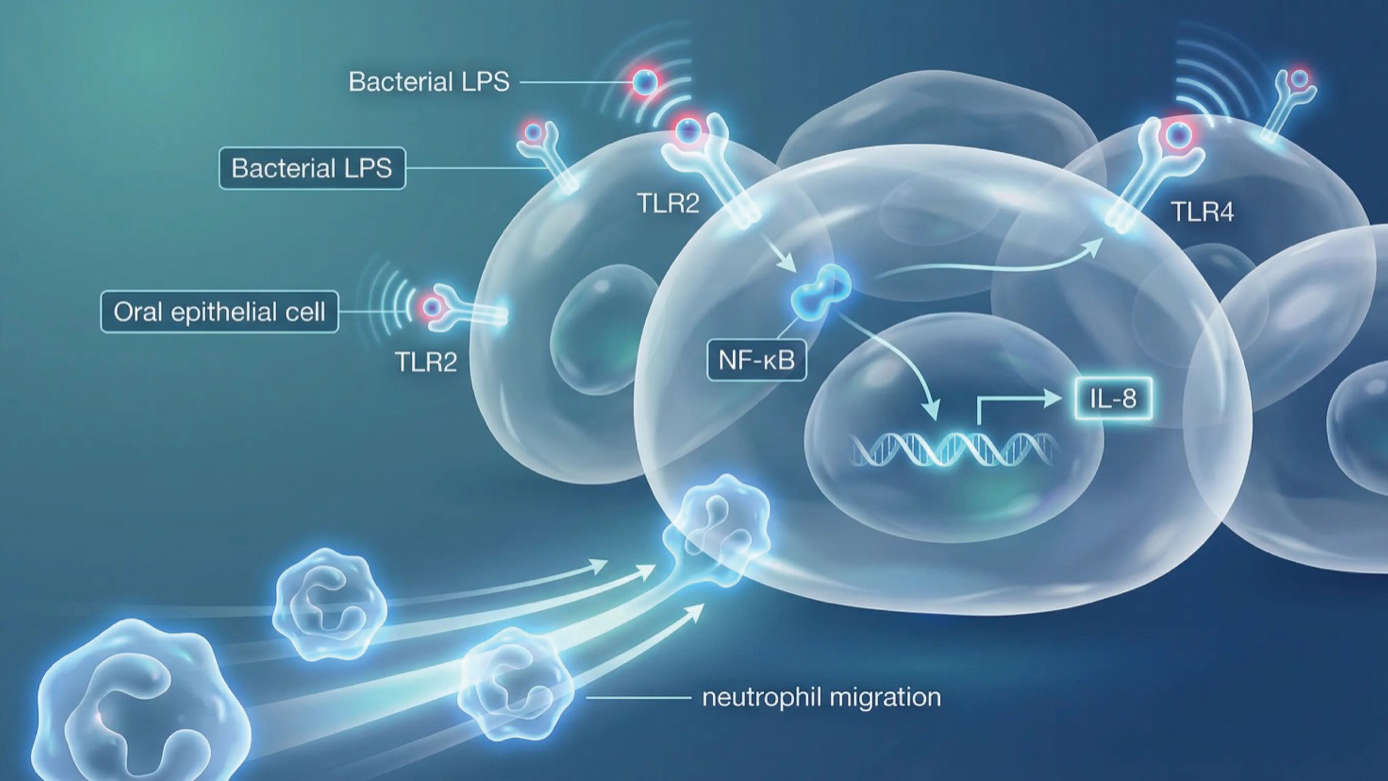
Periodontitis is more than microbial overgrowth in the oral cavity; it represents a sophisticated subversion of the host immune system. At the center of this process is the collapse of Toll-Like Receptor (TLR)–mediated signaling, whereby the host’s defense mechanisms are co-opted to sustain a chronic, dysbiotic state rather than eliminate pathogens. This “information collapse” transforms immune surveillance into a paradoxical process: the host immune system feeds the pathogen while simultaneously being structurally compromised. Understanding this phenomenon provides insight into the intricate host–pathogen interactions that drive periodontal disease and opens avenues for novel therapeutic interventions.
1. The mechanism of information hijacking: C5aR–TLR2 Crosstalk
Healthy TLR function:
- In a healthy oral environment, TLR2 and TLR4 detect microbial cell wall components and initiate a coordinated immune response.
- This includes phagocytosis, oxidative bursts, and regulated inflammatory signaling, effectively serving as a “search and destroy” mission to eliminate invading bacteria.
Pathogen exploitation:
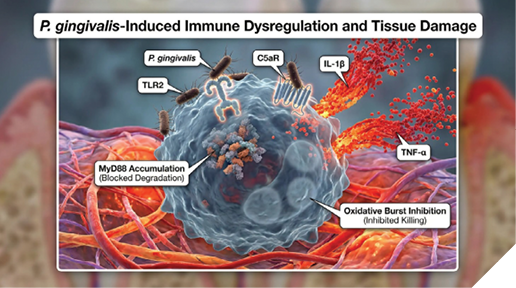
- Porphyromonas gingivalis, a keystone pathogen, hijacks this signaling pathway through C5aR–TLR2 cross-talk.
- Gingipain enzymes simultaneously activate the C5a receptor (C5aR) and TLR2 while interfering with the E3 ubiquitin ligase Smurf1, which normally mediates the degradation of the adaptor protein MyD88.
Paradoxical immune response:
- This manipulation triggers massive secretion of pro-inflammatory cytokines such as IL-1α and TNF-β, which degrade tissue and release nutrients, while simultaneously suppressing oxidative killing mechanisms in leukocytes.
- The host receives instructions to feed the pathogen (“information to inflame”), while the guidance to eliminate it is effectively deleted.
- Result: energy-rich inflammation occurs without bacterial clearance, creating a permissive environment for biofilm persistence.
Fig. 1
2. Signal jamming: Chemokine paralysis
Mechanism of paralysis:
- P. gingivalis secretes SerB, a serine phosphatase that penetrates epithelial cells and dephosphorylates the NF-κB p65 subunit.
- This blockade prevents transcription of IL-8, the primary chemokine responsible for recruiting neutrophils to the infection site.
Consequences for host defense:
- The tissue experiences localized “blindness”, under microbial attack but unable to summon reinforcements.
- Chemokine gradients are silenced, allowing the biofilm to mature into a stable, dysbiotic community before neutrophils or other immune cells can mount an effective defense.
Strategic implication:
- This represents a targeted information blackout, demonstrating that pathogens can manipulate host immunity at the signaling level rather than relying solely on numerical dominance.
Fig. 2
3. The physical infrastructure of disinformation: Biofilm nanowires and matrix
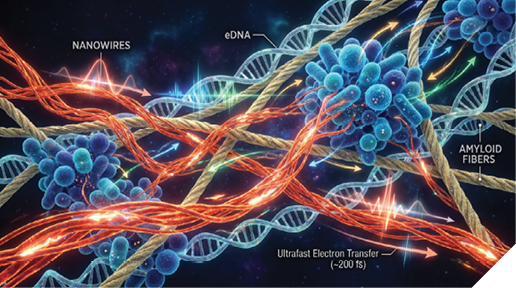
Nanowires as signal conduits:
- Biofilms are not inert; they act as active signaling networks.
- Microbial nanowires (e.g., OmcS in Geobacter) facilitate ultrafast electron transfer (~200 femtoseconds) through quantum coherence.
- These structures distribute energy efficiently across the biofilm, coordinating metabolism and maintaining the energy potential necessary for immune subversion.
Biofilm matrix as weaponized information:
- Composed of amyloids and extracellular DNA (eDNA), the matrix serves as a reservoir for signaling molecules.
- Curli amyloid fibers carry DNA that engages TLR2 and TLR9, eliciting chronic inflammatory responses rather than acute immune resolution.
- This transforms the matrix into a repository of “weaponized information”, enabling the biofilm to manipulate host immunity actively.
Quorum sensing and host interference:
- Bacteria employ autoinducer-2 (AI-2) for coordinated virulence.
Fig. 3
4. Quantum implications for immune signaling
Quantum-assisted immune processing:
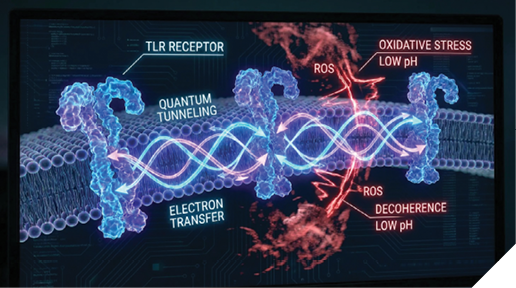
- Emerging models suggest immune signaling may utilize quantum phenomena for speed and specificity.
- Voltage-gated ion channels and receptor conformational changes during TLR activation may rely on quantum tunneling and coherence.
Decoherence in periodontitis:
- The oxidative, acidic, and inflamed environment of the periodontal pocket may induce decoherence, disrupting high-fidelity immune signaling.
- This collapse converts precise immune responses into coarse, low-fidelity outputs, locking the system into a robust attractor state of chronic inflammation.
Systemic impact:
- The host is unable to resolve microbial threats efficiently.
- Signaling pathways collapse from high-precision detection to generalized inflammation, sustaining pathogens while promoting tissue damage.
Fig. 4
Conclusion
- Periodontitis exemplifies advanced immune manipulation, where TLR signaling, chemokine gradients, and biofilm architecture converge to create a high-noise, low-fidelity immune environment.
- Keystone pathogens such as P. gingivalis exploit these vulnerabilities, transforming host defenses into mechanisms that fuel the biofilm while blocking microbial clearance

This article originally appeared in Gengyve’s The Oral Health Bulletin on January 15, 2026.
About the author

Dr. Stephen Thaddeus Connelly is a physician-scientist, surgeon, and healthcare entrepreneur with 20+ years at UCSF and VA systems. He is a Full Clinical Professor with NIH-funded AI research and 60+ peer-reviewed publications and founder of multiple healthtech ventures integrating AI, biosensors, and advanced data systems to enhance patient outcomes. Dr. Connelly is a General Partner at Boutique Venture Partners, investing in AI-enabled healthcare solutions and skilled in system optimization, translational research, and building scalable health platforms. Dr. Connelly applies these scientific principles to formulating products such as Gengyve: www.gengyveusa.com.