
When you hear “glass,” your mind probably jumps to windows, drinking glasses, or maybe even delicate vases. But did you know that glass is also a powerful, high-tech material quietly supporting modern medicine and dentistry every single day?
From the moment you pick up your curing light or dental drill, glass is at work behind the scenes. In dentistry, it guides powerful light precisely where you need it, strengthens fillings to withstand daily chewing forces, and even supports healing by delivering therapeutic laser light deep into tissue. Whether in the form of ultra-pure powders that make fillings strong and beautiful, or glass fibers that carry curing light to hidden molars, glass proves its versatility time and time again.
And it doesn’t stop at dental applications. In the broader medical world, glass optical fibers are essential in endoscopy, offering visualization via precise, bright light deep inside the body to help doctors diagnose and treat disease with minimal invasion. Glass-based diffusers are used in treatments such as laser interstitial thermal therapy (LITT) for brain tumors or epilepsy, where they ensure laser energy is delivered homogeneously and precisely to target and destroy cancer or epilepsy cells without damaging healthy tissue nearby.
In this article, we will dive into what makes glass so vital for dentistry. Since the author works for a specialty glass company with a track-record of 140 years, she can offer some unique insights into how glass supports medical and dental diagnoses and treatments by enhancing medical and dental devices. We will explore how glass empowers dental tools, restorative materials, and even the healing treatments of the future. Get ready to discover why glass truly is one of dentistry’s – and medicine’s – greatest superpowers.
What exactly is glass?
Glass is a solid material without a regular crystal structure. Instead of having its atoms neatly arranged as in crystals, the atoms in glass are in a more random, disordered pattern, similar to how they are in liquids. However, unlike liquids, glass is hard and rigid.
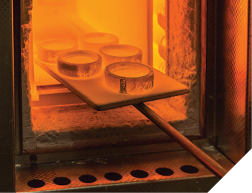
Most glass is made from silicon dioxide (SiO₂) – the same chemical found in sand. When sand is heated to very high temperatures until it melts and then cooled down quickly, it turns into glass. This rapid cooling stops the atoms from forming an ordered crystal structure, which is why glass is called an amorphous solid or sometimes a supercooled liquid.
Glass isn’t just one type. By adding different metal oxides during its production, its properties can be changed. Soda-lime glass (with sodium and calcium oxides) is what windows and bottles are made of. Borosilicate glass (with added boron oxide) is resistant to fast temperature changes, making it ideal for lab glassware and kitchenware like measuring jugs. Specialty glasses, like those used in dentistry, include specific metal oxides to create materials with the exact strength, clarity, or chemical resistance needed for fillings, tools, or even implants.
What makes glass so special is that it combines transparency, hardness, and chemical resistance in a single material. Thanks to its unique structure – solid like a rock but arranged like a frozen liquid – glass plays a vital role in everything from windows and smartphones to dental fillings and curing lights.
Glass fibers: The secret light masters in your dental tools
Think of your curing device or high-speed drill as a superhero gadget. But what is their hidden superpower? Glass. More specifically, the glass fibers inside these tools guide and deliver light precisely where you need it.
In your daily practice, you rely on light-activated resins for everything from sealants and restorations to bonding braces. These resins harden under blue (UV) LED light at a wavelength of around 450 to 470 nm, but here’s the twist: many curing devices don’t shine light directly onto teeth from the LED. Instead, they use rigid light guides made from glass optical fibers to carry the light smoothly from its LED source within the handle to the treatment site.
These fiberoptic rods are cleverly designed. Often shaped like a cone, they are wide at the LED end to gather as much light as possible (Fig. 1). While patients naturally prefer slimmer devices for comfort, traditionally, larger glass guides were needed to channel in more light for shorter treatment times.
Fig. 1
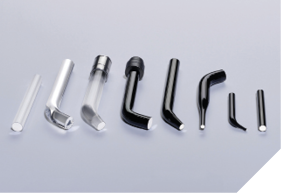
The solution? The glass rods taper down to a smaller diameter tip that comfortably fits into the patient’s mouth, even reaching those tricky posterior areas (Fig. 2). Beyond efficient light delivery, they also significantly support hygiene management and enhance patient safety. Unlike electronic light tips, glass rods can be removed and autoclaved or cleaned thoroughly, keeping your instrument compliant with hygiene standards throughout its life. Importantly, because they are autoclavable, they help to prevent cross-contamination that can occur when devices are not properly or completely disinfected.
Fig. 2
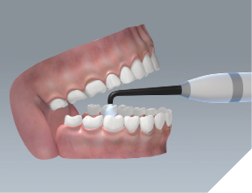
It is not just curing devices that owe their brilliance to glass. Your dental handpieces, turbines, and drills also integrate miniature glass fiber rods to guide light from an LED inside the handle right to the device’s tip. These fibers brighten up the treatment area in a homogeneous way so you can work with ease, whether you are prepping a cavity, adjusting a crown, or finishing a restoration.
Inside these instruments, space is at a premium, but manufacturers can design these glass fiber rods to make use of the available space, no matter how angled or small it might be (Fig. 3). Glass fibers can bend around corners to efficiently carry light even alongside all the mechanical parts, air, and water lines needed in your handpiece – and they maintain their performance over time. Glass fibers deliver light with very high transmission and intensity, over and over again, supporting the long lifetime of dental tools. And thanks to excellent color fidelity, everything in the mouth appears bright and natural under your drill light, without any strange hues or misleading reflections.
Fig. 3
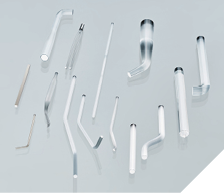
What is also important to dentists: Glass fiber-based elements can be manufactured in a way to be extremely robust and therefore not to break easily, withstanding the wear and tear of daily use. So, make sure to look for high-quality fiber rods in the handpieces of your choice.
If you prefer dental handpieces with LED-on-tip lighting, go for models where the LED chips are hermetically sealed in glass. Unlike plastic housings, glass encapsulations are ultra-robust – keeping the LEDs bright, durable, and reliable even after countless sterilization cycles.
Glass powder: The secret ingredient for lasting smiles
Imagine this: Up to 80% of your composite fillings are glass powder. As you might have guessed by now, this isn’t just any glass. Finely ground into particles up to 200 times smaller than a human hair, dental glass powder lends fillings their outstanding optical properties, long-lasting resilience, and silky polishability (Fig. 4).
Fig. 4
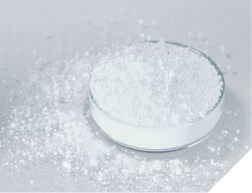
Patients today want their fillings to be invisible – seamlessly blending with natural enamel. High-purity glass powder makes this possible with its impressive transparency, ensuring the composite matches the exact tooth shade. Add some colour pigments and voilà – it’s as if the cavity was never there.
But beauty alone isn’t enough. Think about the incredible force your patients’ chewing muscles exert every day – these are the strongest muscles in the human body, after all. Glass powder ensures their restorations don’t just look like enamel; they also behave like it. A clever blend of larger and ultra-fine glass particles densely packs the composite, minimizing shrinkage during polymerization and enhancing mechanical stability (Fig. 5).
Fig. 5

Here’s another superpower: glass powder’s polishability. Thanks to its controlled particle sizes, fillings are easier to finish to that flawless, glossy surface your patients love to admire in the mirror.
Quality is key here. The glass must be pure, free of any impurities or discoloration that could ruin translucency. Glass manufacturers offering high-quality products will apply the same rigorous standards used for optical glass to apply to dental glass production. This ensures not only beauty and durability but also radiopacity, so you can clearly see your restorations on X-rays.
In short, while patients may leave your chair thinking it’s just a “plastic filling”, you and your materials know better – it is advanced glass technology working behind the scenes to keep their smiles shining for years to come (Fig. 6).
Fig. 6
Glass-based laser diffusers: The healing superpower
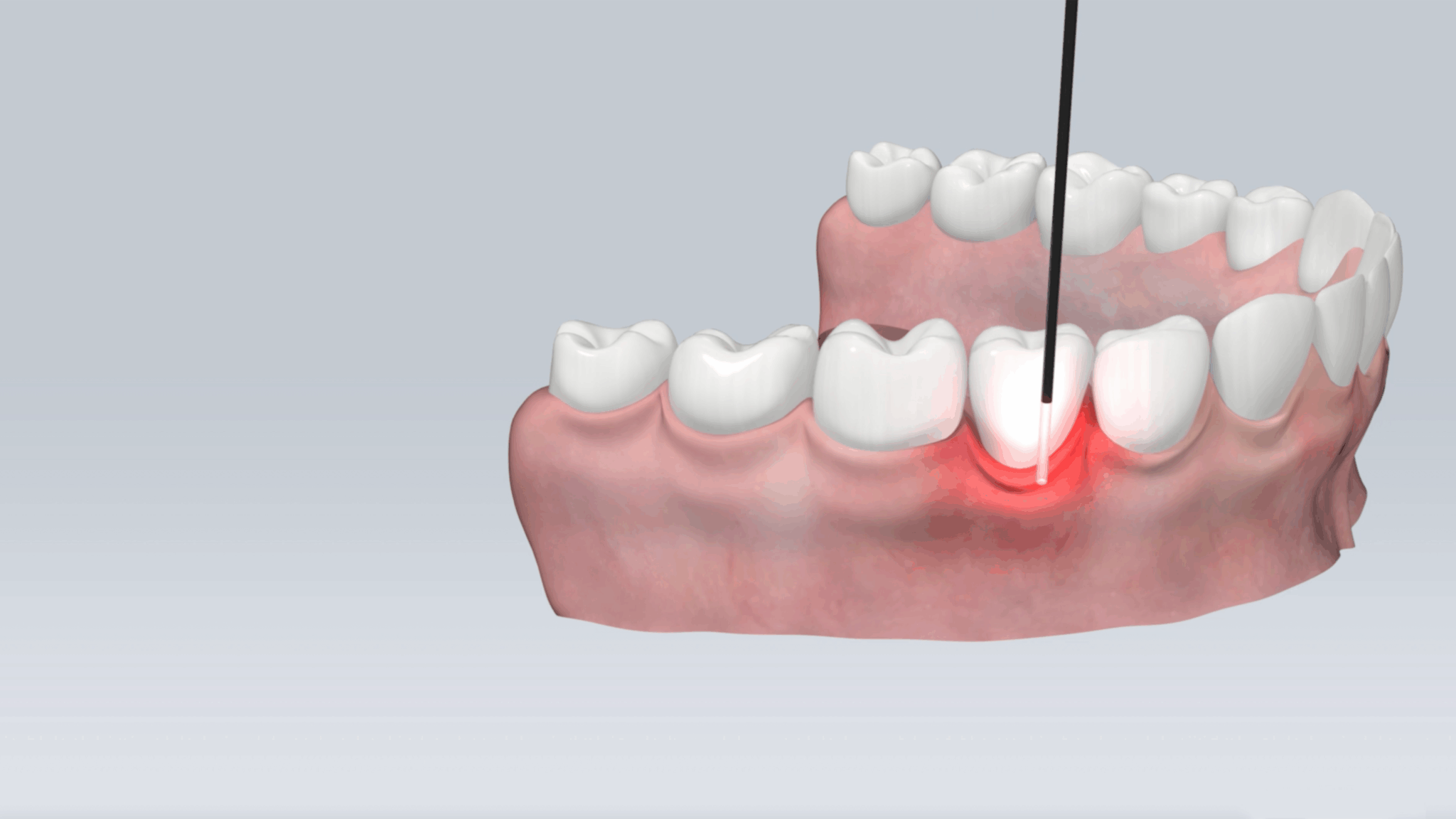
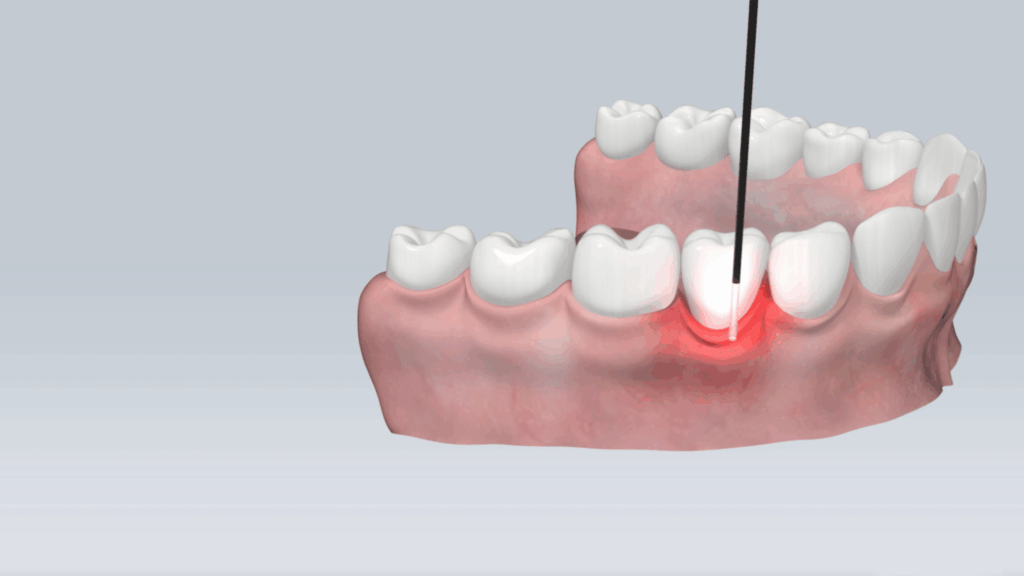
Laser light therapy, also known as photo-biomodulation, uses wavelengths in the visible and near-infrared between 600 and 1,000 nm to promote healing and reduce inflammation. How does it work? The light is absorbed by mitochondria in cells, giving them an energy boost and helping stressed or damaged cells recover faster.
For patients, this means faster wound healing after treatments like gingivectomy or molar extraction, reduced swelling, and less pain. Light therapy can also be used to prepare root canals, reduce bacterial load, and even strengthen the bone-implant interface for dental implants. Children benefit too: Light therapy can ease pain during cavity preparation and help heal gingivitis more quickly (Fig. 7).
Fig. 7
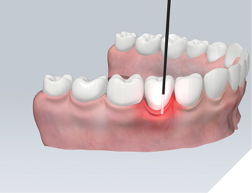
Integrating light therapy into dental tools opens up new possibilities. Imagine using the same instrument to cure a composite and then switch wavelengths to reduce post-op inflammation or accelerate tissue healing – delivering high-value treatments your patients will love.
Of course, creating such multi-wavelength tools is not easy. Light guides must efficiently deliver both blue light for curing and red or infrared light for therapy. They must also compensate for light losses introduced by the design, allowing for more extreme geometries. For instance, some dental instruments may require light guides with 90-degree bends to access the back of the mouth or throat area. It is also key to use light guides that are break-resistant, chemically resistant, and can be sterilized by autoclaving (Fig. 8).
Fig. 8
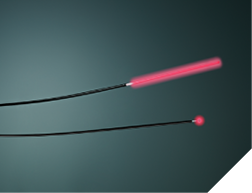
With tremendous advances in glass-based light guides and diffusers, these multifunctional instruments are becoming a reality – making light not just a tool for hardening fillings, but a powerful partner in healing and patient comfort.
Glass: Invisible superpowers for shining results
Glass may be invisible to your patients, but it is indispensable to your daily work. From curing lights and drills to restorative composites and advanced healing therapies, glass empowers modern dentistry with precision, durability, and aesthetics. Behind every confident smile lies sophisticated material science working quietly in the background. As glass technology continues to evolve, it will keep opening new possibilities for better treatments and patient comfort. The magic of glass is the science that keeps your practice shining. 
Oral Health welcomes this original article.
About the author

Haike Frank holds a PhD in English literature and an MA in business administration, English and French language and literature. With more than 20 years of experience in communications and marketing, she currently serves as Marketing Director and Business Development Manager Medical for SCHOTT Lighting and Imaging business unit.