
Early childhood caries in Manitoba – Hearts and minds
The issue of early childhood caries (ECC) is a global one affecting approximately 50% of children worldwide1 but it is also a local one in Manitoba where prevalence rates of ECC can reach 97% in some communities!2 As a research group, we have been tackling these health issues for a long time, starting the Healthy Smile Happy Child initiative in 2000 aimed at reducing ECC rates in Manitoba and ultimately setting children up for a lifetime of healthy dentition. Part of that project has involved building relationships in the community and promoting oral health, including in those who are underserved, access deprived, and geographically isolated. The other part of the project has been intensive research into why the problem exists in the first place, how it develops, and how we can detect it early enough to intervene non-surgically.
Multifaceted approach
Our epidemiological studies on the socio-economic and patient factors have revealed insights into this disease. These include associations between ECC and vitamin D deficiency3 as well as prenatal, maternal, and early childhood factors.4 More recently, we have been attempting to enhance preventive measures by investigating the implementation of caries risk assessment and training tools for non-dental primary care providers.5,6 However, understanding the mechanisms underlying the development of ECC is another major part of our research efforts. Early caries research identified bacteria, specifically Streptococcus mutans in the oral microenvironment, as an important species in the development of early childhood caries.7,8 And now, with the relatively recent advent of next generation whole genome sequencing going “mainstream” and becoming more affordable, we can truly dissect the microbiome as a causative factor in ECC.
Early childhood caries and fungi – It’s a small world
It is evident now that the microbiome is a truly diverse and dynamic community of microorganisms with wide ranging effects on human health. As the mouth contains more than 700 species of bacteria and 100 species of fungi, studying the host microbiome and interkingdom relationships is especially important. Oral dysbiosis is a term often used when describing the imbalance of oral microbial populations causing disease. Evidence suggests that this dysbiosis is a significant contributor of early childhood caries. In this regard, bacteria are well studied and Streptococcus mutans has been identified as the major contributing bacterial species. Yet, despite having fewer fungal species and less biomass than bacteria in the oral microbiome, fungi are emerging as important contributors to ECC as well.9,10
The most common clinical presentation of a fungal infection is likely that of oral candidiasis (oral thrush), the infection caused by overgrowth of Candida albicans. In fact, the Candida genus is frequently identified as the most abundant component of the oral mycobiome in both healthy and ECC populations. While this genus is made up of over 200 species, the one most commonly associated with ECC is C. albicans.11,12 In fact, C. albicans is also commonly associated with S. mutans in mixed biofilms and a higher prevalence of caries exists when these species are present suggesting that co-colonization supports the development of caries.13,14,15 Yet beyond C. albicans, it is becoming apparent that other Candida species such as C. dubliniensis may be important players in the development of ECC. Our efforts have identified several important fungal genera and species9,10 and we are now in the process of teasing out how these pathogenic biofilms form.
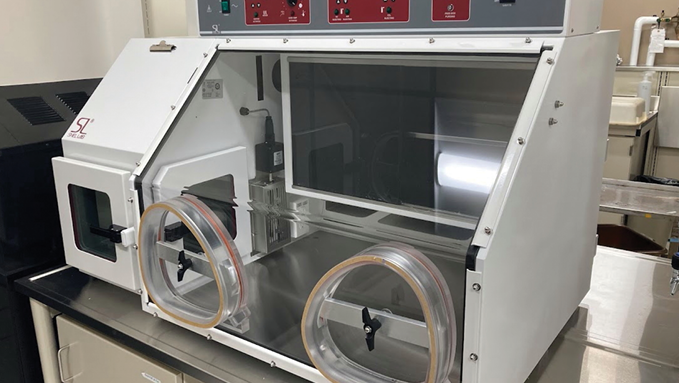
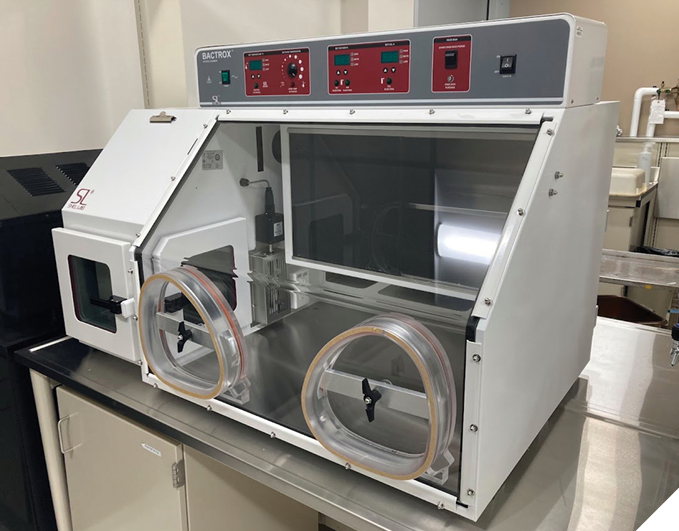
Fungi (and bacteria) constantly send out signals (called quorum sensing molecules) to each other and to their hosts (us!) and we have receptors, such as the bitter taste receptors, that can detect these signals and trigger host immune responses.16 Furthermore, the mouth is a complex microenvironment, with oxygen levels ranging from atmospheric to near anoxic in periodontal pockets,17 and these conditions can affect the growth and virulence of the oral fungi. Some of the work done in the Manitoba Chemosensory Biology Research Group (MCSB) is aimed at understanding these interkingdom signals. We collect saliva and plaque samples from pediatric participants and identify the major fungi present with respect to health and ECC. Employing special equipment (Fig. 1) we use culturomics, whereby fungal isolates are grown in the lab under varying conditions like oxygen levels, to identify specific pathogenic strains and signaling molecules associated with ECC.
From the community to the laboratory and back again
Our research is rapidly progressing and evolving as we understand the patient factors and microorganisms involved in developing caries. We continue to investigate immediately actionable ways to prevent ECC in the community through our initiatives and aim to better understand these variables. Ultimately, we would like to be able to harness what we learn from oral fungi to develop an in-clinic diagnostic test that could identify children who are most at risk of developing ECC. Understanding the early colonization of ECC associated fungi and their signaling molecules that trigger the development of ECC will help guide preventive strategies to reduce future oral health complications and target the appropriate causative agents to ensure that children’s smiles stay healthy for life. 
Oral Health welcomes this original article.
References
- Lemos, J.A., et al., The Biology of Streptococcus mutans. Microbiol Spectr, 2019. 7(1).
- Pierce, A., et al., The Burden of Early Childhood Caries in Canadian Children and Associated Risk Factors. Front Public Health, 2019. 7: p. 328.
- Schroth, R.J., et al., Vitamin D and Dental Caries in Children. J Dent Res, 2016. 95(2): p. 173-9.
- Schroth, R.J., et al., Prenatal, Maternal, and Early Childhood Factors Associated with Dental General Anesthesia to Treat Severe Early Childhood Caries. Pediatr Dent, 2019. 41(6): p. 477-485.
- Olatosi, O.O., et al., Recommendations for Integrating Caries Risk Assessment into Primary Care for Indigenous Children. JDR Clin Trans Res, 2025: p. 23800844251372545.
- Olatosi, O.O., et al., Identifying training needs of healthcare providers to implement caries risk assessment. Front Oral Health, 2025. 6: p. 1641307.
- Hamada, S. and H.D. Slade, Biology, immunology, and cariogenicity of Streptococcus mutans. Microbiol Rev, 1980. 44(2): p. 331-84.
- Loesche, W.J., Role of Streptococcus mutans in human dental decay. Microbiol Rev, 1986. 50(4): p. 353-80.
- de Jesus, V.C., et al., Characterization of Supragingival Plaque and Oral Swab Microbiomes in Children With Severe Early Childhood Caries. Front Microbiol, 2021. 12: p. 683685.
- de Jesus, V.C., et al., Sex-Based Diverse Plaque Microbiota in Children with Severe Caries. J Dent Res, 2020. 99(6): p. 703-712.
- Man, V.C.W., S. Manchanda, and C.K. Yiu, Oral Candida-biome and Early Childhood Caries: A Systematic Review and Meta-Analysis. Int Dent J, 2025. 75(2): p. 1246-1260.
- Weng, L., et al., Inter-kingdom interactions and environmental influences on the oral microbiome in severe early childhood caries. Microbiol Spectr, 2025. 13(6): p. e0251824.
- Du, Q., et al., Coexistence of Candida albicans and Enterococcus faecalis increases biofilm virulence and periapical lesions in rats. Biofouling, 2021. 37(9-10): p. 964-974.
- Xiao, J., et al., Association between Oral Candida and Bacteriome in Children with Severe ECC. J Dent Res, 2018. 97(13): p. 1468-1476.
- Pan, T., et al., Polymicrobial detection and salivary metabolomics of children with early childhood caries. PeerJ, 2025. 13: p. e19399.
- Singh, N., et al., Bitter taste receptor T2R14-Galphai coupling mediates innate immune responses to microbial quorum sensing molecules in cystic fibrosis. iScience, 2024. 27(12): p. 111286.
- Mettraux, G.R., F.A. Gusberti, and H. Graf, Oxygen tension (pO2) in untreated human periodontal pockets. J Periodontol, 1984. 55(9): p. 516-21.
About the authors

Ryan H. Cunnington, PhD, is a research associate studying mycobiome-host interactions.

Vivianne Cruz de Jesus, BDS, PhD, is a pediatric dental resident.

Mohd Wasif Khan, PhD, is a Bioinformatician and Machine Learning expert.

Prashen Chelikani, PhD, is the Associate Dean of Research for the Dr. Gerald Niznick College of Dentistry and expert in Interkingdom Host-Microbe interactions and Chemosensory Taste genetics/biology.

Robert J. Schroth, DMD, MSc, PhD, is a professor and clinician scientist who is an internationally renowned expert in Early Childhood Caries. He holds a Canadian Institutes of Health Research Applied Public Health Chair in Oral Health.