
Treating children, not treat
Fluoride dental treatment has been around for about 75 years, serving hundreds of millions of people without any proof of detrimental effects, unless over ingested. The great majority of cases being dental fluorosis. Fluoride works on the dental complex in three essential ways. But there are two modes of action: systemic and local.
The systemic effect is the strengthening of the developing dentition by making the teeth more resistant to acid attack. The local effect is by reinforcing enamel, and healing initial lesions, and slowing the formation of plaque by streptococcus mutans. Fluoride acts systemically by ingesting drinking water with 0.7 parts per million (PPM) or fluoride supplements. The fluoride acts on the developing dentition only. The systemic effect only works on children under the age of 13. By that age all the permanent dentition has erupted.
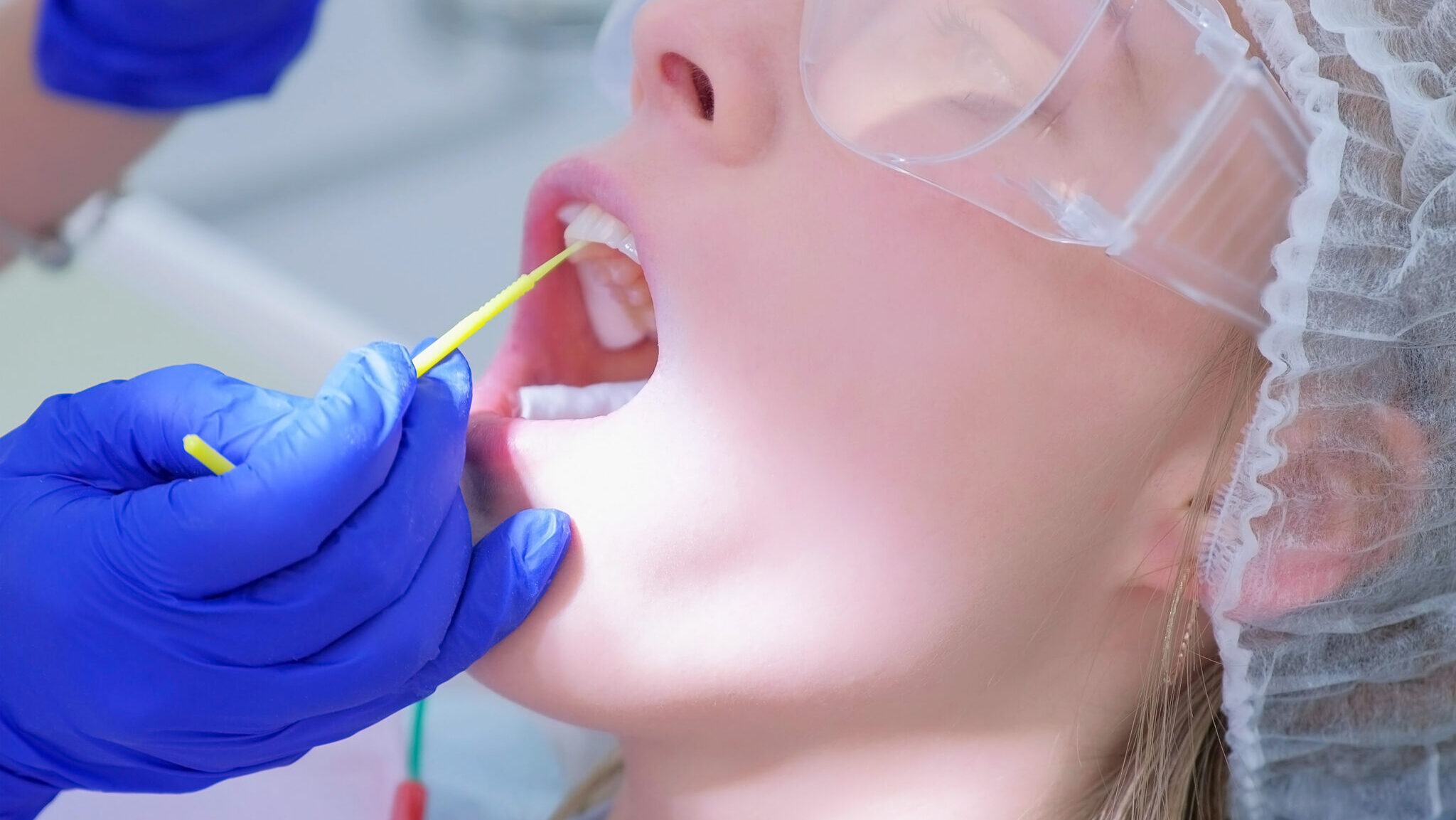
Topical fluoride is applied to the erupted teeth, by means of regular fluoridated toothpaste applications and professional periodic applications. Topical fluoride is effective in reducing interproximal decay. It works on reinforcing the enamel by making the teeth more resistant to acid attack and helping heal initial lesions. Dental caries is a dynamic process with an ebb and flow, eventually leading to caries when the acid cavitates the tooth. In the initial dynamic phase, the lesion can be remineralized, and fluoride can be incorporated in the lesion, making it more resistant to acid attack. Thus, making initial decay reversable. Fluoride also reduces the amount of plaque produced by streptococcus mutans.
Systemically, fluoride is ingested from drinking water at 0.7 PPM. It should be noted that not all municipalities are fluoridated. You can also get fluoride from foods such as tea, coffee, sea food—but this varies due to the water sources of the processing water. You can also get fluoride from swallowing toothpaste. Children’s toothpaste fluoride is usually 500-1000 PPM, adult toothpaste is usually 1000-1500 PPM. Fluorosis can only occur in the developing dentition, due to an overdosage. Fluorosis can be from very mild to severe and usually occurs due to overdoses over a period of time, not one occurrence. Teeth that are fully erupted cannot get fluorosis. In 40 years of practice, I have never seen a case of fluorosis in the primary dentition.
Water fluoridation is a public health measure that you have no control over. Thus, you must address your patients’ dental issues where you can, by doing appropriate topical fluoride applications. In professionally applied fluoride, the amount of fluoride in acidulated phosphate gel and foam is in the range of 12,300 PPM, fluoride rinse is 900 PPM, and NaF 0.2% is 9000 PPM. Thus, for infants under the age of 2 and a half, fluoride free toothpaste is indicated. At 3-and-a-half years of age, you should change to a children fluoridated toothpaste, and use a smudge or very small amount, about the size of a grain of rice. Thus, even when the child swallows the paste, there are no concerns. If an infant below the age of 3 has tooth decay, a fluoridated children’s toothpaste may be indicated. At the age of 5-6, you can increase the size of the toothpaste to the size of a pea and still not worry if the child swallows the toothpaste. It is also important not to rinse the mouth after application of the fluoride. Most young children cannot spit out and this is not an issue.
In the teenage years, if a child is prone to caries, a toothpaste with enhanced fluoride may be indicated. When applying fluoride gel to young children, do not use trays, as that will be difficult for them to tolerate, but brush it on with a toothbrush. Fluoride varnish is more difficult to apply, as it needs more cooperation to be applied effectively. It is effective in older kids with advanced tooth decay. Topical fluoride should be applied twice a year, as the fluoride eventually leaches out. In cavity prone children, four times per year may be indicated. I fully recommend at least annually even in caries free adults.
In a risk-reward analysis, teeth are always under acid attack, and fluid process areas are always decalcifying and reclarifying multiple times. By the time you can identify an incipient lesion on a radiograph, clinically the decay is much more advanced. Once cavitation occurs, active treatment becomes necessary. So, unless you monitor the interproximal area radiographically every 6 months, a topical fluoride gel is beneficial in reversing acid attacks. In addition, fluoride helps reduce plaque formation. Also, the treatment is cost effective and non-invasive. Keep in mind, oral fluoride rinses are not indicated for kids.
Your job as a health coach is to inform and guide your patients and perform treatment specific to your patients’ individual needs. If your patient refuses to have fluoride applications, you can have them sign a waver that they refused fluoride treatment and note it in the chart. On another note, I never prescribe fluoride supplements.
Summing it all up
1-3 years: no fluoride unless there is decay, then topical applied and fluoridated toothpaste is indicated.
5-12 years: adult toothpaste, the size of a pea, and recalls and topical applications as needed from 2- 4 times annually.
12-adult: regular toothpaste and even if caries free, at least one professional application per year. 2-4 applications in active caries.
About the author

Dr. Jack Maltz is a Pediatric Dentist providing dental care to children in Brampton for over 40 years. Dr. Maltz is the former head of the OSPD and Head of the Brampton Civic Hospital Department of Dentistry.