
Digital Transformation and Rising Cyber Threats
Twenty-five years ago, dental practices operated in a world where paper records were the norm, and digital technology was just beginning to make its mark. In the intervening years, the dental industry, like many others, has embraced digital transformation. Patient records have migrated from file cabinets to databases, film-based x-rays have been modernized with newer, faster, and lower radiation digital sensors, the front office has restructured to online scheduling applications, and more (Fig. 1).
Fig. 1
Dentists invest heavily in technology. Technology has empowered better diagnostics, treatment planning, case acceptance, and overall streamlined operations. There have been many benefits for both dental professionals and patients. Unfortunately, this digital evolution, while streamlining operations, has also opened the door to new business vulnerabilities – cyber threats.
A Story of Change and Challenge
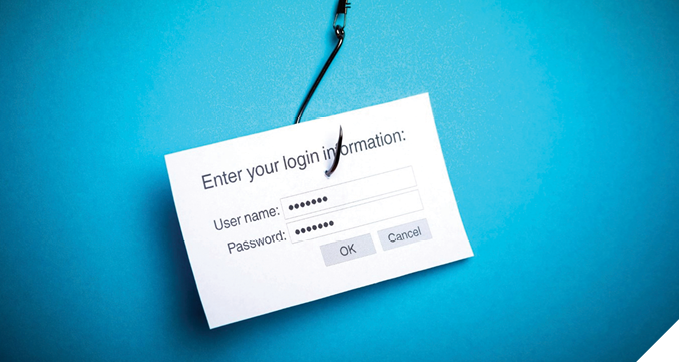
For the small dental practice converting from paper to digital in the early 2000s, the process was relatively straightforward. Initially, the change brought efficiency and ease. However, as technology advanced, the practice was unprepared for the mushrooming array of associated cyber threats. From simple viruses in the early days, to sophisticated ransomware (Fig. 2) and phishing (Fig. 3) attacks today, the journey has been fraught with cyber challenges.
Fig. 2

Fig. 3
The evolution involves more than just adopting new technologies; it also needs to be about understanding and mitigating the risks that come with them. As dental practices become more reliant on digital systems, the importance of cybersecurity grows exponentially. The stakes are high – a breach can compromise sensitive patient data, create financial losses, cause damage to the practice’s reputation, or ultimately, close the entire business. Furthermore, downtime is very expensive, and just not acceptable.
Cybercrime Landscape in Dental Practices Today
Dental practices are prime targets for cybercriminals. The wealth of sensitive patient data, combined with financial details, creates a criminal goldmine for data breaches, identity theft, and financial fraud. Contact information of patients, their families, insurance information, credit card data, and full health histories create a perfect data set for cybercriminals to steal, sell, extort, or perpetrate other types of attacks.
Common Cyber Attacks Faced by Dental Practices
1. Data Theft: Cybercriminals steal patient records to sell or exploit.
2. Ransomware: Locking access to data, and/or stealing data and holding it ransom.
3. Phishing Scams: Tricking employees into revealing sensitive information or clicking on attachments that deliver malware.
4. Hacking: Exploiting vulnerabilities in the system to gain access.
While each of these attacks can have devastating consequences, most dentists cannot afford big software budgets or specialized cybersecurity professionals to build effective cyber prevention strategies. Additionally, many mainstream IT companies still lack the expertise, and strong systems to properly monitor and maintain the security of a dental practice, train staff, or even to create an appropriate backup system. With dentistry being one of the most complex digital environments, there is much to know and to consider in order to properly safeguard the systems, while still allowing an efficient patient treatment workflow.
Phishing Scams – The Way In
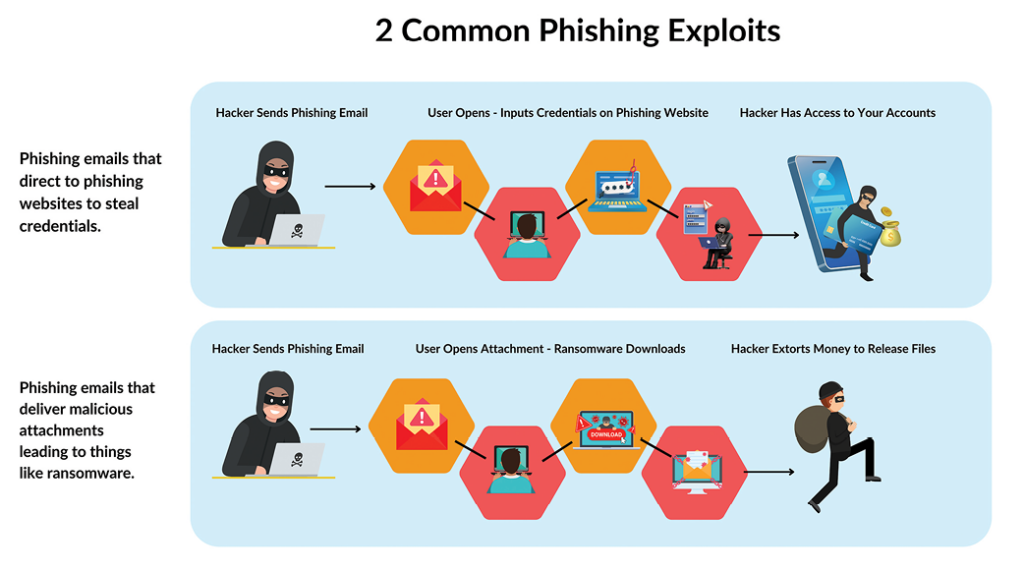
Phishing emails are deceptive messages designed to trick recipients into taking actions that compromise their security. They come in various forms, targeting personal information, credentials, and even the installation of malware. Here is a brief look at the two most common types used for office attacks: (Fig. 4)
Fig. 4
Phishing Emails for Credential Theft
These emails often impersonate reputable companies or services, urging a click on a link that leads to a fake login page. The design mimics the real website closely, tricking the office staff into entering personal credentials (usernames and passwords). Once entered, this sensitive information is sent directly to the attackers, who can then access accounts, personal data, or even commit identity theft.
Phishing Emails Delivering Malware
Instead of stealing credentials directly, these emails aim to install malicious software (malware) on the office devices. The message might prompt the download an attachment or a click of a malicious link under the guise of urgent or enticing business or information. Once the malware is downloaded and executed, it can wreak havoc in various ways—spying on all office activities, locking the office out of access to its own system (ransomware), or secretly enlisting the office device into a botnet for coordinated cyberattacks.
Both types exploit human psychology and trust to breach security measures. Awareness, skepticism of unsolicited messages, and verifying the legitimacy of requests through official channels are key defenses against such threats. These are the keys to avoiding the biggest danger to dental data, which of course, is ransomware.
What Steps Can Be Taken to Protect The Practice?
As related in Oral Health’s “Ask the Experts” series on cybersecurity, breach prevention requires a multi-faceted approach, including education on many levels.
While security controls, antivirus, and firewalls are very important parts of cybersecurity, dentists can significantly bolster the cybersecurity of their practices by prioritizing security awareness training.
Hackers today primarily target the employees of organizations through phishing emails that are loaded with malware or link to credential stealing fake websites. Considering that up to 90% of breaches occur due to human error,1 it is obvious that despite technological advances that can help to minimize threats, training people to recognize these threats is an important first line of defense.
50% of employees are certain that they have made work errors that may have caused security issues.2
In the intricate world of dental care, where sensitive patient data and specialized software are commonplace, and staff access is almost unlimited, generic cybersecurity training falls short. It often lacks the context and specificity needed to address the daily challenges faced by dental teams.
By implementing training that is directly relevant to dental office operations, staff members are not only educated about general cybersecurity principles but also learn how to apply these principles in the specific scenarios they encounter every day. This approach ensures a deeper understanding and more effective skill-building, as it resonates with the day-to-day experiences of dental professionals.
Securing Dental Practice Data Through Specialized Cybersecurity Training
Recognizing the escalating cyber threat environment, specialized cybersecurity training for dental practices is crucial; it must be readily accessible, fast, easy to complete, affordable and engaging.
Myla Training Corp. is Canada’s first online privacy and cybersecurity training portal for dentistry. Myla’s basic cybersecurity awareness course is both a preventive measure and a good investment in the safety and integrity of practice data, offering compliance and insurance documentation.
It Is Crucial to Implement Cybersecurity Education for Dental Practices
Dentists should seek engaging and highly contextualized cybersecurity basics courses tailored to dental professionals, such as the one from Myla Training.
This course stands out for several reasons:
1. Real-world dental practice scenarios: Training includes examples and case studies directly from dental practice experiences.
2. Engaging and easy-to-understand content: Designed to be engaging and accessible, breaking down complex cybersecurity concepts into plain language.
3. Comprehensive coverage: Myla trains teams to recognize common types of cyberattacks and builds skills to prevent breaches, hacking, and viruses.
4. Quick and effective learning: Efficient micro-training modules equip the dental team with cyber defense skills promptly, in under 45 minutes.
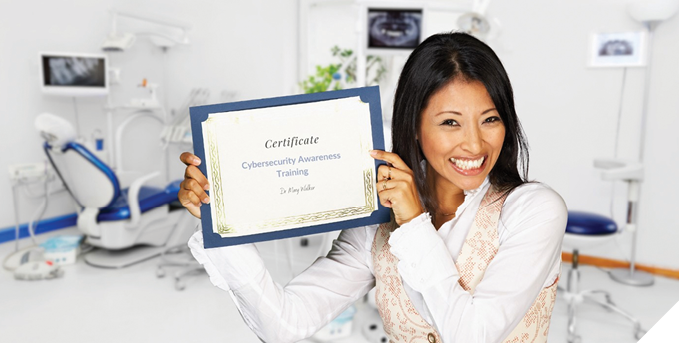
5. Certification and Testing: A test at the end of the course ensures comprehension, and successful participants receive a certificate, adding credibility and assurance (Fig. 5).
Fig. 5
Cyber Criminals Use Social Engineering Techniques to Trick Individuals Into Bypassing Security Controls
The Impact Of Cybersecurity Training
By enrolling in a cybersecurity course, dental practices can dramatically improve the security of their systems, patient data, and employee information. The training empowers every team member, from the front desk to the dental chair, with the knowledge and skills to identify, prevent, and respond to cyber threats effectively.
The learning objectives cover a wide range of topics, including but not limited to:
- Understanding the cybersecurity landscape and its relevance to dental practices.
- Identifying potential cyber threats and vulnerabilities in dental practice operations.
- Implementing effective cybersecurity measures and protocols.
- Developing a culture of cybersecurity awareness within the practice.
- Responding to, and recovering from, cyber incidents.
This comprehensive approach ensures that dental practices are protected not only against current threats but are also prepared for future challenges.
Keeping Dental Data Safe Requires Continuous Training
As dental practices continue to evolve digitally, the importance of cybersecurity cannot be overstated. Training and awareness are keys to safeguarding against cyber threats, especially in the era of artificial intelligence.
Specialized courses, such as the one from Myla Training, offer a comprehensive, engaging, and practical approach to ensuring that dental practices can operate safely and protect the sensitive data they are entrusted with. They equip dental practices with the tools and knowledge to combat these threats. The journey from paper records to digital databases has been challenging, but with the right training and tools, dental practices can confidently navigate the cyber world. The synergy of digital advancement and robust cybersecurity measures together define the success and safety of the dental practice. 
Oral Health welcomes this original article.
References
- IBM X-Force Threat Intelligence Index 2024 https://www.ibm.com/reports/threat-intelligence?mhq=Threat%20Intelligence%20Index&mhsrc=ibmsearch_a
- Tessian/Stanford University 2022 – The Psychology of Human Error https://f.hubspotusercontent20.net/hubfs/1670277/%5BCollateral%5D%20Tessian-Research-Reports/%5BTessian%20Research%5D%20Psychology%20of%20Human%20Error%202022.pdf p. 14
About the Author

Anne Genge is a Certified Information Privacy and Security Professional, and a Certified Healthcare Security Risk Assessment Specialist, a leading expert and trainer in this field with over two decades of experience. Founder of Myla Training, Canada’s first dental online privacy and cybersecurity training platform, Anne collaborates closely with practice owners, managers, dental teams, and IT providers to ensure the safety of patients and practice data while enabling compliance with privacy regulations.