
Canada’s population is rapidly aging, accompanied by a shifting landscape in oral healthcare needs. In 2021, individuals aged 65 and older accounted for 18.5% of the national population, and this figure is projected to increase sharply by 2068.1 This demographic trend presents both challenges and opportunities for the Canadian healthcare system, particularly in the field of dentistry. Older adults often contend with chronic illnesses with essential intake of many medications, reduced functional independence, and financial hardship, all of which contribute to complex oral health needs.2 As such, dental professionals must adopt clinical practices to deliver care that is both evidence-based and socially responsive.
These adoptions start with a foundational understanding of common oral conditions in older adults, which becomes essential for effective clinical management. For example, issues such as xerostomia, or dry mouth, often arise in this population and frequently result from various factors, including the use of multiple medications.3 Many elderly individuals find themselves needing essential daily aids such as antihypertensives, antidepressants, and diuretics that can reduce salivary flow, cause discomfort, impaired swallowing, compromised speech, as well as elevated caries risk.4 Dental professionals help patients manage this condition by recommending sugar-free lozenges, prescribing artificial saliva, and promoting hydration.5 They may also consult with prescribing physicians to modify medication schedules in a way that minimizes hyposalivation. In addition to xerostomia, the prevalence of dental caries, especially root caries, requires targeted attention from dentists.6 These lesions often result from a combination of factors such as exposed root surfaces and reduced salivary protection. Conditions such as arthritis and cognitive impairment further exacerbate the risk of caries by impeding oral hygiene.7 Dental teams mitigate this risk by implementing customized hygiene regimens, providing caregiver training, and utilizing fluoride-releasing materials, such as glass ionomer cement (GIC), during restorative procedures.7 Finally, periodontal disease also affects a significant proportion of seniors, with many individuals presenting with moderate to severe periodontitis.8 Management typically includes regular professional cleanings, oral hygiene instruction, antimicrobial rinses, and the use of sometimes invasive therapies, such as grafting, that aim to support remaining tissue.9 As dental professionals address caries and periodontal disease, they must also remain vigilant for malignancies. Oral cancer incidence increases significantly with advancing age and often affects the lateral tongue, floor of the mouth, and soft palate.10
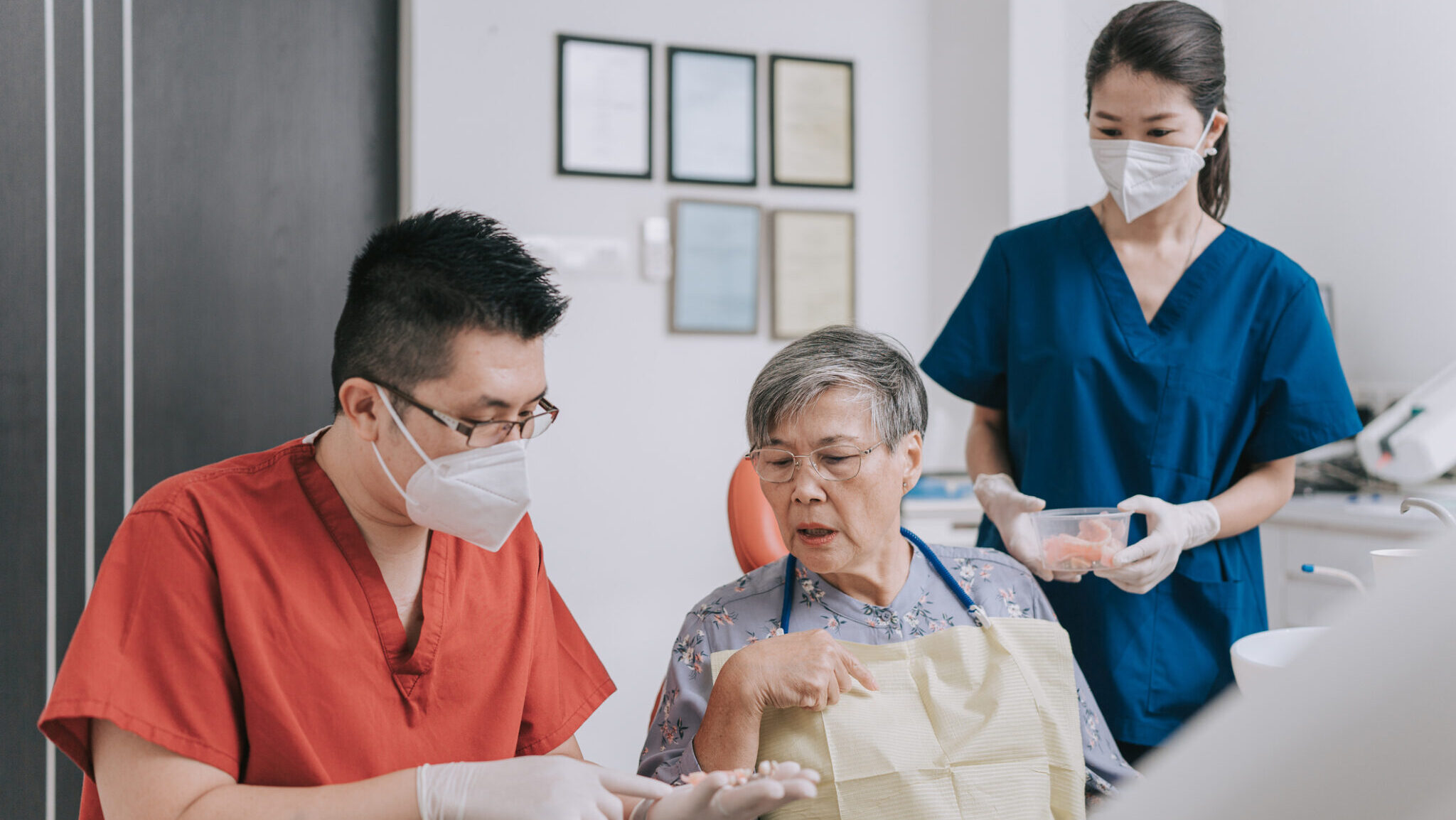
In response, dentists should conduct routine intraoral screenings during examinations to facilitate the early detection of lesions, which could improve patient prognosis.11 Dental professionals should further support prevention by distributing educational materials and engaging in discussions with patients and caregivers about warning signs, including but not limited to persistent ulcers, unexplained bleeding, and changes in mucosa. The presence of edentulism among Canadians in this population adds another layer of complexity to restorative planning. Removable dentures continue to play a central role in the rehabilitation of patients who remain edentulous despite overall declines in tooth loss. Poorly fitting dentures contribute to mucosal trauma, discomfort, and denture-induced stomatitis.12 Dentists in general should consider it part of their role to evaluate the fit routinely, perform relines as necessary, fabricate new prostheses when required, and recommend implant-supported overdentures in medically suitable cases.13 It is essential that dentists engage actively in discussions with patients to educate them on maintenance practices that can extend the longevity of prostheses and improve patient comfort.
Beyond these oral conditions, the interaction between systemic and oral health warrants close attention in geriatric oral healthcare. To elaborate, diabetes mellitus affects approximately one-quarter of Canadian seniors and shares a bidirectional relationship with periodontal disease.9 Inadequate glycemic control exacerbates periodontal inflammation, while chronic oral infection hinders metabolic regulation.9 Coordinated care among dentists, physicians, and endocrinologists supports effective disease management and improved oral outcomes.14 Dentists screen for diabetic symptoms, record blood glucose metrics when feasible, and tailor periodontal therapy to minimize systemic burden. This interplay becomes even more significant when considering cardiovascular implications. Chronic periodontitis contributes to systemic inflammation, potentially influencing cardiovascular conditions such as atherosclerosis, myocardial infarction, and stroke.15 Dental professionals address this issue by prioritizing infection control, reducing pocket depths through non-surgical scaling, and recommending lifestyle modifications that support both systemic and oral health. Cognitive decline adds additional challenges to this integrated model. Cognitive impairments, including dementia, introduce complexities in care delivery, as affected individuals often resist hygiene practices, neglect oral symptoms, or lose the ability to communicate needs effectively. Clinicians must evaluate decision-making capacity, adhere to legal frameworks regarding substitute consent, and implement behavioural strategies that protect patient dignity. Techniques such as simplified communication, visual aids, and brief appointments facilitate successful treatment. Dental professionals also involve caregivers early in the process and use desensitization protocols when patients experience fear or confusion.
While these clinical challenges are significant, systemic barriers to care also demand critical evaluation. Older adults in Canada face numerous obstacles that limit access to dental services. Financial challenges are widespread, particularly among those who no longer receive employer-sponsored insurance. The Canadian Dental Care Plan (CDCP) provides support, but its current scope remains limited.1 Dental providers must stay informed about public programs and advocate for expanded eligibility and awareness. Some practices offer sliding-scale fees or collaborate with community partners to alleviate the economic burden. In addition to financial issues, physical and geographic barriers create logistical challenges. For instance, physical disabilities, including reduced mobility, vision impairment, and arthritis, restrict both home care and attendance at dental clinics.2 In rural settings, transportation issues compound these limitations. Long-term care facilities frequently experience staffing shortages and limited dental infrastructure, which further restrict access.16 Expanding mobile dental clinics and leveraging tele-dentistry platforms may help to alleviate these systemic gaps by increasing accessibility, reducing travel-related barriers, and facilitating timely preventive and diagnostic care for older adults.17 Coordinated scheduling, portable equipment, and institutional policy changes further facilitate access to resources.
Additionally, research has shown that older adults often underestimate the importance of oral care, particularly after tooth loss.18 This is important to consider as misconceptions about the necessity of regular dental visits can lead to the neglect of conditions. Public and in-clinic education by dental professionals must address this misconception and emphasize the integral role of oral health in general well-being and disease prevention. These campaigns are most effective when delivered through familiar channels, such as community centers, religious organizations, and multilingual media outlets.19
Addressing these challenges requires an evidence-based, individualized approach to treatment planning. High-quality geriatric dental care begins with a thorough clinical and medical evaluation.20 Dentists assess medical history, current medications, cognitive status, and functional capacity to formulate individualized treatment plans. This comprehensive approach supports clinical decision-making and minimizes potential complications. Dental providers document findings in shared interprofessional records to promote integrated care as well as preventive strategies, forming the foundation of effective long-term health maintenance and reducing the risk of avoidable complications.21 Clinicians select interventions based on a patient’s cognitive status, manual dexterity, and level of caregiver support. These may include recommending high-fluoride toothpaste, prescribing antimicrobial rinses when appropriate, and adapting oral hygiene aids to suit individual capabilities.22
To support consistent oral hygiene in functionally dependent older adults, studies have shown that home visits by dental professionals, whether at private residences or within long-term care facilities, can be beneficial in maintaining routine care.23 In restorative contexts, material selection and design should prioritize simplicity, durability, and ease of maintenance to accommodate the patient’s functional capacity. Resin-modified glass ionomers are particularly well-suited to these conditions due to their fluoride release and moisture tolerance, making them ideal in compromised clinical environments.24 Additionally, dentists can enhance long-term outcomes by minimizing undercuts and tailoring restorations to match the patient’s abilities, thereby improving function, comfort, and adherence to treatment.
Moreover, effective communication strategies underpin all aspects of geriatric care, requiring thoughtful adaptation to accommodate cognitive, sensory, and emotional challenges.22 For instance, many older adults experience hearing loss or cognitive impairment, which may hinder comprehension and decision-making.25 In response, dentists employ techniques such as repetition, the use of visual aids, and the active involvement of caregivers to promote understanding and secure informed consent. When patients lack decision-making capacity, legal guardians play a critical role in supporting care choices. Furthermore, clinics that provide printed visit summaries and pictorial instruction sheets have reported improved treatment adherence and increased patient satisfaction.19
Given the increasing complexity of geriatric dental care, the scope of education in Canadian dental institutions must evolve to prepare future practitioners adequately. For example, the need for expanded training is especially urgent, as most students currently graduate with minimal clinical experience treating older adults with complex medical and functional needs.26 To address this gap, Ettinger (2010) advocated for the integration of long-term care rotations, simulation exercises, and interprofessional workshops within undergraduate dental doctorate programs. Additionally, continuing education remains crucial for practicing dentists to stay current with evolving demographic demands and changing care models. Notably, universities that include hands-on geriatrics labs and longitudinal patient tracking in their programs tend to produce graduates who demonstrate higher levels of preparedness and confidence in treating older populations. For example, McGill University offers a Special Care Dental Medicine residency that emphasizes geriatric care through rotations in long-term care facilities, enabling residents to gain extensive experience with medically and functionally complex older adults.27
As educational reform advances, policy development must parallel these efforts to ensure sustainable improvements in access to education. Policy reform plays a crucial role in enhancing access to oral healthcare for seniors. Programs such as the Canadian Dental Care Plan (CDCP) represent an important first step toward improving access. Despite this, these programs must continue to evolve to ensure broad, equitable, and sustainable coverage for older adults. Collaboration across healthcare disciplines, including occupational therapists, pharmacists, and speech-language pathologists, enhances patient outcomes. For example, occupational therapists can modify oral hygiene tools to support patient independence and autonomy. At the same time, speech-language pathologists assist in managing dysphagia and promoting safe oral intake, both of which contribute to improved oral and systemic health outcomes.28 Shared electronic health records and interprofessional case conferences play a key role in reinforcing continuity of care across providers.21 At the community level, targeted initiatives complement institutional reforms by delivering services directly where they are most needed. Programs that include caregiver workshops and on-site dental assessments have been shown to enhance outreach and patient engagement.19 In addition, provincial incentives and expanded service availability in rural and underserved areas help reduce longstanding geographic and socioeconomic disparities.29 By integrating oral healthcare into broader public health strategies, these efforts ensure that aging populations receive timely, appropriate treatment.2 Partnerships with public health nurses and social workers further extend the reach and effectiveness of these interventions, fostering a more comprehensive and inclusive approach to geriatric care.28
As healthcare providers and policymakers align their efforts, the role of dental students and new graduates becomes increasingly critical. As I transition to treating real patients, my own learning experiences have only emphasized the importance of preparedness in dentistry, including geriatric dentistry. Effective care for older adults requires an understanding of systemic disease, cognitive variability, and social determinants of health. My goals include improving communication with patients who have cognitive impairments, participating in interprofessional care teams, and promoting curriculum reforms to enhance geriatric training. In this way, I remain committed to delivering equitable, compassionate care that promotes the dignity of older adults. As such, my future clinical experiences will inform both my professional development and my efforts to enhance dental education and inform health policy. 
Oral Health welcomes this original article.
References
- Gondro, J. V., Murphy, K., Clarke, J., & Fortin, Y. (2024). Factors associated with the use of oral health care services among seniors in Canada. Health Reports, 35(6), 1–12.https://www150.statcan.gc.ca/n1/pub/82-003-x/2024006/article/00002-eng.htm
- Petersen, P. E., & Yamamoto, T. (2005). Improving the oral health of older people: The approach of the WHO Global Oral Health Programme. Community Dentistry and Oral Epidemiology, 33(2), 81–92. https://doi.org/10.1111/j.1600-0528.2004.00219.x
- Sreebny, L. M., & Schwartz, S. S. (1997). A reference guide to drugs and dry mouth—2nd edition. Gerodontology, 14(1), 33–47. https://doi.org/10.1111/j.1741-2358.1997.tb00187.x
- Gupta, A., Epstein, J. B., & Sroussi, H. (2006). Hyposalivation in elderly patients. Journal of the Canadian Dental Association, 72(9), 841–846.
- Villa, A., Abati, S., Pileri, P., Calabrese, L., & Strohmenger, L. (2015). Contemporary management of xerostomia. Australian Dental Journal, 60(1), 11–18. https://doi.org/10.1111/adj.12265
- Thomson, W. M. (2014). Epidemiology of oral health conditions in older people. Gerodontology, 31(s1), 9–16. https://doi.org/10.1111/ger.12085
- Chalmers, J. M., Carter, K. D., & Spencer, A. J. (2003). Caries incidence and increments in community-living older adults with and without dementia. Gerodontology, 20(2), 80–94. https://doi.org/10.1111/j.1741-2358.2003.00080.x
- Locker, D., Slade, G. D., & Murray, H. (1998). Epidemiology of periodontal disease among older adults: a review. Periodontology 2000, 16(1), 16–33. https://doi.org/10.1111/j.1600-0757.1998.tb00032.x
- Preshaw, P. M., Alba, A. L., Herrera, D., Jepsen, S., Konstantinidis, A., Makrilakis, K., & Taylor, R. (2012). Periodontitis and diabetes: A two-way relationship. Diabetologia, 55(1), 21–31. https://doi.org/10.1007/s00125-011-2342-y
- Warnakulasuriya, S. (2009). Global epidemiology of oral and oropharyngeal cancer. Oral Oncology, 45(4–5), 309–316. https://doi.org/10.1016/j.oraloncology.2008.06.002
- Lingen, M. W., Kalmar, J. R., Karrison, T., & Speight, P. M. (2008). Critical evaluation of diagnostic aids for the detection of oral cancer. Oral Oncology, 44(1), 10–22. https://doi.org/10.1016/j.oraloncology.2007.06.011
- Gendreau, L., & Loewy, Z. G. (2011). Epidemiology and etiology of denture stomatitis. Journal of Prosthodontics, 20(4), 251–260. https://doi.org/10.1111/j.1532-849X.2011.00698.x
- Feine, J. S., Carlsson, G. E., Awad, M. A., Chehade, A., Duncan, W. J., Gizani, S., … & Lund, J. P. (2002). The McGill consensus statement on overdentures. International Journal of Prosthodontics, 15(4), 413–414.
- Lamster, I. B., & Eaves, K. (2011). A model for dental practice in the 21st century. American Journal of Public Health, 101(10), 1825–1830. https://doi.org/10.2105/AJPH.2010.300073
- Tonetti, M. S., & Van Dyke, T. E. (2013). Periodontitis and atherosclerotic cardiovascular disease: consensus report of the Joint EFP/AAP Workshop on Periodontitis and Systemic Diseases. Journal of Clinical Periodontology, 40(S14), S24–S29. https://doi.org/10.1111/jcpe.12089
- Chowdhry, N., Aleksejūnienė, J., Wyatt, C., & Bryant, R. (2011). Dentists’ perceptions of providing care in long-term care facilities. Journal of the Canadian Dental Association, 77, b21. https://jcda.ca/article/b21
- Daniel, S. J., & Kumar, S. (2021). Teledentistry: A key component in access to care. Journal of Evidence-Based Dental Practice, 21(3), 101584. https://doi.org/10.1016/j.jebdp.2021.101584
- McGrath, C., & Bedi, R. (2002). Influences of social support on the oral health of older people in Britain. Journal of Oral Rehabilitation, 29(10), 918–922. https://doi.org/10.1046/j.1365-2842.2002.00936.x
- Patton, L. L., Willis, J. R., & Mitchell, T. V. (2020). Community-based oral health promotion programs for older adults. Dental Clinics of North America, 64(2), 317–333. https://doi.org/10.1016/j.cden.2019.12.007
- Mulligan, R., White, B. A., & Barreto, A. M. (2013). The impact of oral health on the quality of life of nursing home residents. Special Care in Dentistry, 33(1), 15–20. https://doi.org/10.1111/j.1754-4505.2012.00274.x
- Dolovich, L., Pottie, K., Kaczorowski, J., Farrell, B., Austin, Z., Rodriguez, C., & Gaebel, K. (2008). Integrating family medicine and pharmacy to advance primary care therapeutics. Clinical Pharmacology & Therapeutics, 83(6), 913–917. https://doi.org/10.1038/clpt.2008.40
- Chalmers, J. M., & Pearson, A. (2005). Oral hygiene care for residents with dementia: A literature review. Journal of Advanced Nursing, 52(4), 410–419. https://doi.org/10.1111/j.1365-2648.2005.03605.x
- Wyatt, C. C. L. (2009). Elderly Canadians residing in long-term care hospitals: Part II. Dental caries status. Journal of the Canadian Dental Association, 75(1), 41. https://jcda.ca/article/b09
- Mount, G. J., & Hume, W. R. (2005). Preservation and restoration of tooth structure (2nd ed.). Knowledge Books and Software.
- Kiyak, H. A. (2000). Psychological influences on older adult oral health. Journal of Public Health Dentistry, 60(4), 276–280. https://doi.org/10.1111/j.1752-7325.2000.tb03343.x
- Ettinger, R. L. (2010). The development of geriatric dental education programs in Canada: An update. Journal of the Canadian Dental Association, 76, a1.
- McGill University. (2024). Special Care Dental Medicine – General Practice Residency. Faculty of Dental Medicine and Oral Health Sciences. https://www.mcgill.ca/dentistry/gpr/special-care-dental-medicine-general-practice-residency
- Sung, M., Garcia, L. J., & MacDonald, L. (2017). Interprofessional collaboration in long-term care: Role of speech-language pathologists and occupational therapists. Canadian Journal of Speech-Language Pathology and Audiology, 41(1), 20–31. https://cjslpa.ca/files/2017_CJSLPA_Vol_41/No_1/CJSLPA_41_1_Sung_etal.pdf
- Quiñonez, C. (2013). Why was dental care excluded from Canadian Medicare? Network for Canadian Oral Health Research. https://www.ncchr.info/quinonez-medicare
About the author

Vicky Verma is a third-year dental student at the McGill University Faculty of Dental Medicine and Oral Sciences.