
The Craniofacial Orthodontics Fellowship at New York University is a prestigious program offering advanced training in managing craniofacial anomalies and complex orthodontic cases. The program provides comprehensive care for patients with craniofacial differences from birth to skeletal maturity, all under the expert guidance of Dr. Pradip Shetye. The patient population includes individuals with a wide range of conditions such as cleft lip and palate, syndromic craniosynostosis, hemifacial microsomia, Treacher Collins syndrome, and ectodermal dysplasia, among others. Where else in the world might you encounter two patients with a one-in-a-million condition like cleidocranial dysplasia in the same week?
My Path to Craniofacial Orthodontics
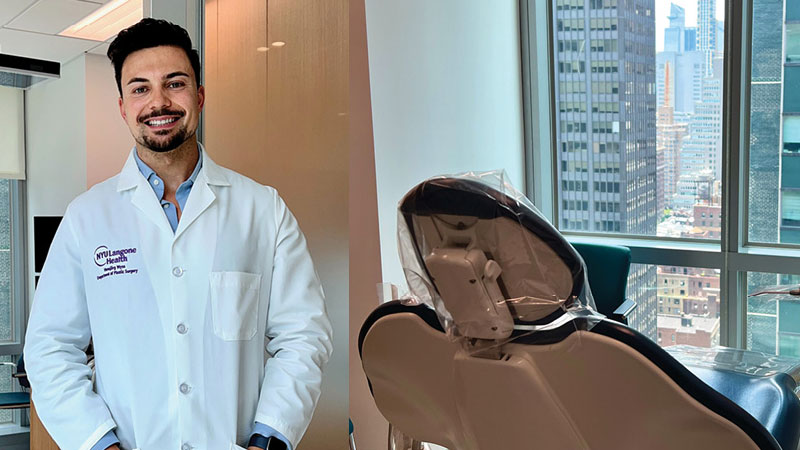
Pursuing a fellowship was always on my radar, even before starting my orthodontics residency, as an extra year in school appealed greatly to my Peter Pan syndrome. Jokes aside, I was heavily influenced by the year I spent working with my dad at his paediatric dental practice. I saw him treat numerous children with rampant caries and witnessed the significant positive impact he makes on his community. To me, this is absolutely necessary, life-changing dentistry. I wanted to have a similar influence in my field and believed that craniofacial orthodontics might offer a comparable opportunity (Fig. 1). My master’s research at the University of Toronto, which focused on the medical necessity of orthodontic care, further solidified my desire to sub-specialize in craniofacial orthodontics. The project’s most unanimously agreed upon finding was that those with cleft lip and palate and other craniofacial anomalies have the greatest “need” for orthodontic care. In addition to the incredible opportunity to be trained in life-changing treatments, the deal was further sweetened by the once in a lifetime chance to live in Manhattan, with its endless array of restaurants, gyms, and activities.
Fig. 1
The Steep Learning Curve
To my surprise, despite graduating from a strong residency program in Toronto, I felt unprepared and out of place in the muggy summer months in Manhattan. It wasn’t only the heat and humidity that had me sweating; I was dealing with scenarios I never encountered in residency, such as multiple missing teeth, severely compromised periodontal support, significant skeletal discrepancies, and much younger patients than I was used to. In addition to bread-and-butter orthodontics, the first few months in NYC had me managing scores of patients in the post-operative period after their alveolar bone grafts or orthognathic surgery. Fortunately, Dr. Shetye was there to guide me when needed and over time, I picked up on patterns and became more comfortable handling these situations on my own. I also had the unique opportunity to shadow our talented plastic surgeons, Dr. Flores and Dr. Staffenberg, performing these procedures in the operating room. This was invaluable as it gave me a deeper understanding of what I can do as an orthodontist to help set these cases up for smooth surgeries and provided insights into managing any post-operative complications.
Another new experience for me was my involvement in presurgical infant orthopedics (PSIO). PSIO focuses on aligning displaced nasolabial structures to aid primary lip repair in infants born with orofacial clefts. While NYU is renowned for popularizing the nasoalveolar molding (NAM) technique, my training was exclusively with the Presurgical Lip, Alveolus, and Nose Approximation (PLANA) technique.1 This innovative approach created by Dr. Shetye uses his proprietary device, NoseAlign, along with medical adhesive tapes to facilitate surgical correction of cleft lip and improve aesthetic and functional outcomes. At first, working with such young patients was outside my comfort zone, but under Dr. Shetye’s guidance, I gradually became more confident. I feel very fortunate to have completed my fellowship during the era of PLANA for I have witnessed its remarkable ability to prepare infants for surgery. Furthermore, I believe the simplicity of this technique significantly lessens the burden of care for families.
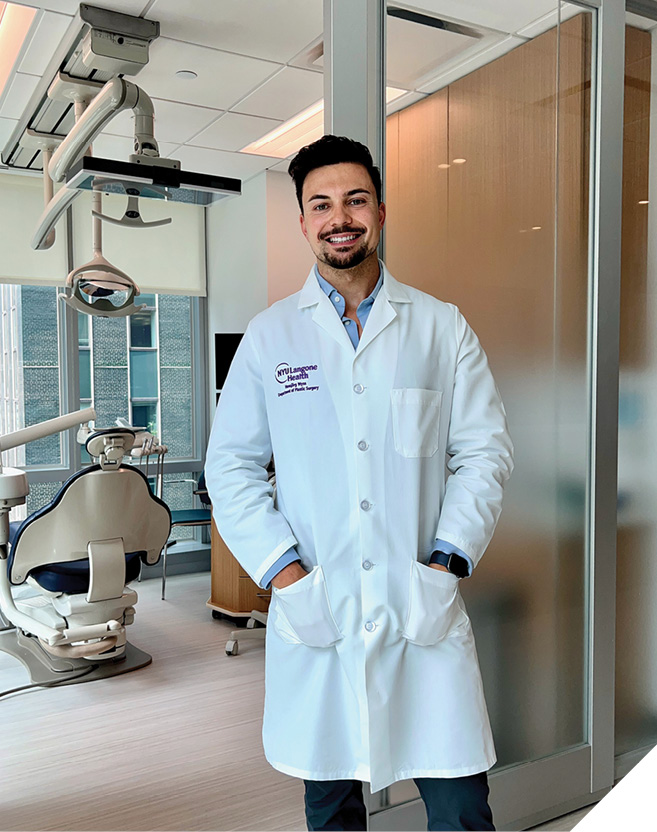
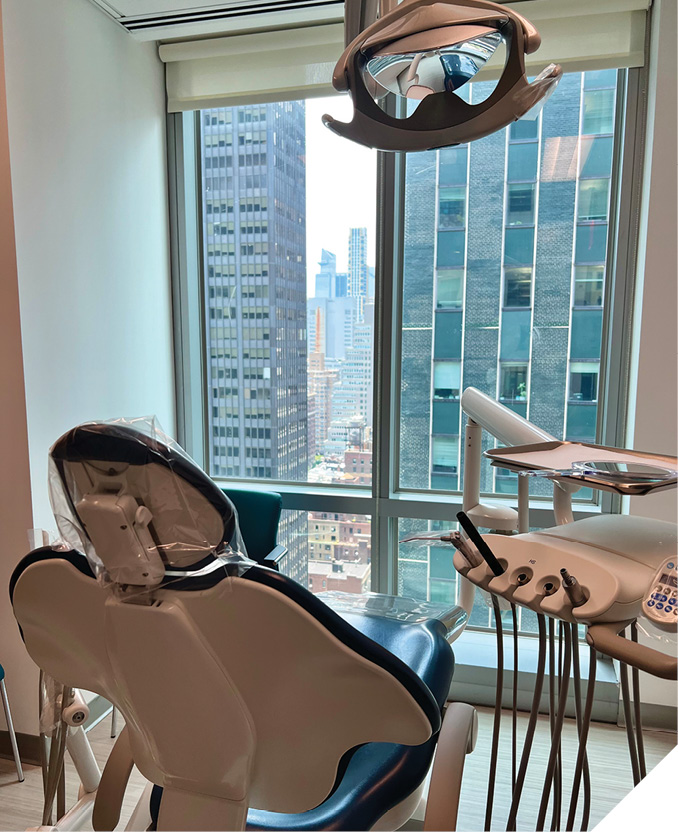
Having encountered numerous new experiences in a short time since joining NYU, I quickly realized that craniofacial orthodontics is a different animal than the orthodontics practiced during residency. Being thrown into the deep end, it was a matter of sink or swim, and with these patients relying on me, I had no choice but to find a way to swim. Each day up on the 22nd floor of our Midtown Manhattan office presented new learning opportunities, compelling me to expand my knowledge and skills (Fig. 2). The steep learning curve was demanding, but it also offered a rewarding sense of achievement as I navigated and overcame these challenges.
Fig. 2
Team Synergy
One of the most significant aspects of the fellowship was the emphasis on teamwork. Collaborating with plastic surgeons, a speech-language pathologist, social worker, dietician, and nurse practitioners required a unified approach to patient care. Our Monday morning team conferences were especially valuable, as we took turns evaluating patients and discussing our findings and treatment plans. This provided me with insights into the perspectives of other specialties. While orthodontic goals often aligned with those of other disciplines, compromise was sometimes necessary to achieve the best overall outcome for the patient. For example, a patient could be destined for jaw surgery, but the social worker might determine they lack the necessary support system at home. Alternatively, we might think it’s too early for orthodontics, but the speech-language pathologist might advocate for early correction to benefit speech development. This interdisciplinary collaboration taught me the value of flexibility and integrating multiple perspectives when creating comprehensive treatment plans. Although I’ll never be an expert in these fields, I will try to always consider these non-orthodontic factors and seek advice from colleagues in other specialties when required.
The Art of Empathetic Communication
Aside from orthodontic treatment, I challenged myself to enhance my communication skills during difficult conversations. Whether I was making sure my voice was heard while navigating complex cases with colleagues or discussing treatment options with patients and their families, the fellowship emphasized the importance of clear, empathetic communication. This was especially true when discussing treatment plans that involved surgical procedures with lengthy, uncomfortable healing processes. It was crucial to put myself in the patients’ shoes, considering these children have endured numerous surgeries, therapies, and countless doctors’ appointments. If they weren’t happy to be in my chair, I didn’t blame them. And if they were, I found it inspiring to observe their positivity and resilience, which helped put my own problems into perspective. Developing this skill was essential in building trust and understanding with patients, ensuring they felt supported and informed throughout their treatment journey. This reinforced the importance of empathy and the human side of medical practice.
Final Thoughts
Reflecting on my NYU fellowship, I am grateful for the professional and personal growth it fostered. The rigorous training, interdisciplinary teamwork, and emphasis on effective communication has greatly shaped my approach to orthodontics. It has enhanced my clinical skills and commitment to compassionate, patient-centered care. I vividly recall a conversation between a teenage patient’s mother and our plastic surgeon, who had completed her son’s cleft lip repair in the Bronx and was about to perform his orthognathic surgery in Manhattan. She said the doctor became such an important part of their lives that they have and would continue to follow him anywhere he went for her child’s care. I will never forget this moment as it highlights the privilege and responsibility of treating these patients as they grow and develop. As I advance in my career, the lessons learned during this fellowship will continue to guide and inspire me. If I could share one final thought with my dental colleagues, it would be don’t hesitate to get involved in the care of those with craniofacial differences. Most treatment needs are similar to those of other patients, and if something is beyond your scope, assist with referrals and collaborate with others. Your willingness to help can profoundly impact the course of a child’s life. 
Oral Health welcomes this original article.
References
- Shetye P. R. (2024). An Innovative Technique of Presurgical Lip, Alveolus, and Nose Approximation
(PLANA) for Infants with Clefts. The Journal of craniofacial surgery, 35(4), e357–e359. https://doi.org/10.1097/SCS.0000000000010107
About the Author
Dr. Daniel Richmond grew up in London, Ontario and attended the University of Western Ontario where he earned his BMSc in Anatomy and Cell Biology. He received his DMD from McGill University in 2019 and subsequently worked with his father in his paediatric dental practice for one year. Following this, he pursued specialty training in orthodontics at the University of Toronto, graduating in 2023. Daniel then completed a fellowship in Craniofacial Orthodontics at New York University. He plans to open an orthodontic practice in London in the near future.