
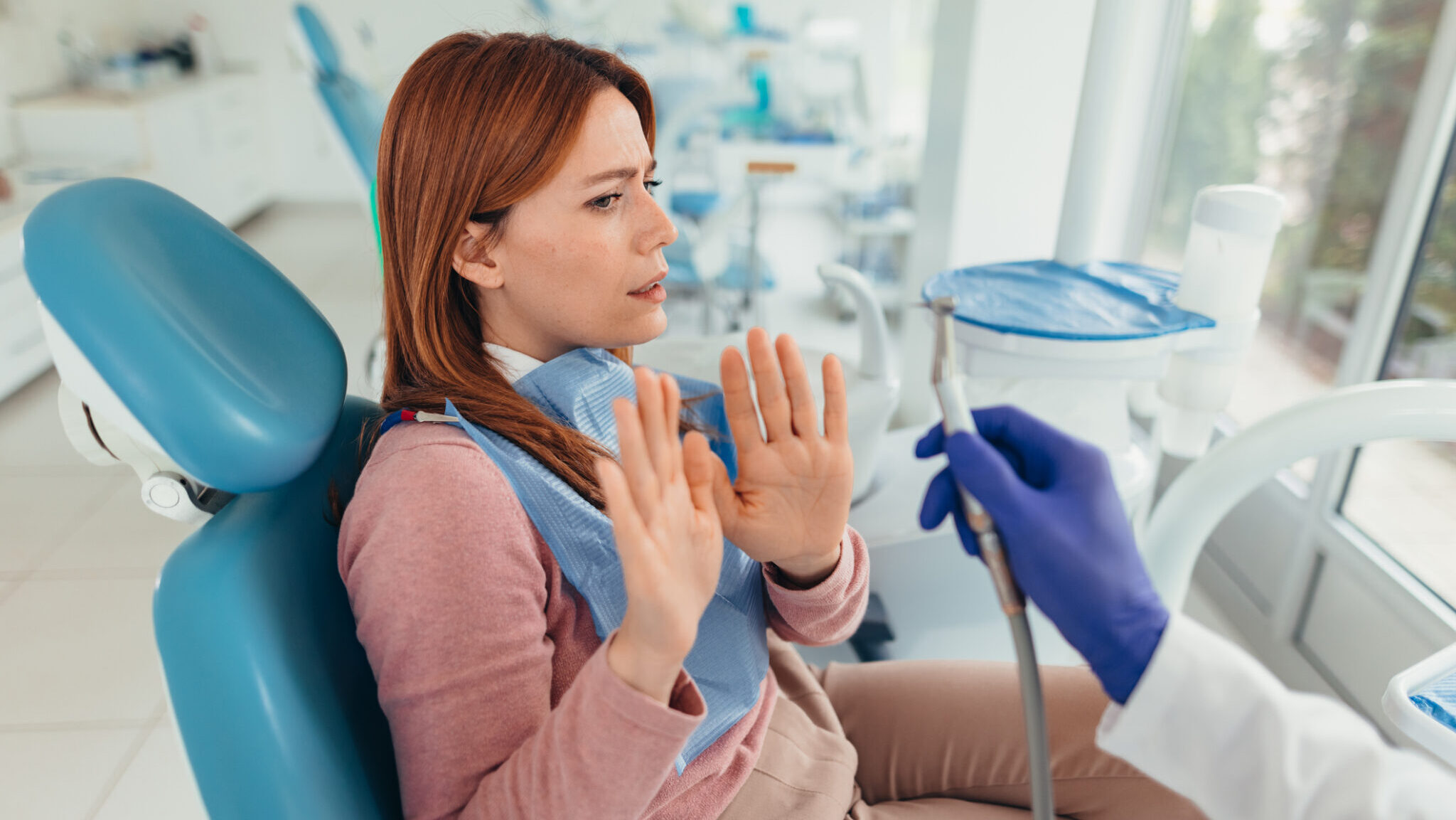

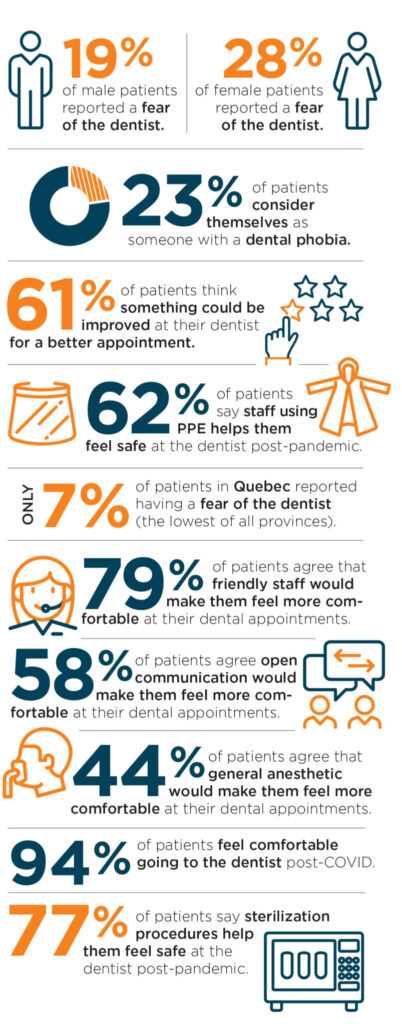
Fear of the dentist, or “dentophobia,” has been widely discussed within both the dental profession and general society, with extensive research conducted on the topic. In our recent survey of Canadian dental patients, 73% of respondents did not consider themselves to have a dental phobia. While this is an encouraging result, dental professionals must still consider the one in four patients who may struggle with fear of the dentist.
When asked what helped them feel more comfortable at the dentist, “friendly staff” was the top response. This serves as a valuable reminder that while clinical skills are essential when hiring team members, a positive and friendly personality is what truly makes a lasting impact on your patient base.
A closer look at the demographics reveals which age groups are experiencing the most fear: 41% of patients under 30 years old reported having “dentophobia,” compared to 20–30% in all other age groups. Many factors may contribute to this heightened fear among younger patients, such as having had less time to build comfort at the dentist or growing up during a global pandemic. If possible, consider spending a little extra time and care to help these patients feel safe and supported in your practice.
As seen in the print issue of Oral Health August 2025
In 2024 Bramm Research, a third-party independent research house, conducted a confidential online survey of general population Canadians who have visited a dentist within the past two years. The survey was limited to those 25 years or older, and nine age brackets were filled proportionally to the Canadian general population. Provincial proportions were also filled to proportionally represent English speakers in Canada of age 25 or higher. The target sample for gender was 50% female and 50% male. The survey launched on Friday, September 20th and closed on Thursday, October 3rd for a total of 14 days in field, and the number of completed responses was 1,000, the same as in 2019. With a total sample of 1,000, the margin of error is plus or minus 3.1 percentage points at the 95 percent confidence level. If, for example, 50% of the sample indicated that agreed with a statement, then we can be reasonably sure (19 times out of 20) of an accuracy within +/- 3.1%. This means that a total census would reveal an answer of not less than 46.9% and not more than 53.1%.
Sponsored by
