
Abstract:
Dental education is undergoing a pivotal transformation, driven by the need to overcome systemic challenges in teaching and assessment. Traditional methods, while foundational, often suffer from inconsistencies in grading, variability in teaching standards, and limited opportunities for hands-on practice. These issues not only hinder student development but also place undue strain on faculty resources. This article delves into the pressing challenges of the current dental education system and proposes forward-looking solutions enabled by advanced technologies. By leveraging these tools, institutions can foster self-preparation and self-assessment among students, ensure objective grading, and achieve faculty calibration, thereby creating a more effective and equitable learning environment. The integration of these platforms has the potential to revolutionize dental education, making it more accessible, efficient, and aligned with the evolving demands of clinical practice. This paper also reviews the impact of these technologies on improving current dental educational systems.
Dental education plays a critical role in preparing future professionals to meet the demands of clinical practice, combining theoretical knowledge with technical proficiency. Historically, the field has relied on the novice-expert apprenticeship model, where students learn through observation, practice, and feedback from experienced mentors. While effective in fostering foundational skills, this approach often lacks scalability and consistency, leading to variability in outcomes.
The limitations of traditional dental education have been well-documented. These include subjective assessment methods, limited opportunities for individual practice, and challenges in providing standardized training across diverse student populations. Moreover, the heavy reliance on in-person interactions places undue pressure on faculty resources and makes the system vulnerable to disruptions, as seen during the COVID-19 pandemic. Such challenges highlight the need for innovative solutions that incorporate advancements in technology to enhance learning outcomes.
Emerging tools like DenTeach and PrepScanner address these gaps by leveraging artificial intelligence, real-time feedback, and quantitative assessment metrics. Studies have demonstrated the potential of technology-based and technology-driven training platforms to improve technical skill acquisition while reducing faculty workload. By integrating these solutions, dental education can transition towards a more efficient, standardized, and accessible model, better aligned with modern clinical requirements.
This article examines the current challenges in dental education and explores how advanced platforms can revolutionize teaching and assessment practices by including emerging technologies such as artificial intelligence (AI), robotics, haptics and cloud computing. By providing objective evaluations and fostering self-directed learning, these tools hold promise for transforming the educational landscape.
Current problems in the traditional dental system
1. Limitations in teaching and learning
One of the primary challenges in dental education is variability in teaching practices. Traditional methods often depend on the subjective judgment of instructors, leading to inconsistent feedback and outcomes. Additionally, limited access to resources and practical opportunities hinders students’ ability to develop essential skills.
2. Limitations in grading, marking, and student preparation before lab sessions
Grading and assessment in traditional dental education are often subjective and time-consuming. This not only creates discrepancies in evaluation but also places a heavy burden on instructors. Students, on the other hand, struggle with inadequate preparation before lab sessions due to the lack of clear benchmarks and immediate feedback.
3. Why addressing the issues is important
The challenges in dental education have far-reaching implications for both students and faculty. Inconsistent teaching and grading practices can undermine student confidence and hinder skill development. Moreover, the inefficiencies in the current system place undue stress on educators, affecting their ability to provide high-quality instruction. Addressing these issues is crucial for ensuring that dental professionals are well-prepared to meet the demands of clinical practice.
Solutions
Advanced technologies such as DenTeach and PrepScanner offer practical solutions to the challenges in dental education. These tools enable self-preparation, self-assessment, and faculty calibration, fostering a more structured and objective learning environment. By integrating these platforms into curricula, institutions can enhance both the teaching and learning experience.
1. DenTeach and its capabilities
DenTeach is a revolutionary platform designed to address key challenges in dental education by integrating technology-driven solutions to enhance teaching, assessment, and skill development. This system offers a comprehensive approach to training, combining simulation-based learning with quantitative feedback mechanisms.
Key features
1. Interactive learning modules
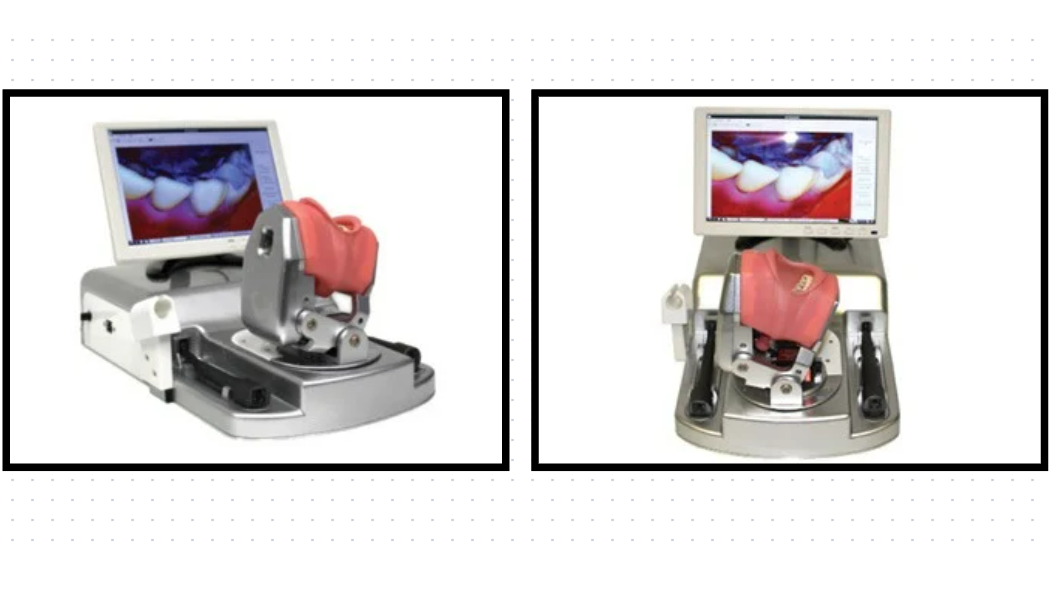
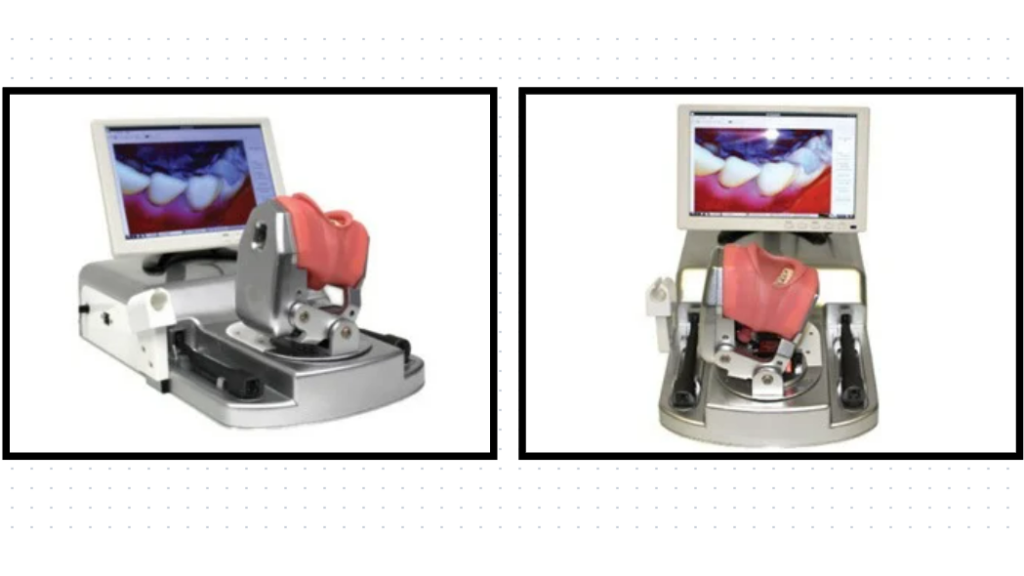
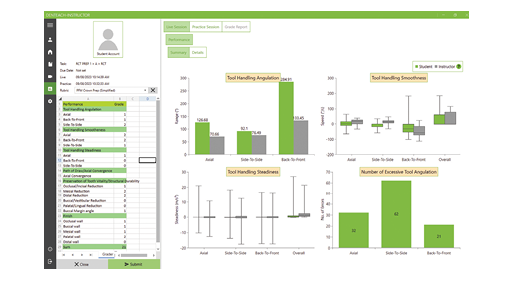
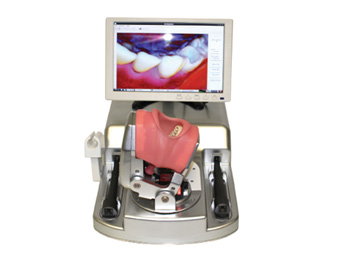
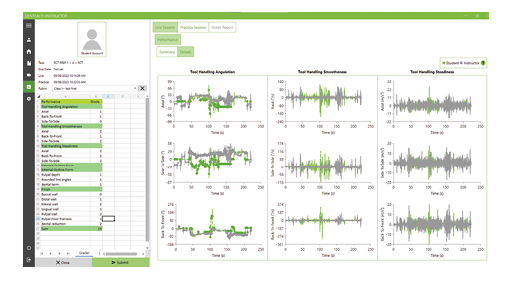
DenTeach provides a range of virtual modules that simulate various dental procedures, enabling students to practice in a risk-free environment. Figure 1A and 1B illustrate the instructor and student workstations that communicate through cloud during a session. All students are able to connect to the instructor and learn practical courses in class or remotely. Figure 2A and 2B illustrate the instructor’s user interface of DenTeach, showcasing its intuitive design and interactive features.
2. Real-time feedback
Equipped with advanced sensory systems and micro actuators and vibrators, DenTeach delivers immediate feedback on critical parameters such as instrument handling, haptic sensation, and procedural accuracy.
3. Metrics-based assessment
DenTeach employs quantitative metrics to evaluate student performance, ensuring consistent and objective grading. These metrics include key performance indicators (KPIs) such as precision, completion time, and tool orientation, as depicted in Figure 2.
4. Scalability and accessibility
The platform enables remote access, making it an ideal solution for institutions with limited physical resources or during unprecedented situations like the COVID-19 pandemic. Students can engage with DenTeach from any location, fostering self-directed learning and flexibility.
By incorporating such technologies into their curricula, dental schools can achieve greater consistency in training outcomes, reduce dependency on faculty supervision, and enhance overall educational efficiency. The platform’s ability to provide detailed performance analytics and tailored feedback empowers students to refine their skills and build confidence for clinical practice.
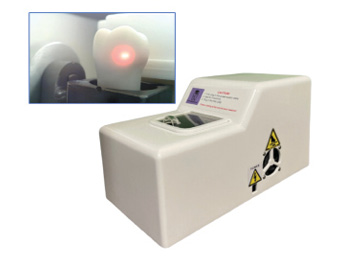
3. PrepScanner utilizes two interconnected robotic platforms that collaborate to guide the sensory system in scanning the tooth.
2. PrepScanner and its capabilities
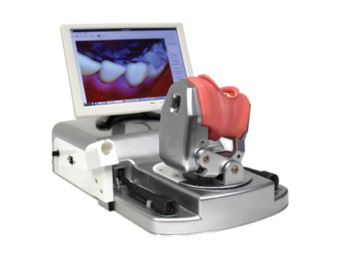
PrepScanner is an innovative tool that complements DenTeach by offering precise and automated assessment of dental preparations (Fig. 3). Designed to streamline the evaluation process, PrepScanner provides students with actionable insights into their work, thereby bridging the gap between practice and proficiency.
Key features
1. Automated measurement system
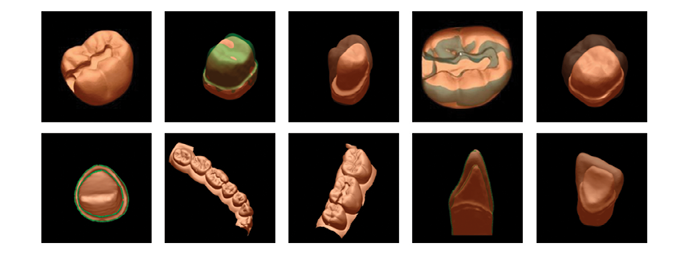
PrepScanner uses advanced scanning technology and artificial intelligence (AI) to capture pre- and post-operative geometries of dental preparations. As shown in Figure 4, the system generates highly accurate 3D models for detailed analysis.
2. Quantitative performance metrics
The tool evaluates critical aspects of dental preparations, such as cavity dimensions, marginal integrity, and surface smoothness. Not only the system has a high precision of 20 micros, the app offers 2 to 4 times more metrics for prep evaluation compared to traditional grading.
3. Integration with DenTeach
The technology can be integrated with the DenTeach platform, allowing for a holistic training approach. Students can use PrepScanner to validate their work post-simulation, ensuring a comprehensive understanding of procedural outcomes.
4. Feedback and recommendations
The system is designed to deliver immediate, actionable feedback on errors detected during the performance of dental tasks by using advanced algorithms to analyze the technical execution of procedures, identifying deviations from established rubric. By offering this guidance, the platform not only corrects mistakes but also reinforces best practices, enabling students to refine their skills effectively.
5. Self-Preparation for students
The platform empowers students to take charge of their learning by providing visual dental tasks, detailed feedback, and interactive rubric. With pre-loaded case scenarios and real-world practice models, students can independently refine their skills, track progress using KPIs, and focus on areas needing improvement.
6. Self-Assessment for students
This technology empowers students to assess their own work independently by providing immediate, data-driven feedback on their performance. Without the need for an instructor’s presence, students can review their progress using objective KPIs, identify areas of improvement, and refine their skills through guided practice. This feature fosters self-directed learning and builds confidence in their technical abilities.
7. Faculty calibration
PrepScanner enhances faculty calibration by providing standardized assessment tools and objective metrics. It ensures consistency in grading across multiple instructors by using uniform KPIs and automated evaluations. This alignment minimizes subjectivity, fosters agreement on teaching standards, and promotes fairness in student assessments, ultimately improving the quality and uniformity of dental education.
Impact on dental education
DenTeach and PrepScanner collectively bring transformative changes to the landscape of dental education, addressing long-standing challenges in teaching, assessment, and skill development.
1. DenTeach: Enhancing standardization and calibration
DenTeach revolutionizes faculty calibration and instructional consistency. By providing structured frameworks for training and evaluation, it minimizes variability in teaching methodologies and ensures all students receive standardized, high-quality education. Faculty members can align their grading and feedback practices with predefined metrics, fostering fairness and transparency in evaluations. Furthermore, DenTeach’s ability to simulate clinical scenarios enhances experiential learning, preparing students for real-world challenges.
2. PrepScanner: Redefining assessment and learning
PrepScanner transforms traditional assessment paradigms by eliminating subjective biases and introducing objective, data-driven evaluations. Its quantitative approach to measuring student performance fosters accountability and accelerates skill acquisition. By providing immediate feedback, PrepScanner enables students to identify and address skill gaps independently, promoting self-directed learning and building confidence in their abilities.
3. Combined impact on dental education
Together, DenTeach and PrepScanner create a seamless integration of advanced technology into dental education. They not only improve the accuracy and consistency of evaluations but also enhance student engagement through personalized, interactive learning experiences. These tools enable institutions to optimize resource utilization, support faculty calibration, and empower students to take ownership of their learning journey. This dual approach represents a significant leap forward in dental education, ensuring a more efficient, equitable, and impactful training ecosystem for both educators and learners.
Case study: The impact of DenTeach on dental education
The global COVID-19 pandemic caused significant disruptions in dental education, particularly for practical courses requiring hands-on training. DenTeach emerged as an innovative solution to address these challenges, enabling remote teaching and learning without compromising educational quality.
Cheng et al. tested this compact, portable platform that consists of instructor (DT-Performer) and student (DT-Student) workstations. Integrated with advanced wireless networking and cloud-based data storage, the platform synchronizes instructors and students in real-time through video, audio, feel, and posture (VAFP) inputs. Three modes of education were examined:
Teaching mode: Instructors conduct dental tasks while students replicate them using synchronized haptic feedback.
Shadowing mode: Students review augmented videos with sensory feedback to refine skills.
Practice mode: Students perform tasks independently, receiving quantitative evaluations through key performance indicators (KPIs).
This study utilized DenTeach and demonstrated its effectiveness in improving dental education. Students exhibited significant advancements in tool handling, motion smoothness, and procedural accuracy over repeated trials. For example:
• The range of motion errors reduced by over 50% in shadowing mode.
• Students completed tasks 25% faster after 10 practice trials, reflecting increased efficiency and confidence.
The authors showed that DenTeach was able to address critical gaps in traditional dental education during the pandemic:
Continuity: Allowed uninterrupted learning despite physical distancing restrictions.
Scalability: Enabled institutions to accommodate more students remotely.
Efficiency: Accelerated skill acquisition and reduced material wastage.
The authors concluded that DenTeach has set a precedent for integrating advanced technology into dental education. Its potential extends beyond the pandemic, offering a sustainable model for remote learning and skill assessment in health sciences. By bridging the gap between traditional and digital learning, DenTeach is revolutionizing how dental skills are taught and mastered.
Impact of PrepScanner and DenTeach on improving current dental educational systems
It is documented in studies that dental undergraduates have high levels of anxiety stemming from lower levels of exposure to complex dental treatments at dental school.2-5 There is a possible advantage of haptics and AI such as PrepScanner and DenTeach in giving undergraduates and also postgraduates more exposure to complex indirect dental work. The pressure feedback and positional guidance of DenTeach, PrepScanner’s system of AI assessment is revolutionary in educating dentists and empowering students and dentists.6
Although it is not possible for new graduates to be fully competent in more technically challenging aspects of dentistry, they need to have had enough practice to at least give them confidence in taking on indirect restorative work.3,5,6
Many universities are moving away from judging competence based on the number of treatments completed, but focusing on assessments of competence. Some studies show that this type of assessment could result in a reduced willingness to keep practising a treatment modality once the required competence level has been reached; this in turn reduces the clinical exposure of students to hands on work.2
There are many reasons for the lower confidence of dental students. In the United Kingdom for instance, the numbers of students have nearly doubled since 1995 whilst conversely the number of dental patients suitable for restorative work and the teacher/student ratio has reduced.2
Studies of final year students at Cardiff and Saudi Arabian dental schools found lower levels of confidence with respect to complex treatments. Another questionnaire based study in England and Wales, even though it had a low response rate; found 51% of senior dentist who train new graduates at foundation level to be not satisfied in their trainee’s clinical work, up to 85% specifically related to indirect work, endodontics, crown and bridge work.3
The study of dental students at Cardiff University showed fixed prosthodontics as scoring the lowest in terms of student confidence levels. The study states ‘insufficient clinical experience’ has decreased the confidence of dental students.5
The use of some current AI, robotics and haptics has a valuable effect in giving students more chances to repeat their preparations and do more in depth guided preparations virtually. The use of virtual reality can overlay the correct prep onto the student’s plastic tooth showing them how their preparation compares to the accepted dimensions.
AI helped inexperienced dentists to be faster and preparing teeth but not in accurate dimensions. As more experienced students and dentists used such virtual systems their work quality began to increase. Students also were very happy that the work could be repeated and be assessed easily. The disadvantage of this virtual system is that users still preferred it only as an adjunct to their learning.2
PrepScanner and DenTeach could bridge the gap from virtual reality education to real drilling of the typodont plastic teeth adding to the quality and skills of undergraduates. This in turn can help them reduce anxiety, gain more confidence, practice and proficiency in fixed prosthodontics in their future careers.
Conclusion
The integration of advanced technologies is reshaping dental education by addressing critical challenges such as variability in grading, limited access to hands-on practice, and inconsistencies in faculty calibration. Together, these tools provide a robust, technology-enhanced learning ecosystem that not only empowers students but also optimizes faculty contributions. DenTeach, with its instructor-led modules and real-time feedback capabilities, ensures standardization and consistency in training across diverse student populations. Its ability to simulate real-world clinical scenarios prepares students for the complexities of professional practice, offering experiential learning that bridges the gap between theoretical knowledge and practical skills. PrepScanner, on the other hand, introduces a paradigm shift in assessment by eliminating subjective biases and incorporating data-driven evaluations. Its self-assessment and self-preparation functionalities allow students to independently refine their skills, fostering confidence and self-directed learning. Additionally, its faculty calibration features enable consistent grading and evaluation practices, promoting fairness and transparency in education. By combining these two platforms, dental institutions can create a transformative learning environment. This dual approach not only enhances resource utilization but also addresses systemic inefficiencies, ensuring a more equitable and impactful educational experience. Together, DenTeach and PrepScanner represent a significant leap forward in dental education, aligning it with the evolving demands of modern clinical practice and setting a benchmark for future advancements in health sciences education. 
References
- Cheng L, Kalvandi M, McKinstry S, Maddahi A, Chaudhary A, Maddahi Y, Tavakoli M. Application of DenTeach in remote dentistry teaching and learning during the COVID-19 pandemic: a case study. Frontiers in Robotics and AI. 2021 Jan 22;7:611424.
- McGleenon E, Morison S. Preparing dental students for independent practice: a scoping review of methods and trends in undergraduate clinical skills teaching in the UK and Ireland. Br Dent J 230, 39–45 (2021). https://doi.org/10.1038/s41415-020-2505-7
- Puryer J, Khalaf S, Ilkhani M. The Confidence of Undergraduate Dental Students When Undertaking Indirect Restorations. J. 2019; 2(3):268-275. https://doi.org/10.3390/j2030019
- Martin N, Fairclough A, Smith M, Ellis L. Clinical educators’ views on the quality of undergraduate clinical restorative dentistry in the UK and ROI. Eur J Dent Educ. 2011;15(4):216-222. doi:10.1111/j.1600-0579.2010.00659
- Gilmour AS, Welply A, Cowpe JG, Bullock AD, Jones RJ. The undergraduate preparation of dentists: Confidence levels of final year dental students at the School of Dentistry in Cardiff. Br Dent J. 2016;221(6):349-354. doi:10.1038/sj.bdj.2016.686
- Maddahi Y, Chen S. Applications of digital twins in the healthcare industry: case review of an IoT-enabled remote technology in dentistry. InVirtual Worlds 2022 Sep 2 (Vol. 1, No. 1, pp. 20-41).
About the authors:

Dr. Maryam Kalvandi is a dedicated dental professional who graduated with a Doctor of Dental Medicine degree from the University of Manitoba in 2018. Dr. Kalvandi is the only certified Vivos sleep apnea dentist in Manitoba, showcasing her commitment to advanced training and specialized care. Her expertise in dental imaging further enhances her ability to deliver precise diagnoses and tailored treatment plans.

Dr. Wahab Shakir is the Principal Dentist of Museum Dental suites and also lectures and trains postgraduate dentists for the prestigious Tipton Training Ltd academy nationally. Dr. Shakir qualified at Newcastle University and then moved to London to work in private practice. He has gained skills and knowledge in cosmetic and general dental procedures, full mouth reconstructions, bite reconstruction, cosmetic bonding and contouring, adult orthodontics, the treatment of TMD, snoring and sleep apnoea.

Professor Paul Tipton is an internationally acclaimed Specialist in Prosthodontics who has worked in private practice for more than 36 years. He is the founder of Tipton Training, one of the UK’s leading private dental training academies which has trained over 5,000 dentists over 30 years.