
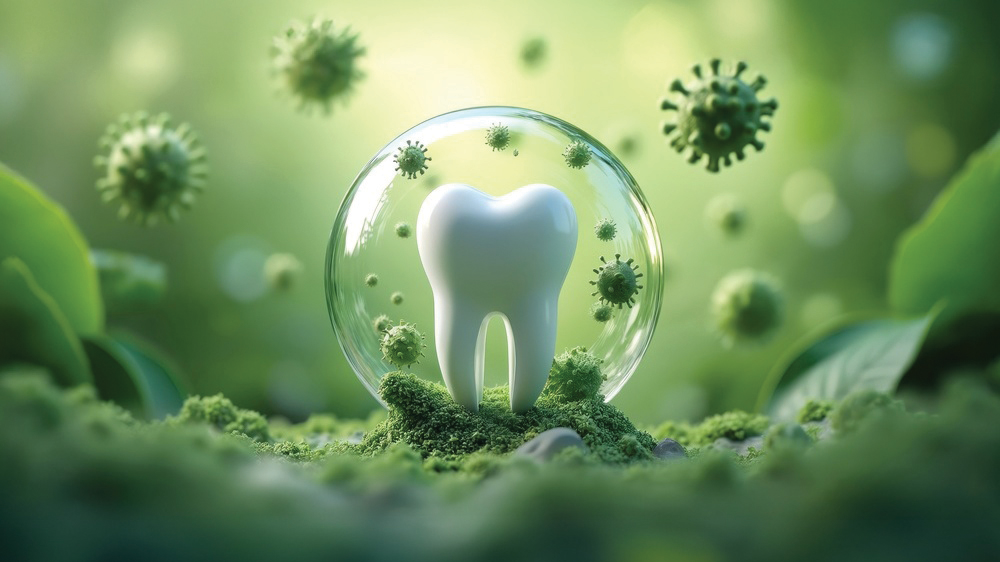
For decades, medicine and dentistry have pursued health through force—stronger antimicrobials, harsher disinfectants, increasingly aggressive interventions. While effective in the short term, these strategies have contributed to antimicrobial resistance, microbial dysbiosis, and unintended systemic consequences. Too often, strength has been conflated with aggression.
Hypochlorous acid (HOCl) offers a fundamentally different paradigm. Though relatively new to modern oral care, it is in fact one of the oldest tools in human biology—an exogenous molecule that is an exact replica of its endogenous counterpart, produced naturally by neutrophils as part of the innate immune response. Japan and the U.K. were among the first countries to recognize this biological elegance and adopt HOCl comfortably in everyday dentistry. North America, by contrast, continues to lag behind.
Endogenous, rapidly acting, and self-limiting, HOCl neutralizes pathogens while preserving host tissue and microbial balance. It resolves inflammation without residue and allows healing to proceed rather than dominate it. Instead of overpowering biology, it works in concert with it—mirroring the immune system’s own logic.
This reframing is no longer philosophical alone; it is now scientifically validated.
A pivotal 2025 study published in the Journal of Oral Microbiology demonstrates that hypochlorous acid solution (HOCL) is not merely an antimicrobial, but a true biofilm-regulating therapy for periodontal disease. The investigators showed that HOCL disrupts pathogenic biofilms by inducing controlled oxidative signaling, suppressing quorum sensing (AI-2), and down-regulating virulence genes—while simultaneously exhibiting superior biocompatibility compared with traditional antiseptics such as chlorhexidine and sodium hypochlorite. In vivo, HOCL significantly reduced periodontal inflammation and alveolar bone loss in rat models of periodontitis, confirming that biological compatibility and antimicrobial efficacy are not mutually exclusive but synergistic.¹
This work validates what biology has always suggested: the most powerful therapies are not those that wage war on microbes, but those that restore balance to ecosystems.
The implications extend far beyond dentistry. HOCl enables hospitals to disinfect without toxic chemicals; agriculture to reduce antimicrobial pressure; and communities to safeguard water, wounds, and vulnerable populations using nothing more than salt, water, and energy. These are not aspirational ideals; they are achievable realities.
After observing the microbiome directly, its complexity and interdependence are unforgettable. Yet potential alone does not guarantee acceptance.
For HOCl to fulfill its promise, it requires continued scientific inquiry, regulatory modernization, clinician education, and responsible scaling. Most importantly, it requires a conceptual shift in how we define health itself.
The future of dentistry is not just mechanical. It is biological. We are no longer simply removing plaque; we are stewarding ecosystems. We are no longer “killing germs”; we are supporting microbial symphonies. We are no longer separating oral from systemic health; we are recognizing metabolic and immunologic continuity—including short-chain fatty acid (SCFA) signaling that links the oral cavity, gut, and immune system.
Within this framework, safe, endogenous HOCl emerges as an elegant ecological modulator—capable of shifting microbial environments from proteolytic to fermentative, inflammatory to regulatory, and destructive to regenerative. Oral health, therefore, extends far beyond clean teeth. It is inseparable from microbial succession, immune signaling, and whole-body homeostasis.
There is a paradox to HOCl: its success is often invisible. When balance is restored, inflammation resolves quietly and symptoms fade without spectacle. Its absence is more noticeable than its presence, and as a result, its contributions are frequently overlooked.
But once the oral microbiome is understood as an ecosystem rather than a battlefield, this perspective cannot be unlearned.
The story of hypochlorous acid is still young—and still unfolding. Yet with each new study, including the landmark 2025 demonstration of its antibiofilm and host-compatible power, the message becomes clearer: by choosing biological intelligence over chemical force, cooperation over eradication, and ecological balance over short-term control, HOCl has the potential to become a foundational tool in sustainable, systems-based healthcare.
Inside that clear liquid lies the wisdom of human biology— and the possibility of a healthier future. Making these possibilities reality is up to us.
I invite you to download and read my new book: The Essential Guide to HOCl: Nature’s Healing Molecule.
References
- Zhang Y, et al. Hypochlorous acid solution inhibits periodontal pathogenic biofilms through ROS induction and quorum sensing suppression. Journal of Oral Microbiology. 2025;https://doi.org/10.1080/20002297.2025.2557959
- Winterbourn CC, Kettle AJ. Biomarkers of myeloperoxidase-derived hypochlorous acid. Free Radic Biol Med. 2000;29(5):403–409.
- Pullar JM, Vissers MCM, Winterbourn CC. Living with a killer: the effects of hypochlorous acid on mammalian cells. IUBMB Life. 2000;50(4–5):259–266.
- Fukuyama T, et al. Hypochlorous acid solution is effective for the treatment of periodontal disease. J Periodontal Res. 2018;53(3):395–402.
- Hajishengallis G, Lamont RJ. Polymicrobial synergy and dysbiosis in inflammatory disease. Mol Oral Microbiol. 2012;27(6):409–419.
- Louis P, Flint HJ. Formation of propionate and butyrate by the human colonic microbiota. Environ Microbiol. 2017;19(1):29–41.
- Del Giudice G, et al. Resolution of inflammation: mechanisms and therapeutic potential. Nat Rev Immunol. 2021;21(12):734–749.
- Marsh PD. In sickness and in health—what does the oral microbiome mean to us? Adv Dent Res. 2018;29(1):60–65.
About the author

 Dr. Janice Goodman is a member of the Oral Health Dental Journal Editorial Board. She graduated from UofT in 1979 and USC in 2015. She has practiced functional dentistry in Toronto for over 40 years. She has a financial interest in ioTech International, a developer and manufacturer of molecular iodine oral care products.