
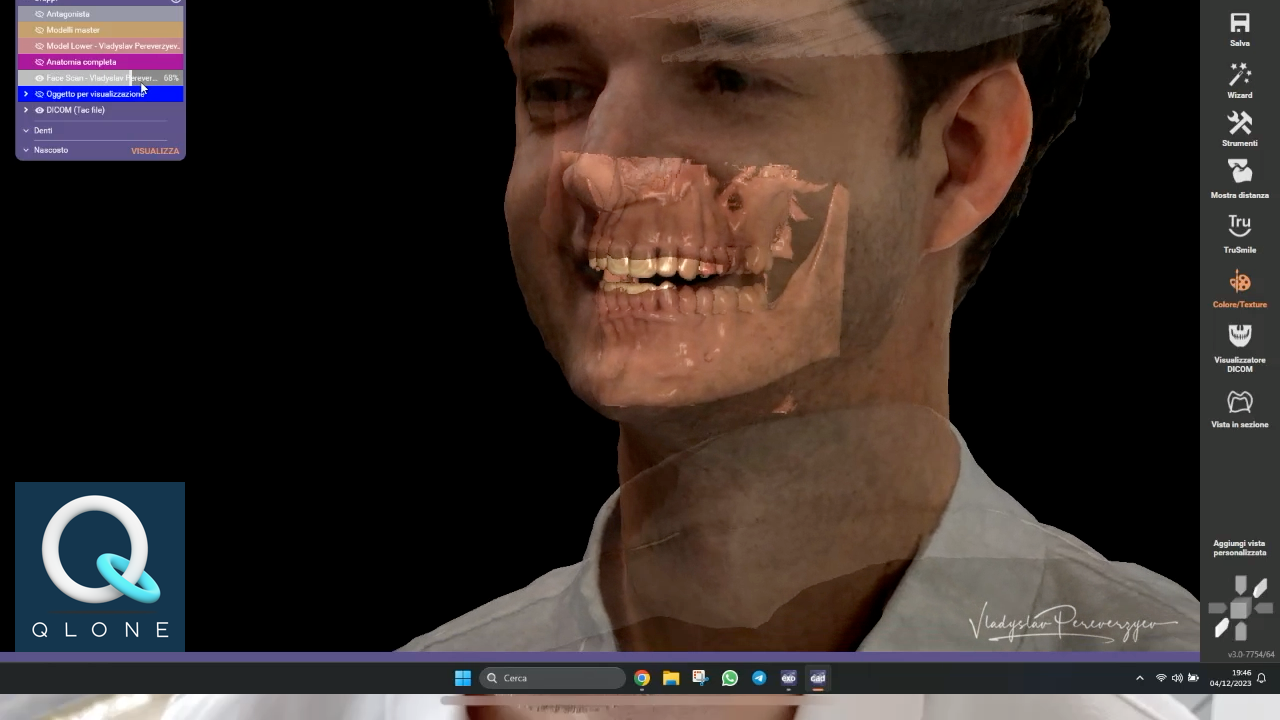
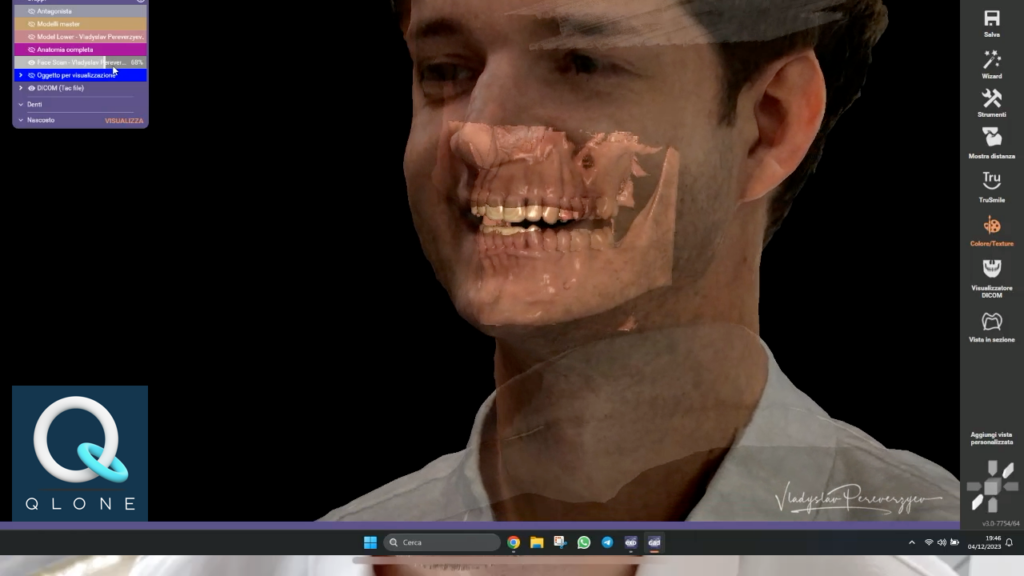
The precise mapping of three-dimensional spatial interactions between the hard dental and facial structures and the soft facial tissues is essential to obtaining both functional and esthetic outcomes in dental diagnostics and restorative therapy. This is especially crucial for patients undergoing orthodontic and orthognathic treatment; in the former, it is necessary to anticipate the facial effects of small-scale tooth movement, and in the latter, accurate measurements of the maxillary and mandibular arch positions are needed to predict the results and guide the surgical process.
Traditional before and after 2D photographs and slides are constrained by a number of variables, including head posture, head angulation, and camera direction (Fig. 1). With respect to dimensions and spatial research and analysis, they only offer a partial, incomplete picture that could be deceptive. A game-changing technique for the 21st century is 3D facial scanning, which provides a thorough, three-dimensional image of the face that includes the location of the maxillary and mandibular arches in relation to facial soft tissues. The developer of Qlone is industry-leading EyeCue Vision Technologies (Yokne’am Illit, Israel) producer of unique and customized vision recognition-based solutions.
Fig. 1
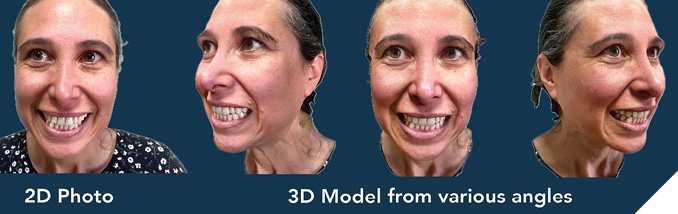
Dentists can now quickly and simply gather extensive 3D data, which is utilized to create restorations within the context of the patient’s face, thanks to the innovative Qlone technology, which helps to bridge the communication gap between the dental laboratory and the clinic. A smile, after all, is much more than just a collection of teeth and lips; it is the overall sum of an individual’s entire face, which includes a variety of hard and soft tissue elements seen from various perspectives. Dentists can quickly and easily show patients multiple images of their own simulated smiles thanks to 3D face scanning, significantly increasing patient motivation and treatment acceptance. 3D facial scanning provides a new degree of visualization that enhances the design process and streamlines the digital dentistry workflow, reducing the need for costly adjustments and remakes.
The world is not a flat canvas; rather, it is a 3D space. Through their senses, people interact with this 3D environment. In contrast to conventional 2D pictures, 3D models provide a very accurate and lifelike depiction of objects, capturing even minute details. Since the 3D models are generated from every perspective, they offer a comprehensive vision that is simply unmatchable by 2D photos. This multi-dimensional viewpoint makes 3D representations feel more realistic, reflecting how people actually see the world. Thus, 3D models provide a new level of visualization that is immersive, interactive, and remarkably lifelike by bridging the gap between digital representation and real-world experience.
The high cost of scanning equipment and the technological complexity of scanning operations are the two main barriers to the widespread adoption of 3D face scanning in dentistry, despite its obvious benefits. Most of the systems that are currently on the market require significant investment and offer steep learning curves, impeding dental offices from easily incorporating these scanning technologies into their everyday operations. As a result, despite the obvious benefits, face scanning technology remains significantly limited in the dental field. These problems emphasize the necessity for more cost-effective and user-friendly systems that can make 3D face scanning accessible to the general dental practice.
The Qlone 3D Scanner app is a ground-breaking tool that gives the iPhone access to 3D face scanning capabilities (Figs. 2, 3). With its intuitive interface, this revolutionary app makes 3D scanning as simple as snapping a picture. Qlone is user-friendly but packs many practical features. With its wealth of advanced capabilities, the Qlone app is an invaluable resource for dental practitioners. It comes with a full set of built-in editing tools that allow for cleaning, smoothing, sculpting, simplifying and improving 3D models (Fig. 4). The all-in-one app also includes an instant AR view mode which allows examination of the 3D model in the local environment and an advanced AI search function which allows easy navigation through the 3D model gallery.
Fig. 2
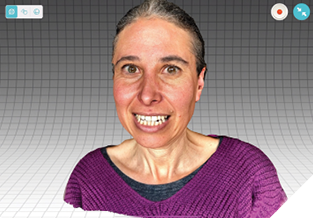
Fig. 3
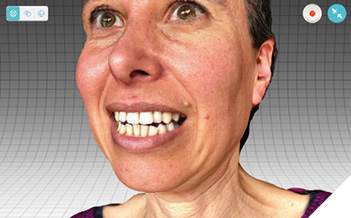
Fig. 4
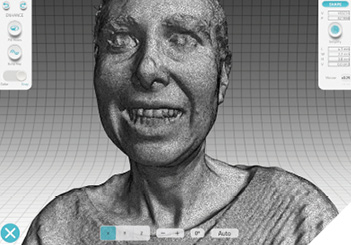
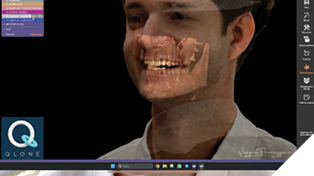
Focusing on patient privacy is possibly the most significant element of the Qlone app. In contrast to competing solutions, Qlone guarantees patient data confidentiality by not storing any photos or 3D data on external servers. Leading the way in platform interaction, Qlone provides a range of export choices in widely used formats like OBJ, PLY, and STL, facilitating seamless integration with popular dental CAD programs like exocad, 3Shape, Medit, and BlueSkyBio (Fig. 5).
Fig. 5
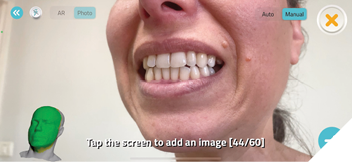
The Qlone 3D Scanner app has a breakthrough face scanning capability, taking clear, detailed facial scans by using an extremely efficient technique. The user-friendly interface, which offers real-time scanning process coverage, ensures that users be certain that they are gathering all the required data (Fig. 6). A significant part of the technology lies in selecting the appropriate set of images for the technology that creates the 3D models of the face. State-of-the-art computer vision algorithms are combined to create the best possible outcome, including adjusting the camera’s exposure settings to ensure that motion blur is avoided and selecting the ideal combination of angles automatically.
Fig. 6
Dental technicians have introduced the Qlone app into their digital workflows. Due to its affordable price and easy integration, Qlone is a desirable option for clinics trying to improve their offerings without going over budget. The iPhone version is available for download, and users can test its most basic functionality for free (Fig. 7). A one-time premium upgrade cost is required for the face scanning capability, 4K resolution scanning, and 3D model exportation.
Fig. 7
The Qlone 3D Scanner app is far more than just a cost-effective scanning solution. It is a comprehensive tool that empowers dental professionals to provide better care for their patients. By bringing 3D face scanning to the iPhone, Qlone makes advanced dental technology accessible to clinics around the world. And with its commitment to patient privacy and ease of use, Qlone sets a new standard for 3D scanning in the field of dentistry. 
Video of Qlone in Dental use-case:
Oral Health welcomes this original article.
About the Authors

Ronen Horovitz is the founder and CEO of EyeCue Vision Technologies (Yokne’am Illit, Israel). He has a B.Sc. in electrical engineering and an MBA, both from the Technion. A computer geek and expert in image processing, Ronen focuses on computer vision technologies that provide enhanced interaction between the physical and digital domains.

Dr. George Freedman, Founder & past president, American Academy of Cosmetic Dentistry, co-founder, Canadian Academy for Esthetic Dentistry, Regent and Fellow, IADFE, Diplomate and Chair of the American Board of Aesthetic Dentistry, Adjunct Prof, Dental Medicine, Western University, CA. Author of 14 textbooks, >1000 dental articles, and international lecturer.