
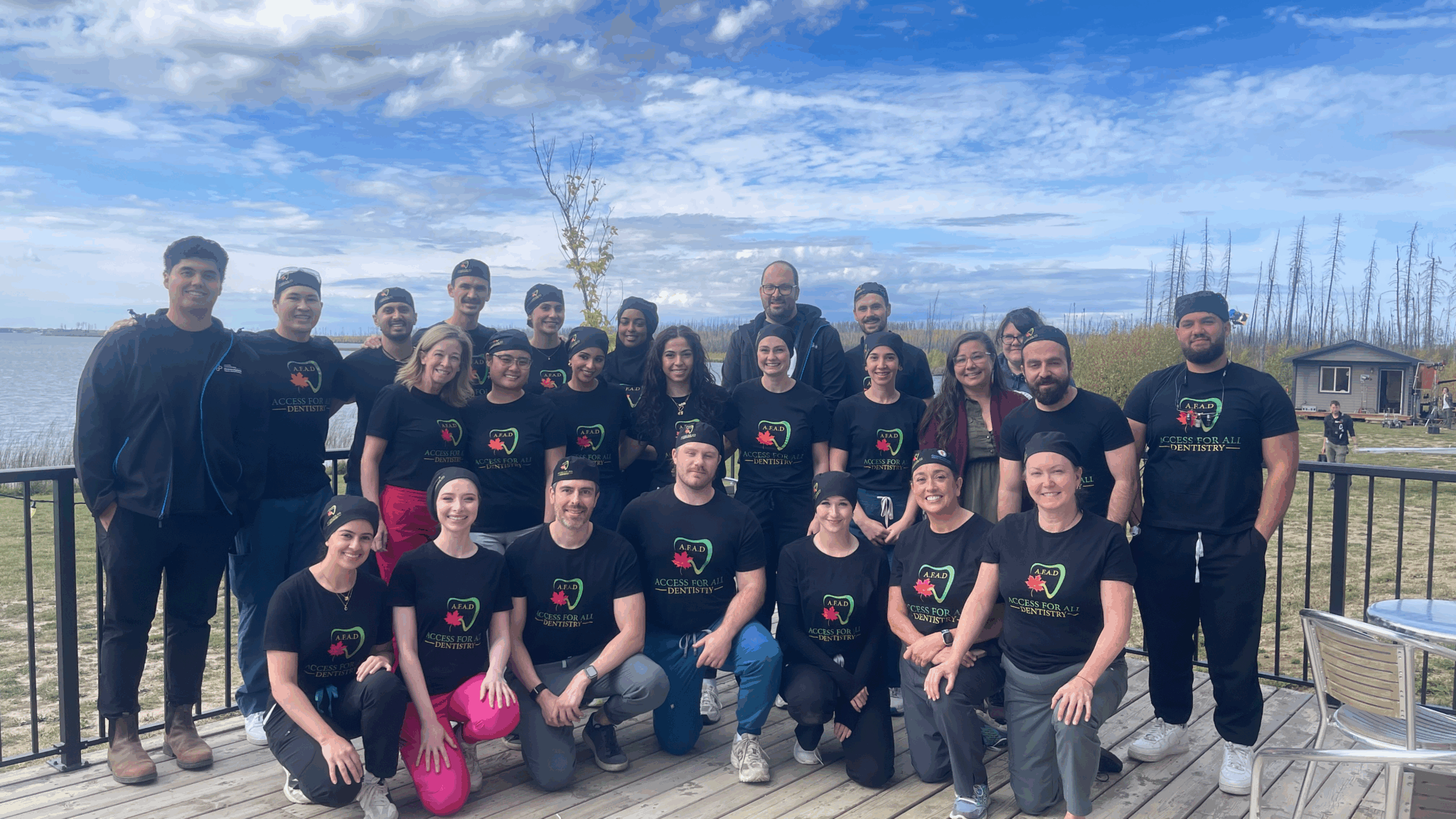
The University of Alberta’s Access for All program — a non-profit mobile dental clinic that became an elective course for dentistry and dental hygiene students last year — has secured $2.6 million in federal funding to expand culturally grounded care in rural Métis communities.
The funding, approved in July after a year-long competitive process, will increase the number of annual outreach trips from three to five and support larger student teams and additional faculty preceptors. It is also part of the more than $35-million that Health Canada recently announced to support 30 oral-health training projects across the country.
“The funding lets us increase hands-on training opportunities for students by supporting equipment purchases, covering travel and venue costs, and strengthening collaboration with our partners at the Otipemisiwak Métis Government of the Métis Nation within Alberta,” said Dr. Suzanne Depledge, the program’s lead and an associate clinical professor in the Faculty of Medicine & Dentistry.
Research partnership on Métis oral health
The Health Canada Oral Health Access Fund (OHAF) submission underwent a competitive, peer-reviewed process and was led by Dr. Depledge, Dr. Anthea Senior, Dr. Hollis Lai and Paulette Dahlseide from the University of Alberta’s School of Dentistry, in partnership with Otipemisiwak Government representatives Reagan Bartel, Director of Health, Ashton Anderson, Nathaniel Le Chalifoux and Sean Dennison. The research component of the project will be carried out jointly with the Otipemisiwak Métis Government and will examine Métis oral health while exploring how cultural-safety principles can be embedded into dental education.
“Access for All shows what is possible when care is delivered in partnership with community,” Bartel said. “For many Métis families, travelling long distances for basic dental care has been a significant barrier. Bringing services directly into community, grounded in culture, strengthens trust and improves health outcomes.”
Bartel added that the program also helps prepare future clinicians by grounding training in “culturally humble and trauma-informed practice, learning directly from community, not from textbooks alone.”
Care rooted in culture
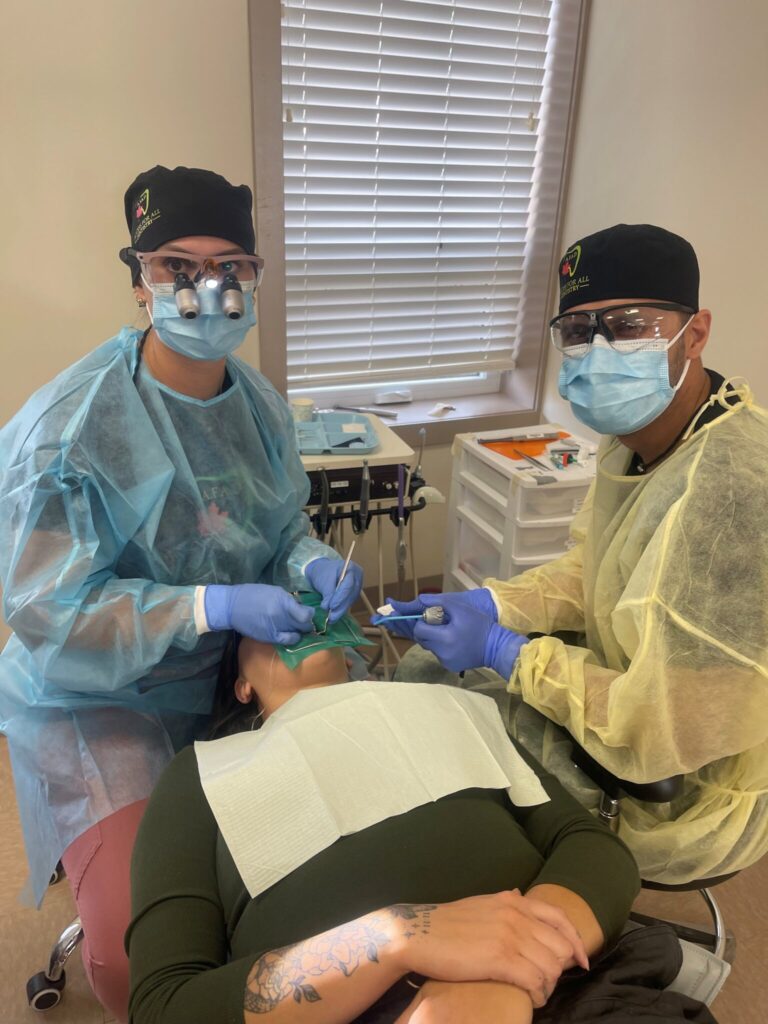
Co-designed with the Métis Nation within Alberta, Access for All provides preventive and restorative care while prioritizing cultural safety and community engagement. Each visit begins and ends with sharing circles facilitated by Elders or Knowledge Keepers. Students also participate in cultural artisanship, storytelling and land-based learning intended to build trust and strengthen relationships.
Typical deployments involve eight to 10 dental students, six dental hygiene students and faculty support — about 20 participants in total.
“The fund will allow every dental and dental hygiene student the opportunity to go on Access for All,” Depledge said. “Most students will gain hands-on clinical and cultural experience providing care in a safe space for the community.”
Each trip delivers between $40,000 and $50,000 in no-cost dental care, serving 70 to 90 patients. “Our hope is to provide continuity of care,” she added. “Once patients come to see us, we can help connect them with local dentists for long-term treatment.”

Related: ‘It’s so popular’: Student-led dental initiative becomes official elective at University of Alberta
Federal support and growing national recognition
Funding was provided through Health Canada’s Oral Health Access Fund (OHAF) – Stream One, which supports accredited and non-accredited oral-health training institutions across the country. The team hopes to include dental assisting students in future rotations.
Because of its success, Access for All was named one of four flagship initiatives in the University of Alberta’s 2025 brand campaign, alongside projects in hydrogen, protein and robotics research. A 30-second national feature began airing Nov. 3 on Air Canada and WestJet in-flight media and on the university’s digital channels.
Depledge, Senior, Lai and Dahlseide will also present Access for All as a model at the American Dental Education Association conference in Montreal next March, sharing best practices with other North American dental schools.
The program is a partnership between the University of Alberta and the Otipemisiwak Métis Government of the Métis Nation within Alberta, supported by recent federal funding.