
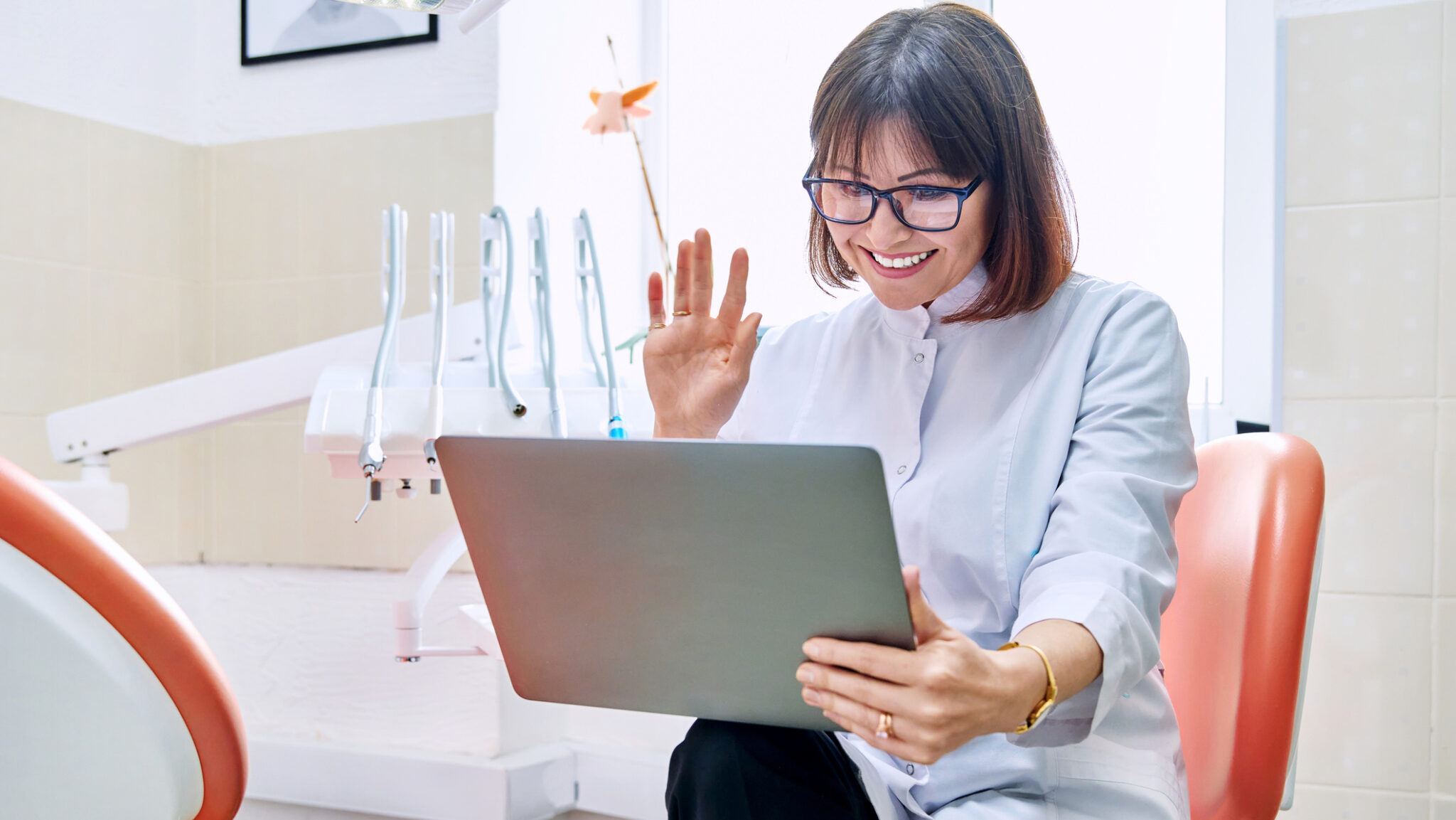
A new Georgia law that came into effect Jan. 1 allows residents across the state to access dental care through teledentistry, with a particular focus on improving access in remote and underserved areas.
House Bill 567 authorizes licensed dentists in Georgia to provide consultations, evaluations and referrals through teledentistry, and allows dental insurance coverage for certain services delivered remotely. The legislation also permits a limited number of licensed dental hygienists to perform teledentistry under specific conditions.
The law includes several patient protections. Dentists must obtain a full medical history and informed consent before any teledentistry appointment. They may prescribe antibiotics and anti-inflammatory medications but are prohibited from prescribing opioids. Orthodontic treatment still requires an in-person examination before remote services can begin.
“We’ve got 21 counties in Georgia that don’t have a dentist,” said Dr. Amber Lawson, immediate past president of the Georgia Dental Association, in comments reported by local media outlet 13WMAZ.
Lawson stressed that teledentistry is not intended to replace in-person dental care, but rather to function as a triage tool to help patients determine next steps.
Related: UBC teledentistry app connects seniors in long-term care with student dentists
According to the Centers for Disease Control and Prevention, approximately 57 million Americans lived in a dental health professional shortage area as of 2024, with about 67 per cent of those areas located in rural communities.
A study published last year in Frontiers in Oral Health found that teledentistry modalities such as e-consultations and virtual dental homes improved access to preventive dental care. The authors recommended hybrid care models that combine virtual screening with in-person treatment to help bridge care gaps, particularly for underserved populations.
Teledentistry in the U.S. has decades-long roots
Teledentistry in the United States dates back to 1994, when it was first implemented by the U.S. Army as part of its Total Dental Access Project to improve care delivery in remote settings. Early applications also emerged in Alaska, California and Minnesota during the 1990s, largely to reach underserved and rural populations.
California became one of the earliest states to permanently formalize teledentistry. Assembly Bill 1174—signed Sept. 27, 2014 and effective Jan. 1, 2015—added teledentistry to Medi‑Cal and made permanent elements of the Virtual Dental Home model, creating a durable regulatory and reimbursement framework for wider adoption.
Related: New Study Shows Only Half of Ontario Dentists Used Teledentistry During Pandemic
National guidance followed in 2015, when the American Dental Association adopted a policy addressing patient rights, quality of care, licensure, reimbursement and supervision of allied dental personnel. Despite those developments, the use of teledentistry remained limited prior to 2020 and was largely concentrated among providers serving specific populations, before accelerating during the COVID-19 pandemic as routine in-person dental care was restricted.