
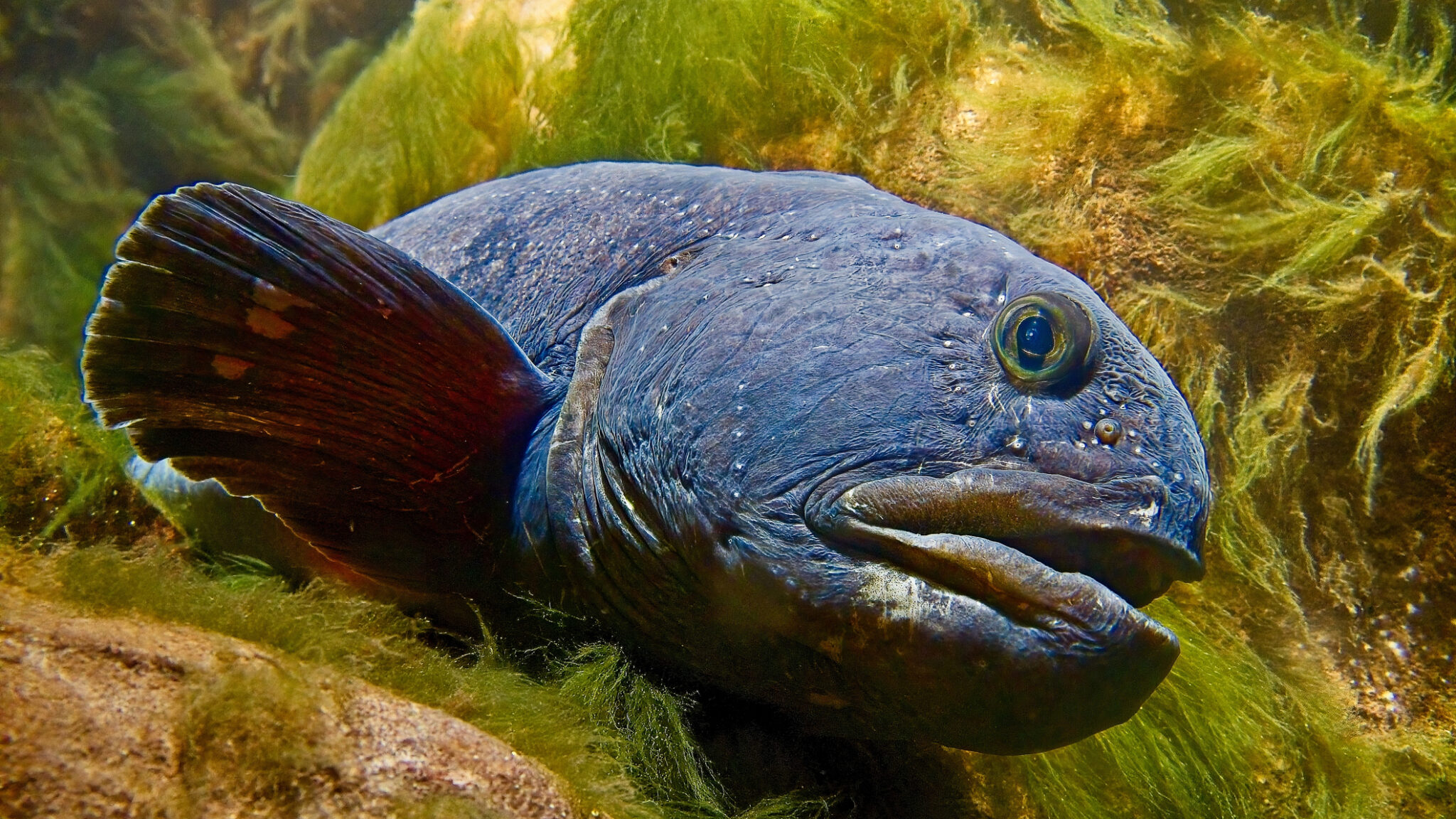
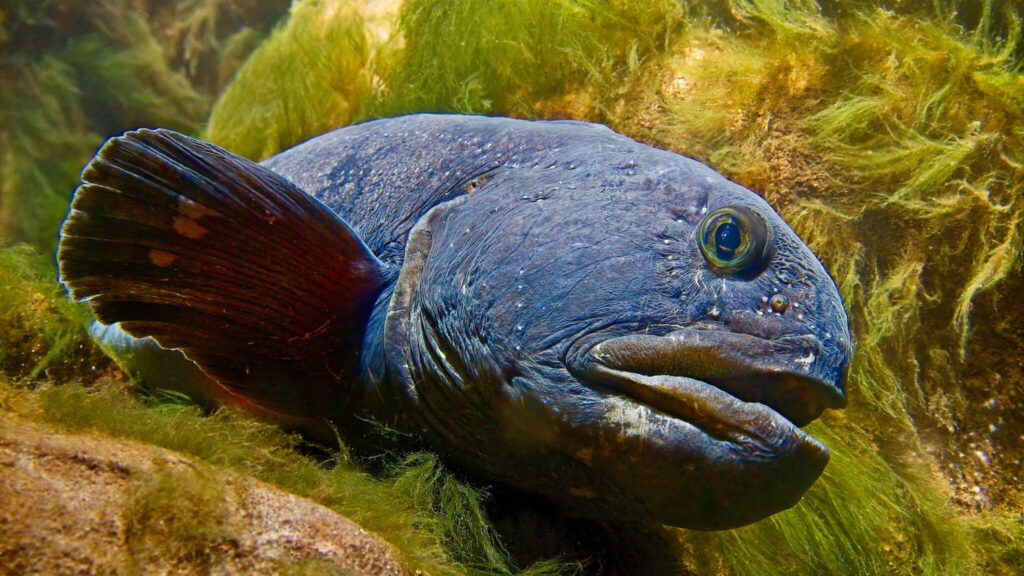
Researchers at Hebrew University of Jerusalem have discovered that the Atlantic wolffish’s teeth contain a rare internal material that contracts in every direction when compressed — a mechanical behaviour almost never seen in natural mineralized tissues.
The study, led by Prof. Ron Shahar of the Koret School of Veterinary Medicine at Hebrew University, found that the core tissue of the wolffish’s teeth, known as osteodentin, exhibits a phenomenon called auxeticity. The findings were published in the journal Acta Biomaterialia.
Most materials expand sideways when compressed along their length. Osteodentin does the opposite, shrinking laterally and longitudinally at the same time.
“We were astonished to find that osteodentin behaves in a way that almost no other natural mineralized tissue does,” Shahar said. “Its internal architecture allows the tooth to absorb heavy loads safely and efficiently.”
The Atlantic wolffish is known for its powerful bite, capable of crushing hard-shelled prey. When researchers applied force along the tooth axis — simulating the fish’s natural biting forces — the material consistently contracted in all directions. This response corresponds to a “negative Poisson’s ratio,” a hallmark of auxetic materials.
Related: Researchers learn from marine mollusks’ indestructible teeth, aim for industrial applications
Rarely observed even in engineered materials
Across all eight teeth examined, researchers recorded effective Poisson’s ratio values mostly between –1 and –2, a range rarely observed even in engineered materials.
Auxetic materials are considered exceptionally rare in nature and have become a major focus in the development of human-designed metamaterials because of their ability to resist damage, absorb energy and distribute stress more evenly.
To document the phenomenon, the team used advanced phase-contrast X-ray tomography combined with digital volume correlation, producing detailed three-dimensional maps of how intact teeth deform under load. The analysis showed that osteodentin contracts uniformly along all three axes during compression.
Researchers traced this unusual behaviour to osteodentin’s microscopic structure — a dense network of vertically oriented canals, measuring roughly 10 to 20 microns in diameter, that run from the base of the tooth to its tip and curve outward near the surface. Under pressure, mineralized columns between the canals bend inward, increasing toughness and helping prevent cracks from forming.
Related story: Review says eggshell-derived hydroxyapatite shows promise as dental biomaterial
Read related story: Regrowing teeth? Two Manitoba scientists draw inspiration from tropical fish’s regenerative abilities
Finding may extend beyond the Atlantic wolffish
While nano-indentation tests showed osteodentin’s stiffness is similar to bone, its internal architecture appears to be responsible for its exceptional mechanical performance. Comparable auxetic behaviour in mineralized tissues has previously been documented only in two invertebrate species: limpet teeth and nacre.
The researchers believe the finding may extend beyond the Atlantic wolffish, suggesting auxeticity could be a broader feature of osteodentin in other fish species. Beyond advancing understanding of how teeth evolve to withstand extreme mechanical stress, the discovery could inform the design of new synthetic materials for engineering and biomedical applications that require a combination of strength, damage resistance and energy absorption.