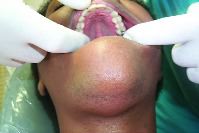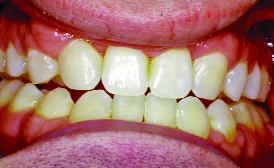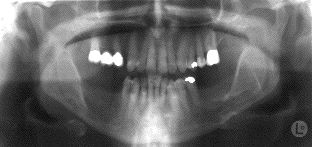
Immediate Custom Implant Provisonalization: A Prosthetic Technique
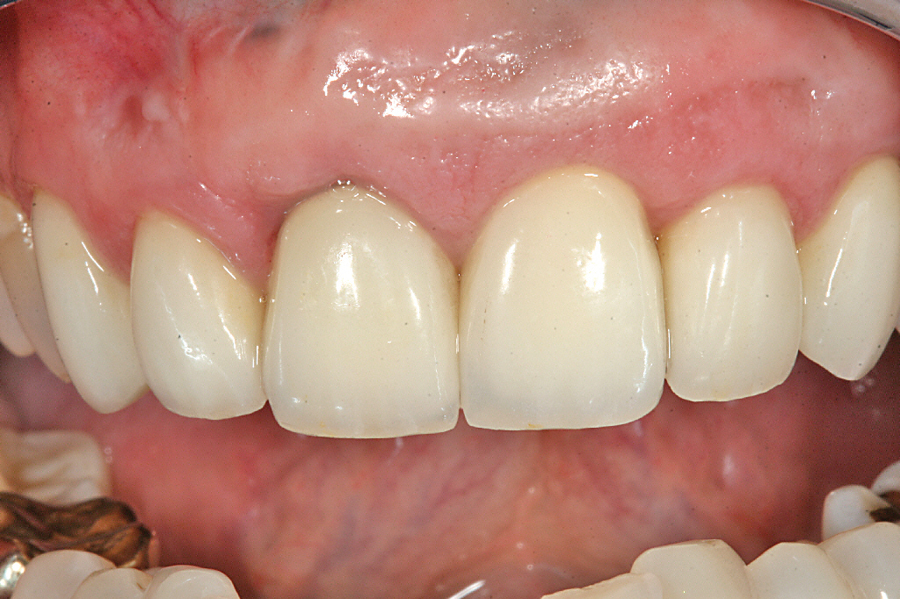
Figure 52.

Surgical and restorative techniques that can reduce the loss of hard and soft tissues are desirable. The use of a custom fabricated provisional will provide a mechanism by which preservation of hard and soft tissue can be achieved. This article will explore two different scenarios where the fabrication of an immediate custom provisional and provisional … Read more
Dentistry’s Role in Repair of the Facial Trauma Patient: A Case Report

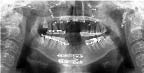
Figure 5 - Post operative panorex showing anterior tooth loss with extensive alveolar bone loss making prosthetic reconstruction a challenge.

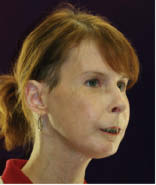
IntroductionTraumatic facial injuries are commonplace in North America. Interpersonal violence, falls, motor vehicle crashes and sport related injuries make up the majority of etiologies for these injuries.1 Since the advent of seat belts and air bags, there has been a significant decline in severe facial trauma as was seen in the ’60s, ’70s and ’80s.2 … Read more

Methadone: A Review

INTRODUCTION Methadone is a synthetic opioid that was developed as an analgesic by German scientists during World War II. It has been used as part of the treatment for opioid addicted patients since the 1960s. More recently, methadone has been used as an analgesic for the management of various chronic pain conditions. Methadone’s special pharmacologic … Read more

Airway Management in Maxillofacial Trauma-Alternative Techniques of Intubation and Modifications of Nasal Airways

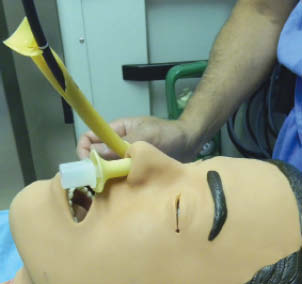
Figure 2 - Simulation of the use of a Modified Nasal Trumpet (Left Nasal) and fiberoptic intubation through a Split Naso Pharyngeal Airway (Right Nasal).

INTRODUCTIONAirway management for maxillofacial trauma is often complicated by distortion of the airway from the injury, emergent management for impending compromise, and other serious co-existing injuries. While traditionally the use of nasal intubations and tracheostomies are preferred, we discuss the use of retromolar and submental intubation techniques as alternative airway management strategies. Additionally, we will … Read more

Squamous Cell Carcinoma of the Lower Lip

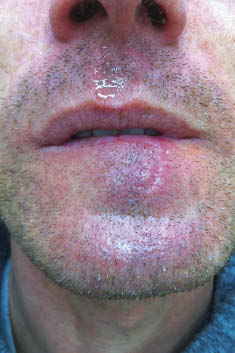
Figure 7 - One-month post-operative photograph of lower lip.

Carcinoma of the lips is the most common malignant tumour of the oral cavity.1 In a large review of 1,252 patients, 96.7 percent were found in males and 95.6 percent of cases involved the lower lip.2 Prolonged exposure to sunlight and outdoor occupations are known major etiological factors for squamous cell carcinoma of the lips.3,4 … Read more

Lumps and Bumps

Submucosal mass

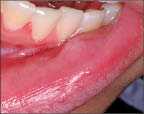
A Practical Guide to the Differential Diagnosis of Submucosal Lesions

Evolving Scope of Practice

Bruce R. Pynn, DDS, MSc, FRCDC , Oral and Maxillofacial surgery, Thunder Bay, ON. He is the oral and maxillofacial surgery board member for Oral Health.

Since the Second World War, the scope and complexity of Oral and Maxillofacial Surgery in North America has steadily progressed beyond the practice of exodontia. Significant advances were made in the medical and surgical management of victims of trauma, temporomandibular disorders, and treatment of dentofacial deformities, infections and oral pathology, as well as reconstructive procedures … Read more

Emerging Natural Therapies for Oral Care: Reflections on Oral Health from a Holistic Perspective

Patients increasingly seek integrated and preventative approaches to their healthcare. In this changing health environment, oral healthcare specialists can leverage and expand their long-standing commitment to the preventative care model. The preventative care model in dentistry focuses on education and ongoing maintenance. As processed sugary foods flood a market sated by quick fixes, dentists respond … Read more

You’re Only a Dentist…

Dr Pynn practices oral and maxillofacial surgery in Thunder Bay, Ontario.

I was relaxing on the plane during a recent transatlantic flight; deeply focused on my book when I heard, “is there a doctor on board”? As no one responded, my wife, Tania, sitting across from me, gave me the look and told me to go help out. So I walked to the back of plane … Read more

Effective Post-Surgical Pain Management

Figure 5

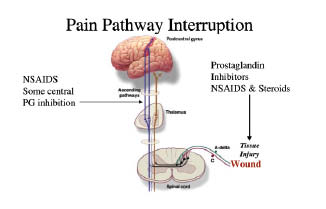
Abstract The inroads made over the last decade have greatly increased our knowledge in pain conduction and perception. This has lead to pain management protocols that place excellent pain control modalities in the hands of the clinician. Trigeminal anatomy, the physiology of pain and the anatomical basis for pain management protocols are described. Concepts of … Read more

Replacement of the Temporomandibular Joint

Figure 5 a,b,c,d,e,f,g,h--38 year old female with PSS (progressive systemic sclerosis). Note the absence of condyles, anterior open bite and the stiff board like facies. Bilateral total joint reconstruction in combination with orthognathic surgery led to a significant improvement in occlusion, functional range of motion and esthetics.

While dentists deal with aspects of, or problems with and related to the temporomandibular joint every week in our practices, we do not often meet patients who are in need of replacement of their mandibular condyle or fossa or both. As a matter of fact it would be a rare requirement to need fossa replacement … Read more

Extracranial meningioma mimicking a temporomandibular joint disorder

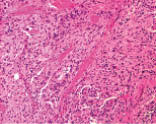
Figure 3--Histopathology of WHO grade 1 meningioma showing a very vascular tumor with cells which have spindle shaped morphology,elongated hyperchromatic nuclei and infiltrates of fibrocollagenous and skeletal muscle tissue. (H&E, 100x).

Pain is often the commonest presenting symptom of temporomandibular joint disorders (TMDs) and can manifest as headaches, facial and jaw pain, dental pain, neck and associated muscle pain. TMD may also be be accompanied by other common symptoms including clicking and crepitus, locking, swellings, deviations with limited mouth opening as well as an assortment of … Read more

Genioplasty

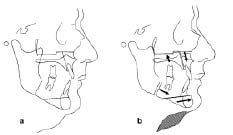
Figure 14--a. A patient with an anterior open bite malocclusion, poor chin prominence, poor submental esthetics and increased lip-chin-throat angle with a moustache camouflage. b. The improved facial esthetics following treatment and removal of the moustache. Note the increased chin prominence and decreased adipose tissue following submental liposuction. c. The surgical treatment plan involved: A multi piece le Fort I osteotomy to close the open bite, mandibular advancement by means of bilateral sagittal split osteotomy, an advancement genioplasty, and submental liposuction. d. Post treatment cephalometric tracing. Note the submental soft tissue change.

The human face has enchanted mankind for a very long time. Psychological studies have shown that even as babies we are drawn to faces and that nine minutes after being born, when we can barely focus our eyes, we prefer to gaze at faces than any other object.1 Our faces forms an integral part of … Read more

Aesthetic Diastema Closure Utilizing a Novel Matrix System

Figure 22-Centrals Retracted 1:1 two week Post-op.

Abstract Diastema closure is a frequently requested, technique sensitive cosmetic procedure. When performed correctly, enhanced dental-facial aesthetics can result, with psychological and social benefits to our patients. If incorrectly done, poor contacts, poor contour, increased plaque retention, and gingival irritation from subgingival overhangs can affect the patient’s periodontal health and the tooth – restorative margin … Read more

Cone Beam Volumetric Tomography

FIGURE 7

Cone Beam Volumetric Tomography (CBVT) also known as Cone Beam CT was first commercially introduced to the dental profession in 2001. Cone beam CT is an imaging modality that produces volume imaging in an easier and quicker fashion than conventional medical CT. Cone Beam CT was specifically designed for the dental profession to provide accurate, … Read more

Are You Looking But Not Seeing?

FIGURE 10

It is well accepted that no dental examination is complete without an examination of the oral mucosa for oral cancer. The incidence of oral cancer is on the rise amongst women, younger adults, non-alcoholics, and non-smokers.1-6 Oral cancer can be as fatal as melanoma (skin cancer) or cervical cancer. Since these “new-comers” do not fit … Read more

Cleidocranial Dysplasia: An Insight Into Genetics and Dental Management

FIGURE 14

With a frequency rate of one in one million individuals, cleidocranial dysplasia (CCD) is considered a rare disorder.1 CCD (also known as cleidocranial dysostosis) is a well defined disorder of bone development with characteristic clinical manifestations presenting in an autosomal pattern of inheritance affecting both sexes and all ethnic groups equally.1-4 CCD is characterized primarily … Read more

Snowmobile Accidents and Facial Fractures

FIGURE 5--Snowmobiles lined up for large-scale snowmobile tours and safaris in Finnish Lapland in Rovaniemi on the banks of the Kemi River. Such tours which are primarily for tourists are strictly regulated with mandatory helmet wear and alcohol monitoring.

ABSTRACT With the popularity of snowmobiles, the incidence of facial fractures in those enjoying this recreational activity has increased due to a combination of factors including: alcohol use, night-time driving, immaturity of the driver, inappropriate use of helmets, and traveling on unknown terrain. In order to help decrease the rate of snowmobile related injuries, further … Read more

Recreational Illicit Drug Use

The use and abuse of recreational drugs is not a topic routinely found, or at least not covered in depth, in the dental curriculum. It is a subject in which information is usually obtained and shaped from cultural and sociological attitudes, media reports or just hearsay.1 Although, probably more understood (and prevalent) today than at … Read more