Tips for Discussing Orthodontic Treatment with Patients

Orthodontic Treatment

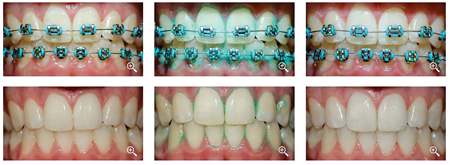
The thought of getting orthodontic treatment can be scary for patients, and if you feel like you’re meeting resistance when you suggest it, you’re not the only one. Many dentists find it difficult to get patients on board with the idea of dental braces, while others seem to have no trouble with patient compliance or … Read more
Histobacteriology Of Teeth With Failed Root Canal Treatment – A Pilot Study

Neelakantan Fig.1-3 alternate text for this image

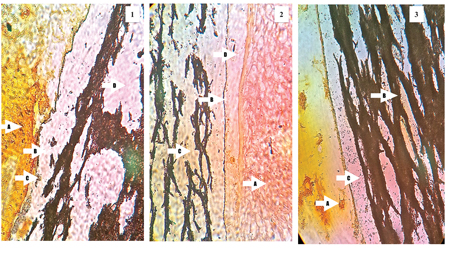
Abstract While several in vitro studies have focused on the antibacterial activity of root canal disinfection protocols and sealing ability of root filling materials, the exact clinical relevance remains unknown. In this pilot study, we aimed at identifying the possible causes of treatment failure in teeth that had been endodontically treated and diagnosed as treatment … Read more

The Three F’s of Predictable Endodontics “Finding, Following, and Finishing”

West fig IB NEW alternate text for this image

The classic “Endodontic Triad” is founded on the three pillar principles of cleaning, shaping, and packing. More specifically, the historical triad was described as debridement, sterilization, and obturation. However, the best mental and technical process for actually achieving cleaning, shaping, and packing is best understood from the perspective of the proper 3 “F” technical sequence. … Read more

Buccal-Radial Radiographic Projections Allow Accurate Detection Of Cortical Bone Defects In Cadaver Mandibles By Practitioners With Different Levels Of Expertise

Buccal-Radial Radiographic Projections Allow Accurate Detection Of Cortical Bone Defects In Cadaver Mandibles By Practitioners With Different Levels Of Expertise

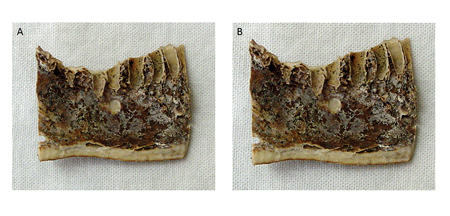
Introduction Cone beam computed tomography (CBCT) has been recommended for the “diagnosis of radiographic signs of periapical pathology when there are contradictory (nonspecific) signs and/or symptoms”.1 CBCT provides additional information from three-dimensional images; however, there is a need for the clinician to justify its use because of the increased ionizing radiation, so it should be … Read more

Treatment of a Patient in the Late Mixed Dentition with Severe Crowding in the Maxillary Arch, Ectopic Eruption of the Maxillary Canines, and Unilateral Transposition

Wechsler fig 20 alternate text for this image

Abstract The purpose of this article is to describe the treatment of a 14-year-old boy in the late mixed dentition with over-retention of several primary maxillary teeth. This situation has caused a palatal eruption of the permanent incisors and a transposition of the upper right maxillary canine between the lateral and central incisors. The case was treated non-extraction by a combination … Read more

Editorial: The Real Rules for Practicing Dentistry

Cover sm alternate text for this image

The first “rules” that I can remember learning in dental school were G.V. Black’s rules for cavity preparation. My classmates and I carefully memorized those rules along with hundreds of others that our professors and clinical instructors taught us. But now, after many years in practice, I realized that the REAL “rules” for practicing dentistry … Read more

Children at Risk?: One Dentist’s Thoughts

sedation

On July 9th, the show Sunday Night with Megyn Kelly aired a piece called “Children at Risk? Kids and Sedation at the Dentist’s Office” that may generate discussion among your colleagues and in your practices. The lead reporter in the piece was NBC News national correspondent Kate Snow. In that piece, the safety of sedation … Read more

Risk Factors in Implant Dentistry: “Patient Local Related” Risk Factors

Arlin 5A alternate text for this image

Introduction This article is the third in a series for Oral Health magazine (August issues) that highlights the discipline of Implant Dentistry. The first article 1 of the series was published in the August 2015 issue with the title “Surgical Risk Factors in Implant Dentistry: “Effect on Failures and Bone Loss”. The second article 2 … Read more

Editorial: Remembering Greatness

sedation

Dr. Carl Misch was a friend of our family whom I would best describe as a passionate man – both in his personal and professional life. And professionally, his passion was for dental implants. As a child, Carl always said he wanted to be a dentist.  Later during his dental schooling, when asked why he … Read more

Predicting The Transition Line Of An Immediate Complete Maxillary Implant Prosthesis

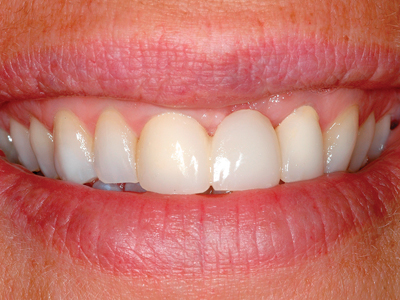
Introduction Complete maxillary implant rehabilitation presents great challenges in achieving optimal aesthetic outcomes. The aesthetic component of the rehabilitation can often be unpredictable and not satisfy patients’ expectations, which implies the need of highly well done pre-operative examination and treatment planning. In patients with a high lip line, the transition between the implant prosthesis and … Read more

Keys to Predictable Socket Grafting: Part 2

sedation

The last article discussed the first five keys to bone grafting. The keys to bone grafting are local factors that affect the prognosis of the procedure and include: defect size, absence of infection, soft tissue closure, space maintenance, graft immobilization, regional acceleratory phenomenon, bone vascularity, growth factors, healing regeneration time, graft materials and a transitional … Read more

The Economics of Dental Aesthetics

Lowe 018 alternate text for this image

The Past When it became possible to bond tooth colored restorative materials to enamel in the early 1980’s, dental practice, as we know it was changed forever. The “Age of Aesthetic Dentistry” was born. No longer did the dentist deal with only dental disease (caries and periodontal), but now could offer solutions for aesthetic dental … Read more

Full Arch Immediate Fixed Implant Rehabilitation: A Case Demonstration

Microsoft Word – All In 1 Arch.docx alternate text for this image

The Quality of Life studies in the scientific literature highlighted the compromises with conventional removable prosthesis versus benefits of implant retained removable or fixed prosthesis. In addition, even a larger but unspecified number of patients present with terminal non-restorable dentition that will require full Arch/mouth rehabilitation in due time. When given a choice, most patients … Read more

CBCT In Treatment Planning Of External Cervical Resorption: A Case Series

Nahmias Figure 1 alternate text for this image

Resorption of tooth structure happens in primary and permanent dentitions. Physiologic tooth resorption involves primary teeth, preceding their shedding. In permanent dentition, tooth resorption is a pathologic phenomenon, and is classified as internal or external resorption, depending on the surface of tooth structure involved. External root resorption can be further classified into surface resorption, external … Read more

2017 is Truly the Year to Celebrate 150 Years

Crawford dental office 1 alternate text for this image

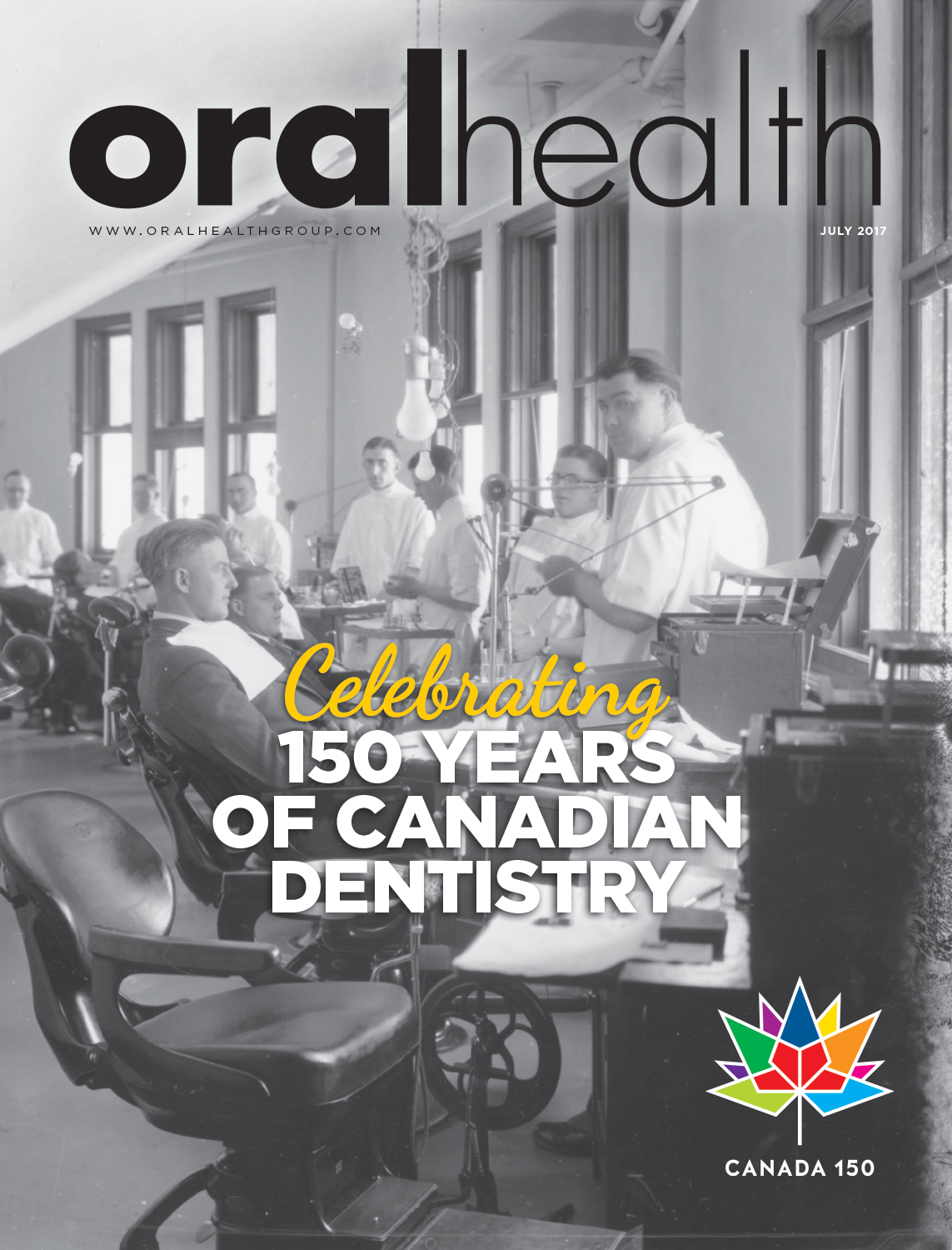
On July 1, 2017 Canada celebrated its 150 years of Confederation. The early struggles to bring our vast country together was indeed a wonderful achievement. John A. Macdonald was the leading figure which resulted in the British North America Act that gave birth to Canada as a nation and he was the first prime minister … Read more

Natural Adjunct to Post-Operative Management After Third Molar Surgery

Tatch Fig 3 alternate text for this image

Removal of wisdom teeth is one of the most common procedures performed in Oral and Maxillofacial Surgery. The most common postoperative complications of impacted lower third molar extractions are extended pain, trismus and facial swelling. These symptoms slow down the patient’s recovery and influence his or her ability to resume normal daily activities. 1-4 Many … Read more

Gingival Augmentation: High Powered 970nm Diode Laser

Benjamin fig 1 alternate text for this image

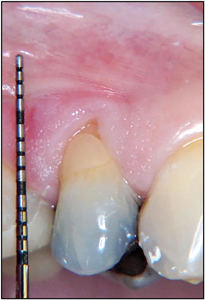
Early analysis and diagnosis of soft tissue abnormalities and discrepancies enhances the clinician’s ability to attain the best possible outcomes with minimally invasive procedures. All too often, conditions are allowed to progress to their more advanced stages due to the erroneous thought process that the treatment is more disruptive than the pathologic condition itself. Today, … Read more