Blogs, blogs,we got blogs
2011-12-12 06:25:35

2011-12-12 06:25:35
Wonderful posting from an endodontic forum by a talented clinician – Javier Pascual……his first language is Spanish, but pictures speak in every language. Asymptomatic tooth. Ortho treatment just finished. Patient is not happy with the color. GP treatment plan: endo + internal bleaching. GP can´t locate canal and patient is referred to my office. Since … Read more
The raw power of the internet is the ability to shift gears on the fly………the blog is in its infancy, we’re following a trodden path………perhaps we need to invent our own path and journey on one not only less travelled, but perhaps previously unexplored…. Post your comments on how you would treat this situation…..the goal … Read more
A recent study by Givol, Rosen, Taicher & Tsesis, published in the Journal of Endodontics, points out some interesting facts about malpractice claims in endodontics. Image via Wikipedia Endodontic claims are the most frequently filed malpractice claims in dentistry. It has been reported that there are twice as many endodontic malpractice claims than other specialty … Read more
BARCELONA, Spain/LEIPZIG, Germany: What do Barcelona and endodontics have in common? For me, the answer was nothing, until last week’s Roots Summit. From now onwards, I will forever connect Gaudí, Paella and La Sagrada Família with root canals. It is certainly not an exaggeration to say that Roots Summit 2010 had all of those lucky … Read more
There is no excerpt because this is a protected post.
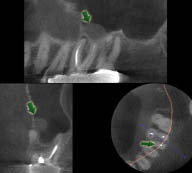
In 1895, Wilhelm Roentgen, a German physicist, discovered x-rays and in 1896, a New Orleans dentist, C. Edmond Kells, took the first diagnostic x-ray of a dental patient in the United States. In spite of this diagnostic breakthrough, for over the past one hundred years, the dental profession has seen three dimensional (3D) structures with … Read more
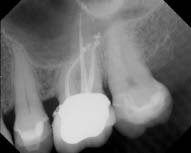
This paper was written to detail, with clinical rationale, the various steps in orthograde first time endodontic treatment of adult teeth with closed apices. The steps detailed are principle driven and will work with virtually any rotary nickel titanium (RNT) instrumentation system. The above notwithstanding, this article describes the use of Twisted Files* (TF) and … Read more
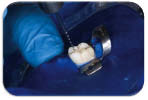
The evolution of endodontic instrumentation from stainless steel hand files to the intricacies of rotary nickel titanium has advanced the efficiency and predictability of the enlargement of root canals. In recent years, other improvements in instrumentation methods and materials have produced even better results. These advancements include the use of hand and engine driven files … Read more
After reading Dr.Serota’s articles on the endodontic vs. implant controversy, I felt compelled to comment and elaborate on some of the assertions made in those articles. Dr.Serota states that the purpose of his paper “is to ensure that all variables in the treatment planning equation are understood and given equal weight in the comprehensive care … Read more
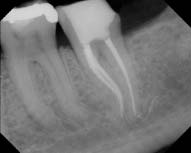
Several parameters should be considered in shaping root canal spaces, these include choosing the correct: • working length • master apical diameter • taper. With regard to working length, while there is some divergence of opinion among clinicians, the natural termination point for endodontic cleanings, shaping and obturation is the minor constriction (MC) of the … Read more
Dead Stuck, a non-fiction book by Richard Mounce, DDS, boisterously describes how being a root canal specialist (endodontist) has provided the author unique opportunities and challenges in marital and parental relationships, how he once wore girl repellent, his addiction to world football, how he diverted flights with fire on the wing, and the mortal danger he encountered while … Read more
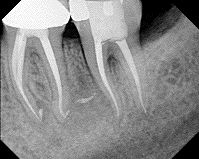
With the wealth of options available in obturation, it can be a challenge to know which technique to adopt and what the ramifications of these choices are in clinical practice. As a first step, obturation techniques might be divided into their general classes. There are master cone based techniques (warm and cold), paste techniques, “squirt” … Read more

Recently, I received these two questions from the same reader. The answers have clinical application for all clinicians who practice endodontics. These questions underscore the importance of understanding the causes of pulpal inflammation as well as the basic indications for endodontic therapy with a diagnosis of irreversible pulpitis (IP). The onset of an IP is … Read more

Is it more effective and safe to finish root canal preparations with hand files or rotary nickel titanium files? There are proponents on both sides of the issue. My empirical bias is that it is inefficient, fatiguing and risks iatrogenic events unnecessarily to finish root canal preparations with hand files. It could be strongly argued … Read more

What happens when irrigants such as chlorhexidine or sodium hypochlorite are expressed out of the apex? All irrigants with bactericidal action are irritating and toxic to apical tissues to one degree or another. Of the commonly used endodontic irrigants, 5.25% sodium hypochlorite is the most irritating solution if extruded beyond the apex followed by 2% … Read more
ABSTRACT The purpose of this study was to use an enzyme immunoassay to determine whether diffusion of tetracycline occurs through root dentin of extracted human teeth. Twenty-one roots were mechanically prepared and then divided into three groups: experimental (G1; n=15; tetracycline-impregnated gutta-percha (TGP) with MCS sealer); negative control (G2; n=3; plain gutta percha with MCS … Read more

If, when injecting a flowable sealer (like RealSeal sealer or EndoRez), an air bubble (void) forms, how do you get around that? Do you have to remove it all and start over? How much sealer and how the sealer is applied is indirectly related to both the reduction of sealer extrusion and optimal sealer hydraulics … Read more

How often do we examine a patient experiencing pain and wonder if the problem is odontogenic or of another origin? Making matters more complicated, how often have we concluded that the patient’s problem is of dental origin but we are unable to localize the offending tooth? With a patient in exquisite pain it can be … Read more