Got ‘Til It’s Gone

Dental Anesthesia

Don’t it always seem to go/That you don’t know what you’ve got ‘til it’s gone. – Joni Mitchell (“Big Yellow Taxi”) There is an active application to recognize Dental Anesthesia as a dental specialty nationwide. Dental Anesthesia is recognized as a specialty in Ontario as well as in the United States and Japan. This assistive … Read more

Subcutaneous Emphysema: Dental Causes and Management

Dental Anesthesia

Introduction Subcutaneous emphysema is a well-known complication that can occur during dental procedures. It arises when air is forcefully pushed into the submucosal spaces, leading to tissue distension. This trapping of air can progressively spread through the facial spaces, which are anatomical regions of loose connective tissue between muscles and bones. The consequences of subcutaneous … Read more

Automated External Defibrillators and the Dental Office

Dental Anesthesia

The primary function of an automated external defibrillator (AED) is to convert certain fatal non-perfusing heart rhythms back into perfusing heart rhythms (producing a pulse that can provide oxygen to vital organs). They are now a required component of the Basic Life Support (BLS) training courses for healthcare providers such as dentists and dental personnel. … Read more

Dental Anesthetic for a Patient with Cornelia De Lange Syndrome During Dental Treatment: A Case Report

Dental Anesthesia

Abstract Cornelia de Lange Syndrome (CdLS) is a rare genetic neurodevelopment disorder that can present challenging behavioral and airway management during general anesthesia. This case report involves a 25-year-old female patient with CdLS who received a moderate sedation for dental treatment at the Adult Surgicentre, Faculty of Dentistry, University of Toronto. CdLS is associated with … Read more

Lingualized Occlusion: An Occlusal Scheme for Complete Dentures in Atrophied Ridges – A Case Report

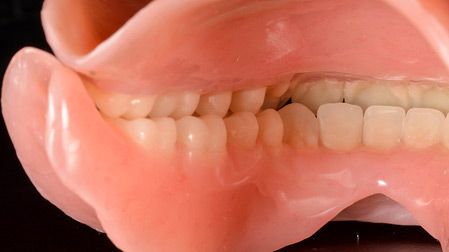
Introduction Rehabilitation of completely edentulous maxillary and mandibular arches should satisfy form, function and esthetics. Such rehabilitations can be carried out either with or without implants. Although contemporary rehabilitation of completely edentulous situations is inclining towards dental implants, the demand for conventional removable prosthodontics is still high owing to surgical, economic and patient’s medical limitations. … Read more

Prepare to Win

“It’s been too hard living/But I’m afraid to die/’Cause I don’t know what’s up there/Beyond the sky” – A Change Is Gonna Come by Sam Cooke. According to Bill Bryson’s book, The Body, there are about 8,000 things that can kill us. Of course, only one cause has to succeed, and at least one will … Read more

Case Report: Use of Intramuscular Glycopyrrolate Bromide for Hypersalivation

Summary This case report provides a review of the use of the intramuscular (IM) injection of glycopyrrolate bromide as an antisialagogue. In this case, copious saliva interfered with the ability to obtain an accurate impression of the tooth preparation. Glycopyrrolate was delivered intramuscularly to the deltoid muscle. Drying was adequate, and a successful impression was … Read more

A Brief History of Propofol and the Introduction of Remimazolam as a Potential Heir Apparent

Propofol (2,6-diisopropylphenol) is an intravenous (IV) sedative-hypnotic agent commonly used for the IV induction and maintenance of general anesthesia.1 It has a rapid-onset, provides a rapid recovery even after multiple bolus doses or continuous infusion, and has anti-emetic properties which decreases the incidence of post-operative nausea and vomiting.1 These benefits helped propofol become the most … Read more

Diphenhydramine as a Local Anesthetic: Case Report

Keywords: local anesthetic, allergy, diphenhydramine, emergency treatment Abstract Allergy to local anesthetics is a rare condition which poses a unique challenge for dental treatment. In this article, we present a case of suspected allergy to conventional local anesthetics which was managed successfully using 1% diphenhydramine solution with 1:100,000 parts epinephrine as an alternative means of … Read more

Lipid Emulsion Treatment for Local Anesthetic Systemic Toxicity

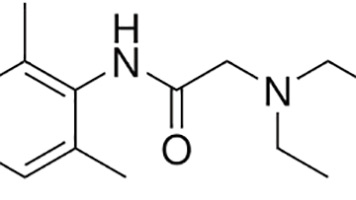
Local anesthetics are used by dentists extensively and when used erroneously, such as intravenously or above the maximum dose, life-threatening local anesthetic systemic toxicity (LAST) can result. The signs and symptoms of LAST can appear immediately after injection if injected directly into a blood vessel or delayed if the anesthetic is absorbed from the tissue … Read more

The Problems with the COVID-19 Test: A Necessary Understanding

Viewpoint: Introduction On August 26th, 2020 Professor Mark Woodhouse, a senior scientific advisor to the UK Government stated the following, “We couldn’t think of anything better to do. Lockdown was a panic measure and I believe history will see that trying to control Covid-19 through lockdown was a monumental mistake on a global scale, the … Read more

NPO Guidelines and Current Evidence-Based Considerations

Current nil per os (npo) standards promote pre-operative fasting as an approach to reduce the volume and acidity of a patient’s stomach contents to reduce the risks of regurgitation and subsequent pulmonary aspiration. Pre-anesthesia fasting standards apply to any procedure where sedative medications reduce the protective airway reflex that under normal conditions prevent aspiration. The … Read more

Peri-Operative Epistaxis During Dentistry: A Case Report

Epistaxis (nasal bleeding) is a relatively common complication that may arise during a dental visit that utilizes sedation/anesthesia. While rarely fatal, appropriate and prompt management of peri-operative epistaxis is critical in order to prevent further harm. This article will discuss a case report of epistaxis encountered during dentistry under deep sedation. In addition, the anatomy, … Read more

Reviewing Contraindications to Nitrous Oxide

All practitioners who deliver nitrous oxide to their patients should be intimately familiar with the relative and absolute contraindications to its administration. Relative Contraindications Nasal obstruction: Nitrous oxide sedation can proceed if despite some degree of nasal obstruction, the patient is still able to respire through the nares (or one naris) in such a way … Read more

Mandibular Anesthesia: Troubleshooting and Overcoming Failure to Anesthetize

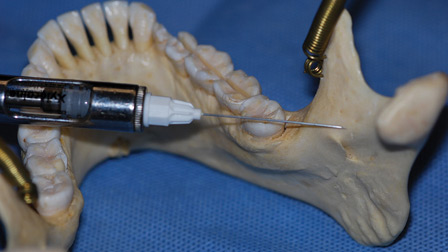
Abstract When difficulty in obtaining adequate mandibular anesthesia is encountered a systematic approach incorporating the evaluation of patient factors and operator technique will substantially improve outcomes. Even for the most experienced dental practitioners, consistent, profound mandibular anesthesia remains difficult to achieve 100 percent of the time. This can be stressful for both dentist and patient … Read more

Assessing BONES May Give You Moans, But it Can Help Manage Oversedation

Oversedation

Pre-operative airway assessment and management is essential to successful dental treatment under procedural sedation. In the event of oversedation, defined as the transition from an intended level of sedation to an unintended deeper level of sedation, the patient’s ability to independently maintain ventilatory function may be impaired. This can result from an inability for the … Read more