A Risk Manager’s Practical Guide to Meeting the Demand for Sedation Services

oral-health-feb-2024 alternate text for this image

Fear and anxiety toward dentistry are common in all cultures. Such feelings usually originate in childhood, persist through life, lead to avoidance of dental therapy, and contribute to diminished dental health.1 Indeed, psychological factors pose significant barriers to access to oral health care. Dentists are by and large aware that anesthesia and sedation services assist … Read more

A New Era Has Begun

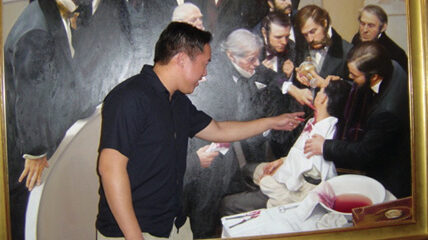
Photo: “Etherdome” at Massachusetts General Hospital (2006) Painting: “Ether Day” October 16, 1846 at the Massachusetts General Hospital. “The very first public demonstration of Anesthesia achieving insensibility to pain”. Dr. William Thomas Green Morton, A Boston dentist administered Sulphuric Ether to the patient Gilbert Abbott. The surgeon, Dr. John Collins Warren, removed a tumor from his neck. Knowledge of this discovery spread from this room throughout the civilized world and new era for medicine and dentistry had begun.

On February 17, 2023, the Canadian Dental Regulatory Authorities Federation approved the national recognition of Dental Anesthesia as a Specialty in Dentistry. Shall I be so bold to say “A New Era Has Begun”? As current President of the Canadian Academy of Dental Anaesthesia (CADA), I think I will be so bold as to name … Read more

Is Diversity in Dentistry Good for Patients?

oral-health-february-2023 alternate text for this image

Ralph Ellison’s 1952 masterpiece novel, Invisible Man, compares and contrasts being black in America in the South and the North. Towards the end of the story, the protagonist asks, “Whence all this passion toward conformity anyway? – diversity is the word. Let man keep his many parts and you’ll have no tyrant states.”1 Fast forward … Read more

Failed Mandibular Anaesthesia: Aberrant Nerve Pathways

Santos fig 3 alternate text for this image

Failed mandibular anaesthesia is a burden on both patients and dental practitioners, as lack of profound anaesthesia can result in pain, apprehension about dental visits, and rescheduling of appointments. When considering factors such as the provider, patient, and techniques used, the incidence of failed mandibular anaesthesia has been reported to be as high as 50%.1 … Read more

An Update on the Current Opioid Crisis in Canada and Opioid-free Analgesia

oral-health-february-2023 alternate text for this image

In Ontario, dentists are the third largest group of opioid prescribers after family physicians and surgeons, and therefore are possible contributors to the opioid crisis.1 The opioids commonly dispensed by Ontario dentists are codeine combination products (76.4%), oxycodone combination products (18.4%), and tramadol (2.8%).2 As recommended by the Royal College of Dental Surgeons of Ontario … Read more

Introduction to Oral Sedatives: Benzodiazepines

oral-health-february-2023 alternate text for this image

Dental anxiety is a common phenomenon among Canadians. All clinically active dentists have anxious patients in their rosters. The simplest choices available to you for anxiolysis are nitrous oxide and oxygen or oral benzodiazepines. If your office does not offer nitrous oxide sedation or if nitrous oxide alone is inadequate for patient management, it might … Read more

Got ‘Til It’s Gone

Dental Anesthesia

Don’t it always seem to go/That you don’t know what you’ve got ‘til it’s gone. – Joni Mitchell (“Big Yellow Taxi”) There is an active application to recognize Dental Anesthesia as a dental specialty nationwide. Dental Anesthesia is recognized as a specialty in Ontario as well as in the United States and Japan. This assistive … Read more

Subcutaneous Emphysema: Dental Causes and Management

Dental Anesthesia

Introduction Subcutaneous emphysema is a well-known complication that can occur during dental procedures. It arises when air is forcefully pushed into the submucosal spaces, leading to tissue distension. This trapping of air can progressively spread through the facial spaces, which are anatomical regions of loose connective tissue between muscles and bones. The consequences of subcutaneous … Read more

Automated External Defibrillators and the Dental Office

Dental Anesthesia

The primary function of an automated external defibrillator (AED) is to convert certain fatal non-perfusing heart rhythms back into perfusing heart rhythms (producing a pulse that can provide oxygen to vital organs). They are now a required component of the Basic Life Support (BLS) training courses for healthcare providers such as dentists and dental personnel. … Read more

Dental Anesthetic for a Patient with Cornelia De Lange Syndrome During Dental Treatment: A Case Report

Dental Anesthesia

Abstract Cornelia de Lange Syndrome (CdLS) is a rare genetic neurodevelopment disorder that can present challenging behavioral and airway management during general anesthesia. This case report involves a 25-year-old female patient with CdLS who received a moderate sedation for dental treatment at the Adult Surgicentre, Faculty of Dentistry, University of Toronto. CdLS is associated with … Read more

Lingualized Occlusion: An Occlusal Scheme for Complete Dentures in Atrophied Ridges – A Case Report

Kumar-Fig-14 alternate text for this image

Introduction Rehabilitation of completely edentulous maxillary and mandibular arches should satisfy form, function and esthetics. Such rehabilitations can be carried out either with or without implants. Although contemporary rehabilitation of completely edentulous situations is inclining towards dental implants, the demand for conventional removable prosthodontics is still high owing to surgical, economic and patient’s medical limitations. … Read more

Prepare to Win

FEBRUARY-2021-OH alternate text for this image

“It’s been too hard living/But I’m afraid to die/’Cause I don’t know what’s up there/Beyond the sky” – A Change Is Gonna Come by Sam Cooke. According to Bill Bryson’s book, The Body, there are about 8,000 things that can kill us. Of course, only one cause has to succeed, and at least one will … Read more

Case Report: Use of Intramuscular Glycopyrrolate Bromide for Hypersalivation

chiu-thumbnail alternate text for this image

Summary This case report provides a review of the use of the intramuscular (IM) injection of glycopyrrolate bromide as an antisialagogue. In this case, copious saliva interfered with the ability to obtain an accurate impression of the tooth preparation. Glycopyrrolate was delivered intramuscularly to the deltoid muscle. Drying was adequate, and a successful impression was … Read more

A Brief History of Propofol and the Introduction of Remimazolam as a Potential Heir Apparent

FEBRUARY-2021-OH alternate text for this image

Propofol (2,6-diisopropylphenol) is an intravenous (IV) sedative-hypnotic agent commonly used for the IV induction and maintenance of general anesthesia.1 It has a rapid-onset, provides a rapid recovery even after multiple bolus doses or continuous infusion, and has anti-emetic properties which decreases the incidence of post-operative nausea and vomiting.1 These benefits helped propofol become the most … Read more

Diphenhydramine as a Local Anesthetic: Case Report

charette-thumbnail alternate text for this image

Keywords: local anesthetic, allergy, diphenhydramine, emergency treatment Abstract Allergy to local anesthetics is a rare condition which poses a unique challenge for dental treatment. In this article, we present a case of suspected allergy to conventional local anesthetics which was managed successfully using 1% diphenhydramine solution with 1:100,000 parts epinephrine as an alternative means of … Read more